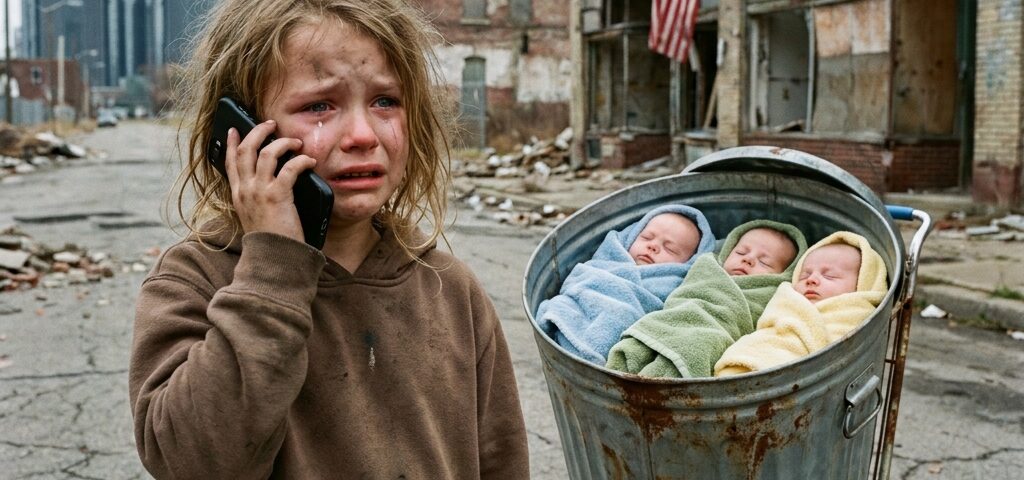
He should have gone back.
He should have done anything except leave before dawn with a note that only said, Thank you for helping me remember I’m human.
Now there were three babies.
His babies.
Maybe.
No. Not maybe.
In his bones, Grant already knew.
He drove west, past luxury condos, packed restaurants, empty lots, and underpasses where people wrapped themselves in tarps against the cold. The Chicago he lived above and the Chicago Harper survived inside were separated by only a few miles and an entire universe of blindness.
He called his assistant through the car system.
“Evan, I need emergency supplies delivered to my house. Formula, diapers, bottles, baby clothes, blankets, cribs, everything for three infants around nine months old. I also need children’s clothes for an eight-year-old girl and comfortable clothing for an elderly woman.”
A pause.
“Sir?”
“Do it now.”
“Yes, sir.”
“And find the best pediatrician available tonight. Pay whatever it takes.”
“Is everything all right?”
Grant stared through the snow. “No.”
He found the abandoned printing warehouse twelve minutes later. The streetlights were broken. Snow gathered in dirty ridges along the curb. A line of dumpsters sat behind a chain-link fence bent open at one corner.
“Harper!” Grant shouted.
Only wind answered.
His polished shoes sank into black slush as he searched the alley. He found the dumpster. He found trash bags split open, cans scattered, small footprints in the snow.
But no girl.
Panic hit him so hard he grabbed the side of the dumpster to steady himself.
Then he saw it.
A red knit hat lying near the fence.
Grant picked it up. It was damp, tiny, and smelled like cold smoke and garbage. For one brutal second, he imagined every terrible thing that could happen to an eight-year-old child alone in this neighborhood during a snowstorm.
Then someone spoke behind him.
“Mister?”
Grant turned.
Harper stood at the alley entrance, gripping a trash bag full of cans like a shield. She was smaller than he expected. Too thin. Her cheeks were hollow, her lips chapped, and her eyes were the kind of old that children’s eyes should never be.
He took one step toward her, then stopped. He did not want to scare her.
“Harper?”
She nodded.
“I’m Grant.”
Her chin trembled, but she did not cry. “You came.”
“Yes.”
“People say that sometimes and don’t.”
“I know.” Grant lowered himself to one knee in the snow. His suit pants soaked immediately, but he did not care. “I’m sorry it took me this long.”
She studied him as if deciding whether he was a miracle or another danger.
“Where are the babies?” he asked.
“At Saint Agnes Church. Grandma June is with them. But she can’t hold them all when they cry. Noah cries the loudest. Sophie doesn’t cry much anymore, and that scares me more.”
Grant felt something tear open inside his chest.
“How long since they ate?”
Harper looked down. “Yesterday morning. We had one bottle left, and Grandma said split it, but Noah was screaming, so I gave him more. Sophie and Miles only got a little.”
Grant stood very slowly. “Take me to them.”
Harper did not move. “If you’re lying, I’ll scream. And I have a broken piece of glass in my pocket.”
It was the saddest threat Grant had ever heard.
“I’m not lying.”
“My mama said rich men can buy anything except a clean heart.”
Grant swallowed. “Your mother was right.”
“Do you have a clean heart?”
He thought about the phone in the dumpster, the money, the missed chance, the woman who died without him knowing she needed help.
“I don’t know,” he said honestly. “But I want to try.”
That answer seemed to matter more to Harper than any promise would have. She nodded once, then turned down the sidewalk.
Saint Agnes was six blocks away, a stone church with boarded basement windows and a faded sign that read WARM MEALS WEDNESDAY. Inside, the basement smelled like soup, bleach, and damp wool. Cots lined the walls. A few tired people looked up when Grant entered, then looked away.
In the far corner sat an elderly woman wrapped in two blankets, her hands swollen and shaking. Three baby carriers rested around her like a fragile wall.
The crying reached Grant before the faces did.
One baby boy kicked weakly under a thin blanket. Another whimpered with his eyes half-closed. A tiny girl stared upward, silent, her lips moving as if looking for a bottle that was not there.
Harper ran to them.
“I found him, Grandma.”
June Reed looked up.
Her eyes were sharp despite the pain in her face. “Grant Calloway?”
“Yes, ma’am.”
She studied him, then looked at the babies. “Olivia said you’d come if you knew.”
Grant could not speak.
June’s voice cracked. “She wanted to tell you. Pride stopped her. Fear stopped her. Poverty stopped her. Then sickness took away the time.”
Grant knelt beside the carriers.
The silent baby girl turned her gray eyes toward him.
His eyes.
The world narrowed to that one impossible detail.
“What’s her name?” he whispered.
“Sophie,” Harper said. “That’s Noah. And that’s Miles. Mama said they were born early, but they were fighters.”
Grant reached toward Sophie, then stopped, afraid he might break her. Harper noticed.
“You have to support her head,” she said, with the weary patience of someone who had become a mother by force. “Like this.”
She showed him.
Grant Calloway, who had intimidated senators and outmaneuvered men twice his age, let an eight-year-old homeless girl teach him how to hold his daughter.
Sophie settled against his chest.
A sound left him then, broken and low. Not quite a sob. Not quite a prayer.
“I’m taking you home,” he said. “All of you. Tonight.”
June closed her eyes. Harper stared like she was afraid to believe him.
“Home?” Harper asked.
“Yes.”
“For how long?”
Grant looked at her. “Forever, if you’ll let me.”
Harper’s face crumpled. For the first time, she looked eight years old instead of eighty.
“The babies won’t be hungry?”
“Never again.”
“Grandma can come?”
“She has to.”
“And me?”
Grant stepped toward her carefully, Sophie still against his chest.
“You most of all.”
Harper dropped the bag of cans.
Then she ran into him so hard he almost fell backward, wrapping her skinny arms around his waist while the whole terrible week finally came out of her in one shaking cry.
“I tried,” she sobbed. “I tried so hard.”
Grant held the baby with one arm and Harper with the other.
“I know,” he whispered. “You saved them. Now let me help save you.”
Part 3
Grant’s mansion in Lincoln Park had once been the quietest house in Chicago.
It had five bedrooms, a wine cellar, a private gym, a library nobody used, and a grand staircase that echoed under every footstep. The interior designer had called it “restrained modern elegance.” Grant had called it efficient. His father, when he was alive, had called it a museum for a man pretending he did not need anyone.
By midnight, the museum was gone.
Noah was screaming in the kitchen. Miles had spit up on a handmade Italian rug. Sophie refused to drink unless Harper hummed the same lullaby three times in a row. Grandma June sat in an armchair by the fireplace, crying quietly into a towel because the warmth hurt her hands in the best possible way.
Boxes covered the entry hall.
Evan, Grant’s assistant, had performed what looked like a military operation on every open store in Chicago. Formula. Bottles. Sterilizers. Diapers. Wipes. Pajamas. Socks. Stuffed animals. Baby monitors. Three portable cribs. A mountain of blankets. Bags of clothes for Harper. Medication for June’s arthritis. Soup, bread, fruit, and half a pharmacy.
Evan stood in the doorway, staring at the chaos with his tablet clutched to his chest.
“Sir,” he said, “the pediatrician is fifteen minutes out. I also found a night nurse, but she cannot begin until tomorrow morning.”
Grant had Sophie in one arm and a bottle in the other, looking like a man defusing a bomb.
“Evan, how do I know if this is too hot?”
Evan blinked. “I manage your calendar, sir.”
Harper appeared at Grant’s elbow. Clean towels were stacked in her arms. “Put a little on your wrist. If it feels warm but not hot, it’s okay.”
Grant obeyed.
Harper nodded. “That’s good. But Sophie likes it slower. Noah drinks too fast and gets mad when you stop him to burp. Miles falls asleep, so you have to tickle his foot.”
Evan stared at her.
Grant looked down at the tiny girl who had run a survival operation with three starving infants and one sick grandmother.
“Harper,” he said softly, “you should not have had to know all that.”
She shrugged like it was nothing. “Somebody had to.”
That sentence followed Grant for the rest of his life.
The pediatrician arrived at 12:21 a.m., a silver-haired woman named Dr. Evelyn Brooks, who moved through the chaos with calm authority. She examined each baby in the downstairs guest room while Grant hovered so close she finally told him to sit down before he fainted.
“They’re underfed,” Dr. Brooks said when she finished. “Dehydrated, but not critically. Cold stress, mild diaper rash, and exhaustion. Whoever cared for them did remarkably well with almost nothing.”
Harper stood against the wall, twisting her fingers.
Dr. Brooks turned to her. “Was that you?”
Harper nodded.
“Then you are the reason they are alive tonight.”
Harper looked down fast, but Grant saw the tears hit her shoes.
Dr. Brooks examined June next, then wrote prescriptions and instructions. By two in the morning, the house had turned into a nursery. The triplets slept in three cribs set up in the room beside Grant’s master suite. June had been settled into the warmest guest room with medication, clean pajamas, and a promise that a specialist would come tomorrow.
That left Harper.
She stood in the hallway outside the bedroom Grant had chosen for her. It had a white bed, pale blue walls, shelves, and a window overlooking the snow-covered street. New clothes lay folded on the comforter.
Harper did not go in.
“What’s wrong?” Grant asked.
“Nothing.”
“You can tell me.”
She stared at the room. “It’s too clean.”
Grant did not understand at first.
Then he did.
Too clean meant temporary. Too clean meant untouched. Too clean meant someone else’s house. Someone else’s bed. Someone else’s life she could be thrown out of.
“We can make it messy tomorrow,” he said. “Paint it any color you want. Put books everywhere. Toys. Pictures. Whatever makes it feel like yours.”
Her mouth trembled. “Mine?”
“Yes.”
“What if I pick wrong?”
“There is no wrong.”
Harper looked toward the nursery. “What if the babies need me?”
“I’ll hear them.”
“You don’t know their cries yet.”
“Then teach me.”
She looked at him suspiciously. “Adults don’t like being taught by kids.”
“I’ve been wrong about many things.”
That almost made her smile.
Grant sat on the floor beside her bedroom door, not caring that he was still in a ruined designer suit. “Here’s the truth, Harper. I don’t know how to be a father yet. I don’t know how to change diapers without making a disaster. I don’t know which cry means hunger and which cry means tired. I don’t know how to braid hair, pack school lunches, buy the right size shoes, or make pancakes shaped like animals.”
“Bears are easiest,” Harper whispered.
“Then I’ll start with bears.”
She studied him. “You really want to learn?”
“More than anything.”
Harper finally stepped into the room.
She touched the blanket first, then the pillow, then the folded pajamas as if checking whether they were real. Grant stayed in the doorway, giving her space. After a long moment, she picked up a pair of yellow socks.
“Mama liked yellow,” she said. “She said it looked like hope.”
“Then tomorrow,” Grant said, “we’ll buy every yellow thing in Chicago.”
Harper looked back at him. “Don’t waste money.”
“It won’t be wasted.”
“You lost money today. I heard you on the phone.”
Grant let out a breath. “I did.”
“Are you mad?”
“I was.”
“At me?”
The question punched straight through him.
He crossed the room and knelt in front of her. “Never at you.”
“People get mad when kids need things.”
“Not in this house.”
“You promise?”
Grant held up his hand, solemn as an oath in court. “I promise.”
Harper nodded, but he could see promises were not enough yet. Promises had to become mornings. Meals. Warm baths. Adults who came back after leaving the room.
“Can I sleep in the chair in the nursery?” she asked.
Grant almost said no. Then he saw the terror behind her eyes.
“For tonight,” he said. “But I’ll be there too.”
So the richest man in Chicago spent his first night as a father in a rocking chair, with one infant asleep against his chest, two more breathing softly in their cribs, and an exhausted eight-year-old curled under a blanket on the nursery rug because she still did not trust the world enough to sleep in a bed.
At 4:03 a.m., Noah woke hungry.
Grant reached for the bottle warmer.
Harper stirred instantly.
“I’ve got it,” he whispered.
She blinked at him, half-asleep. “Support his head.”
“I remember.”
She watched him lift Noah carefully, watched him test the bottle on his wrist, watched him sit and feed the baby without panic.
Only then did Harper close her eyes again.
Grant looked down at his son.
Then at Harper.
Then at the snow turning the city white beyond the window.
He had thought the worst day of his career had taken everything from him.
Instead, it had delivered his life to him through a broken phone in the trash.
Part 4
The first month was not a miracle.
It was harder than that.
Miracles were clean in movies. A sad child found a rich man, the rich man opened his mansion, and everyone cried under soft lighting while the music rose. Real life had paperwork, nightmares, stomach viruses, social workers, legal questions, trauma responses, and three babies who somehow conspired to never sleep at the same time.
Grant discovered that fatherhood did not care how much money he had.
Money could buy formula at midnight, the best pediatrician, a full-time nurse, organic baby food, and a stroller so advanced it looked engineered by NASA. Money could not teach him why Sophie cried whenever a door slammed. It could not make Noah sleep through teething pain. It could not convince Miles that mashed peas were not a personal attack.
Most of all, money could not make Harper believe she was safe.
She woke before dawn every morning, running to the nursery before anyone else. She counted bottles. Counted diapers. Counted babies. If one of the triplets sneezed, she went pale. If June coughed, Harper’s hands started shaking. If Grant left the house for more than an hour, she sat by the front window until his car returned.
The child had survived seven days of emergency and months of watching her mother die. Her body had learned that rest was dangerous.
Grant hired a child therapist named Dr. Alicia Monroe, who came twice a week and never pushed Harper to talk before she was ready. She brought crayons, puppets, and a sand tray. Harper ignored the toys at first.
“She’s parentified,” Dr. Monroe told Grant quietly after one session. “She was forced into an adult role during crisis. She may resist care because care feels unsafe to her. She trusts responsibility more than comfort.”
“How do I fix that?”
“You don’t fix her,” Dr. Monroe said gently. “You show up consistently until her nervous system believes childhood is allowed again.”
So Grant showed up.
He learned to make breakfast. Badly at first. The first pancakes were burnt outside and liquid inside, and Harper laughed before she could stop herself. It was a small laugh, barely a crack in the ice, but Grant treated it like sunrise.
He learned the triplets’ cries.
Noah’s hungry cry was angry. Sophie’s tired cry was soft and wounded. Miles had a fake cry he used when someone else was getting attention, which Harper identified immediately and with deep offense.
“He’s dramatic,” she said.
“He gets that from no one in this room,” June muttered from her armchair.
June changed too. With proper medication and warmth, the pain in her hands eased. She began cooking again, first soup, then biscuits, then Sunday chicken with rosemary that filled the mansion with a smell Grant had not realized he missed from childhood. She told stories about Olivia while she cooked.
“Your mama once tried to rescue a raccoon from behind a gas station,” June told Harper one night. “Got herself scratched to pieces and still named him Prince Henry.”
Harper giggled. “That sounds like Mama.”
Grant listened from the kitchen island, hungry for every detail.
Olivia became more than the woman from one night. She became the teenager who sang in church. The young mother who cut her own hair to save money but somehow made it look stylish. The exhausted waitress who gave free pie to lonely old men at the diner. The woman who had loved fiercely, made mistakes, and died too young.
Every story cut Grant open and stitched him back together differently.
One Saturday, he took Harper shopping for her room.
Not to a designer showroom. Harper refused that. Instead, they went to a big store in the suburbs where families pushed carts and children begged for stuffed animals. Grant wore jeans and a baseball cap. Harper wore a yellow sweater and walked close enough that her sleeve brushed his hand.
“Pick anything,” he said.
She frowned. “Anything is too much.”
“Okay. Pick five things.”
She chose a lamp shaped like a moon, a yellow comforter, a set of chapter books, a small wooden music box, and a framed print of wildflowers.
At checkout, she slipped a pack of baby socks onto the belt.
“For Sophie,” she said quickly. “She gets cold feet.”
Grant added three more packs.
Harper gave him a stern look. “That’s wasting.”
“That’s parenting.”
Her expression softened.
On the drive home, snow melted into gray slush along the highway. Harper held the music box in her lap.
“Can I ask something?” she said.
“Always.”
“Are Noah and Sophie and Miles really yours?”
Grant had been expecting this. The DNA test had been done privately two weeks earlier. He had wanted legal certainty before anyone could challenge their place in his home. The results were clear.
“Yes,” he said. “The test confirmed it.”
Harper nodded slowly. “So you’re their dad.”
“Yes.”
“But not mine.”
The words were quiet. Not accusing. Worse. Accepting.
Grant pulled into a parking lot and stopped the car. Harper stared out the windshield.
“Look at me, sweetheart.”
She did.
“No, I am not your biological father.”
“I know.”
“But biology is not the only way families are made.”
She looked doubtful.
“My mother left when I was nine,” Grant said. “My father raised me alone. He used to tell me that family is not just who shares your blood. Family is who stays when leaving would be easier.”
Harper held the music box tighter.
“I want to stay,” Grant said. “With you. Not just the babies. You.”
Her eyes filled, but she blinked the tears back. “You don’t have to.”
“I know.”
“I’m a lot of trouble.”
“You are eight.”
“I have nightmares.”
“So do I.”
“I get scared you’ll change your mind.”
“I won’t.”
She looked down. “Mama said people leave when things get heavy.”
Grant’s voice broke a little. “Then I’ll carry heavy things.”
For a moment, Harper said nothing.
Then she reached across the console and took his hand.
It was not a hug. It was not trust, not fully.
But it was the first time she reached for him without fear.
That night, after they put the new yellow comforter on her bed, Harper slept in her own room for three whole hours before a nightmare sent her running to the nursery. Grant found her there at two in the morning, curled beside Sophie’s crib.
He did not scold her.
He brought a blanket and sat beside her on the floor.
“You came back,” she whispered, still half in the nightmare.
“I told you I would.”
She leaned against his shoulder.
Down the hall, June slept without pain for the first time in years. In their cribs, the triplets breathed in peaceful rhythm. Outside, Chicago froze under a hard white moon.
Inside, the house was becoming messy, loud, imperfect, and alive.
For the first time since his father died, Grant Calloway no longer dreaded morning.
Part 5
The world found out before Grant was ready.
He had tried to keep the story private. He paid lawyers to seal documents. He warned employees not to leak a single name. He installed new security cameras, changed household staff contracts, and threatened tabloids with lawsuits before they even published.
It did not matter.
Someone at Saint Agnes Church sold the story.
By Monday morning, every major Chicago gossip site had a version of it.
Billionaire CEO Discovers Secret Triplets After Homeless Girl Calls From Dumpster.
The articles blurred truth into spectacle. Some called Harper a “trash-bin angel.” Some suggested Olivia had hidden the babies to trap Grant later. One particularly cruel columnist asked whether the whole thing was a “poverty scam wrapped in a fairy tale.”
Grant read that line at six in the morning and nearly put his fist through a wall.
Harper saw the news at school.
Whitmore Academy had accepted her midyear after a donation Grant made anonymously but everyone somehow knew about anyway. It was the kind of private school where children wore navy uniforms and parents discussed summering in Nantucket while pretending not to compete.
Harper lasted four hours.
At 12:17 p.m., Grant received a call from the principal.
“Mr. Calloway, Harper had an incident.”
He was already standing. “What kind of incident?”
“She pushed another child.”
Grant’s stomach dropped. “Why?”
A pause.
“The other child made a comment.”
“What comment?”
“Perhaps it would be better discussed in person.”
Grant arrived in eleven minutes.
Harper sat in the principal’s office with her hands folded, face pale and closed. Across from her sat a boy with a red mark on his shoulder and a mother wearing diamonds large enough to signal moral superiority from space.
“That girl attacked my son,” the mother said.
Grant ignored her and knelt in front of Harper.
“What happened?”
Harper stared at the floor.
“Sweetheart.”
The boy muttered, “I just said what everybody knows.”
Grant turned his head slowly.
“What did you say?”
The mother stiffened. “He is eleven. Children repeat things.”
The boy looked suddenly less brave. “I said her mom was a gold digger and she was dumpster bait.”
The room went silent.
Harper’s mouth trembled once, then hardened.
Grant stood.
He had never wanted to destroy a child before, and the realization disturbed him. So he looked at the mother instead.
“Your son will apologize.”
She laughed. “Excuse me?”
“He will apologize to Harper, to her deceased mother, and to the office staff who had to hear his cruelty.”
“Mr. Calloway, surely—” the principal began.
Grant raised a hand. “No. Not surely. Not diplomatically. Not with a donor-friendly phrase about misunderstandings. My daughter has survived more in two months than most adults in this building could survive in a lifetime. She will not be punished for reacting to cruelty while the cruel are protected by tuition checks.”
Harper looked up sharply.
My daughter.
He had never said it in public before.
The diamond mother heard it too. Her expression shifted.
“Your daughter?” she said.
“Yes.”
“She is not legally—”
“She is my daughter,” Grant said, his voice low enough to make the room colder. “Legal paperwork is catching up to the truth.”
The boy apologized. Badly, but he did it. Grant took Harper home for the day.
In the car, she stayed silent until they reached Lake Shore Drive.
“You called me your daughter.”
“I did.”
“Did you mean it?”
“Yes.”
“You said it in front of people.”
“Yes.”
“What if they say I’m not?”
Grant kept his eyes on the road. “People say wrong things all the time.”
“Like dumpster bait.”
His hands tightened on the wheel. “That boy was cruel.”
“He sounded like the articles.”
Grant had no answer good enough.
At home, Evan waited in the foyer with bad news written all over his face.
“Sir, there is someone here.”
Grant removed Harper’s coat. “Who?”
Before Evan could answer, a woman stepped out of the formal sitting room.
She was tall, polished, and severe, with auburn hair twisted into a knot and a camel coat that probably cost more than Harper’s mother had earned in a month. Beside her stood a lawyer with a leather briefcase.
June appeared in the hallway behind them, face ashen.
Harper froze.
The woman’s eyes landed on her.
“Harper,” she said softly. “You probably don’t remember me.”
Harper moved behind Grant.
“I’m Vivian Moore,” the woman continued. “Your mother’s older sister.”
Grant felt the air change.
June’s voice came sharp. “You have no right walking into this house.”
Vivian flinched, but held her ground. “I came for my sister’s children.”
Grant stepped forward. “No, you came with a lawyer.”
The lawyer opened the briefcase. “Mr. Calloway, my client has filed an emergency petition regarding custody and guardianship. As the biological aunt of Harper Reed and the triplets, she has serious concerns about their placement with an unmarried man who had no relationship with their mother beyond a single encounter.”
Harper grabbed Grant’s hand so hard it hurt.
Vivian’s gaze flickered to the child. “Harper, honey, I know this is scary. But I’m family. I can give you a stable home in Evanston. Cousins. A mother figure. People who knew Olivia.”
June laughed, but it was bitter. “You knew Olivia? You cut her off when she needed you.”
Vivian’s face tightened. “I did not know she was sick.”
“You didn’t ask.”
The lawyer handed Grant a stack of papers.
Temporary custody request.
Home evaluation.
Questions about paternity.
Questions about Harper’s legal status.
Questions about whether Grant’s wealth had allowed him to bypass proper child welfare procedures.
Grant read fast, his anger rising with every line.
“You want to take four traumatized children out of the first safe home they’ve had since their mother died?”
Vivian’s voice shook. “I want to make sure my sister’s children are not being raised by a stranger with guilt and money.”
“I am their father.”
“To the babies, maybe. If the test proves it.” Her eyes cut toward Harper. “But not to her.”
Harper made a small sound, like someone had stepped on her chest.
Grant folded the papers once.
Then again.
Then he looked at Vivian with the expression that had ended hostile takeovers before breakfast.
“Listen carefully. You may have regrets. You may have blood. You may even have a lawyer. But you do not get to storm into my home and make a grieving child feel unwanted because you suddenly discovered your conscience.”
Vivian went pale.
Grant continued. “If you want to be their aunt, we can talk. If you want war, bring better weapons.”
The triplets started crying upstairs.
Harper turned instinctively toward the sound, torn between fear and duty.
Grant squeezed her hand. “Go with Grandma June. I’ll handle this.”
But Harper did not move.
She looked at Vivian.
“Where were you when Mama couldn’t breathe?” she asked. “Where were you when I washed bottles in a gas station bathroom? Where were you when Noah was hungry?”
Vivian’s face broke.
“I didn’t know,” she whispered.
Harper’s voice was small, but it carried. “You didn’t come.”
Then she ran upstairs.
The lawyer began to speak, but Grant cut him off.
“Get out.”
Vivian stared toward the staircase, tears standing in her eyes.
“This isn’t over,” she said.
Grant looked at the custody papers in his hand.
For the first time since Harper’s phone call, he felt fear stronger than guilt.
Because money could buy lawyers.
But it could not guarantee a judge would understand that a family had already been born in this house.
Part 6
Grant assembled a legal team by sunrise.
Three family law specialists. One child welfare expert. A former judge. A private investigator. A crisis communications consultant Evan insisted on hiring after two news vans parked outside the mansion gates before breakfast.
Grant hated all of it.
He hated the language most of all.
Placement.
Petition.
Best interest.
Household composition.
Legal relationship.
Words clean enough to hide the fact that four children could be ripped out of their beds because adults had failed them in different ways.
The DNA results for the triplets came first.
Noah, Sophie, and Miles were Grant’s biological children with a probability greater than 99.99 percent. His attorneys moved immediately to establish legal paternity and temporary custody. That part, they said, was strong.
Harper was the problem.
Not because she had done anything wrong. Because the law had not yet caught up with love.
“You can petition for guardianship,” attorney Elise Vance told him in his study, papers spread across the desk. “Eventually adoption, if the court agrees and if no biological relatives successfully object. But Vivian Moore’s claim is not frivolous. As Olivia’s sister, she has standing.”
Grant looked through the glass doors toward the living room.
Harper sat on the rug with the triplets, stacking blocks for Miles to knock down. She kept smiling for the babies. Every few seconds, her eyes flicked toward the study.
“She thinks I’m going to lose her,” he said.
Elise’s voice softened. “Then you need to make the court see what you see.”
“What do courts see?”
“Documentation. Stability. Expert opinions. Evidence of attachment. Evidence that removal would harm her.”
Grant almost laughed. “Any human being with eyes could see that.”
“Courts prefer paper.”
So Grant made paper.
Dr. Monroe wrote a report explaining Harper’s trauma and attachment to Grant, June, and the triplets. Dr. Brooks documented the babies’ recovery under Grant’s care. Whitmore Academy submitted a letter describing Harper’s academic progress and emotional improvement after placement in Grant’s home. Saint Agnes provided shelter records, reluctantly but clearly, showing Harper and June had arrived with three underfed infants and no support from extended family.
June gave a statement that hurt to write.
Vivian and Olivia had not spoken in five years.
The fight, June explained, had happened after Olivia became pregnant with the triplets. Vivian had called Olivia reckless. Olivia had called Vivian heartless. Vivian had offered money under conditions Olivia could not accept. Olivia had refused. Pride, pain, and poverty did the rest.
Harper’s statement was the hardest.
Grant did not want her involved. Elise told him her voice mattered. Dr. Monroe said it could be empowering if handled gently. Harper said she wanted to speak because adults kept talking around her like she was furniture.
So on a snowy Tuesday afternoon, Harper sat at the kitchen table with a yellow pencil and wrote in large, careful letters.
My name is Harper Reed. I am eight years old. My mom died. I miss her every day. After she died, I took care of Noah, Sophie, and Miles because they are my family. I called Grant because Mom told me to. He came. He feeds the babies. He takes me to school. He sits with me when I’m scared. Grandma June lives here too. I don’t want to leave. Please don’t make me lose my family again.
When she finished, Grant had to walk into the pantry and stand there until he could breathe.
The temporary hearing took place in Cook County family court on a gray morning that smelled like wet wool and old coffee. Grant wore a dark suit. Harper wore a yellow cardigan over her dress. June sat beside them in the waiting area, holding Sophie while a nurse cared for Noah and Miles at home.
Vivian sat across the hall with her lawyer.
She looked less severe than before. Tired. Red-eyed. Human.
Harper leaned against Grant. “Is she going to win?”
“I don’t know what the judge will decide today,” Grant said, because he would not lie to her. “But I know I’m not leaving.”
Harper nodded.
Inside the courtroom, everything moved too slowly and too fast. Vivian’s lawyer argued that Grant had acted impulsively, taking children into his mansion without proper legal structure. He emphasized Grant’s demanding career, his lack of parenting history, the media frenzy, and the absence of a maternal figure.
Grant’s lawyer argued facts.
The children were safe. The babies were thriving. Harper had bonded strongly with Grant. June lived in the home. Medical and therapeutic care were in place. Removing Harper would compound trauma. Separating her from the triplets would be devastating.
Then Vivian asked to speak.
Her lawyer looked startled. The judge allowed it.
Vivian stood with both hands gripping the table.
“Your Honor, I filed this petition because I believed I was doing right by my sister. I believed money and guilt were not enough to raise children. I believed blood gave me a responsibility.”
Grant went still.
Vivian looked at Harper.
“But I have watched Harper sit here holding Mr. Calloway’s hand like it is the only thing keeping her on the earth. I have read the reports. I have spoken with her grandmother. And I have had to face the truth that I was not there when my sister needed me.”
Her voice broke.
“I don’t withdraw my love for these children. I am asking the court to let me be part of their lives. But I no longer believe immediate removal from Mr. Calloway’s home is in their best interest.”
Her lawyer whispered urgently, but Vivian ignored him.
“I am not withdrawing my petition entirely today,” she said, and Grant’s stomach tightened. “But I am asking that it be converted into a request for structured visitation while the court evaluates permanent guardianship and adoption options. I do not want to hurt them more.”
Harper stared.
Grant did not trust it at first. Not fully. But he recognized the look on Vivian’s face. It was the look of a person finally crushed under the weight of her own pride.
The judge granted temporary custody of the triplets to Grant pending final paternity orders. Harper would remain in Grant’s care under temporary guardianship while evaluations continued. Vivian would receive supervised visitation, beginning slowly, only with Harper’s consent and Dr. Monroe’s guidance.
It was not final.
But it was enough for Harper to breathe.
Outside the courtroom, Vivian approached them carefully.
“I’m sorry,” she said to Harper. “Not just for today. For before. For not coming. For not asking. For being angry at your mother when I should have loved her better.”
Harper looked at her for a long time.
“Did Mama like pancakes?” she asked.
Vivian blinked. “Yes. She used to burn them every Saturday.”
Harper’s mouth twitched. “Grant burns them too.”
Vivian laughed through tears.
It was not forgiveness.
But it was a door left unlocked.
That night, Grant tucked Harper into bed. Her yellow room glowed under the moon lamp. Books lined the shelves. The music box played softly.
“Are we safe?” she asked.
“More than yesterday.”
“That’s not the same as safe.”
“No,” Grant admitted. “But it’s closer.”
Harper took his hand. “I’m glad you don’t lie.”
“I’ll always try not to.”
She closed her eyes. “Dad?”
Grant froze.
She had called him that once before in fear, but this was different. Sleepy. Natural. Chosen.
“Yes, sweetheart?”
“Don’t let go.”
He sat on the edge of the bed until she slept, holding her hand long after her grip loosened.
Downstairs, Vivian’s petition still existed. Reporters still waited outside. The future still had teeth.
But in that room, beneath yellow light and the sound of a child finally sleeping, Grant knew the truth.
Family was not safe because nothing could threaten it.
Family was safe because someone stayed awake when threats came.
Part 7
Spring arrived in Chicago like an apology.
The snow melted first from the sidewalks, then from the branches, then from the dark corners of the city where winter always seemed to linger longest. At the Calloway house, sunlight began spilling through windows that had spent months reflecting gray skies. The triplets turned one in April, and June insisted they needed a real party.
“Not some rich-person event with tiny food nobody likes,” she said. “A birthday party. Cake on faces. Balloons. Noise.”
Grant looked at the three babies throwing cereal from their high chairs and said, “We seem to have noise covered.”
Harper planned the party with the seriousness of a military commander. Yellow balloons for Mama. Blue for Noah. Purple for Sophie. Green for Miles. A chocolate cake because Olivia had loved chocolate, and vanilla cupcakes because Harper worried babies might not appreciate “deep flavor.”
Vivian came to help two days before the party.
Her visits had begun awkwardly. The first time, Harper sat beside Grant the entire hour and answered every question with one word. Vivian brought a photo album of Olivia as a child. Harper touched the pictures but did not smile until she saw one of Olivia at age nine, missing two front teeth and wearing rain boots with a princess dress.
“She looks like she got in trouble,” Harper said.
“She usually did,” Vivian replied.
By the fourth visit, Harper allowed Vivian to read to the triplets.
By the sixth, she asked Vivian if Olivia had been scared of thunderstorms.
“Terrified,” Vivian said. “She used to crawl into my bed with a flashlight and say we were camping.”
Harper stored every story like treasure.
The custody case changed too. The court evaluator visited the house and found a chaotic, loving environment full of schedules, safety gates, therapy appointments, schoolwork, toys, and a billionaire CEO wearing a burp cloth over his shoulder during an interview.
“You understand permanent guardianship of Harper is a serious commitment?” the evaluator asked.
Grant was on the floor, helping Miles retrieve a block from under the couch.
“Yes.”
“Your life will never return to what it was before.”
Grant looked at Harper, who was showing Sophie how to clap.
“Good.”
By May, the recommendation was clear. Harper should remain with Grant and June. Adoption proceedings could begin if Vivian formally consented and no other relatives objected.
Vivian signed the consent on a rainy afternoon in Grant’s study.
Her hand shook as she wrote her name.
“I am not giving her away,” she said, mostly to herself.
Grant stood across from her. “No.”
“I’m choosing what Olivia would have wanted.”
“I believe you are.”
Vivian looked up, eyes wet. “Do you?”
Grant thought about the woman who had arrived with lawyers and grief disguised as righteousness. He thought about the aunt who now came every week with stories, baby clothes, and apologies she did not force anyone to accept.
“Yes,” he said. “I do.”
The triplets’ birthday party happened on a Saturday with sunlight, balloons, and too much cake. Evan came, wearing casual clothes so stiffly that June asked if he needed instructions on how to relax. Dr. Brooks came. Dr. Monroe stopped by with a stuffed giraffe. Vivian brought a framed photo of Olivia holding newborn Harper.
Harper opened the gift slowly.
In the picture, Olivia looked tired and radiant, her cheek pressed against baby Harper’s head. On the back, in Olivia’s handwriting, were the words: My little sunrise.
Harper held the frame against her chest.
Grant watched her face move through grief, joy, and longing all at once. He had learned children did not heal in straight lines. Some days Harper laughed until she hiccupped. Some nights she woke screaming that the hospital machines were beeping again. Healing was not forgetting. It was learning the memory could hurt without killing you.
After cake, Grant found Harper in the garden.
She stood beneath a budding magnolia tree, holding the photo.
“Parties make me happy and sad,” she said.
“Me too.”
“I wish Mama could see them.”
Grant stood beside her. Noah was in the yard with June, smashing cake into his own hair. Sophie was asleep against Vivian’s shoulder. Miles was trying to eat a ribbon while Evan panicked nearby.
“I think she would have loved today,” Grant said.
“She would have liked you,” Harper said.
The sentence hit him harder than he expected.
“Do you think so?”
Harper nodded. “You’re not how you look.”
Grant raised an eyebrow. “How do I look?”
“Like a man who says no a lot.”
He laughed.
“But you say yes to important things.”
Grant looked toward the party. “I almost didn’t answer the phone.”
Harper turned.
“The day you called, I had thrown that phone away because I was angry about money. If you had found it ten minutes later, the battery would have been dead. If you had been too scared to call, I never would have known.”
“But I did call.”
“Yes.”
“And you did answer.”
Grant nodded. “Thank God.”
Harper slipped her hand into his. “Mama said phones were bad because people stare at them instead of each other. But I think that phone was good.”
“It was the best thing I ever lost.”
That summer, the adoption process moved faster than expected because Vivian did not contest it and every report supported the placement. Grant still worked, but differently. He hired a new CEO for daily operations and moved into the role of chairman. The board nearly revolted.
“You built Calloway Global,” one director said during a tense meeting. “You cannot step back now.”
Grant looked around the table at men and women who thought urgency and importance were the same thing.
“I built a company,” he said. “Now I’m building a family.”
The room went silent.
He did not apologize.
In July, Harper began piano lessons. Grant had bought a baby grand after Vivian told him Olivia had played by ear. Harper was shy at first, touching the keys like they might scold her. Then the teacher taught her a simple melody Olivia used to hum, and Harper cried so hard the lesson stopped.
The next week, she tried again.
By August, the house was full of wrong notes and determination.
Grant loved every sound.
On the last day of summer break, Harper found him in the library.
“Dad?”
He looked up from a legal packet. The word still struck him like grace every time.
“Yes?”
“When the adoption is done, will my name change?”
“It can, if you want. You could be Harper Reed-Calloway. Harper Calloway. Or you can stay Harper Reed. It’s your choice.”
She thought seriously. “Can I keep Reed in the middle? So Mama stays with me?”
Grant’s throat tightened. “Of course.”
“And Calloway at the end? So you stay too?”
He closed the folder.
“Yes,” he said softly. “I would like that very much.”
Harper nodded, satisfied. “Then that’s who I am.”
She ran back toward the nursery, where the triplets were now toddling into fresh disasters.
Grant sat alone in the library for a moment, looking at the adoption papers.
Harper Olivia Reed Calloway.
A name made of past and future.
Loss and rescue.
Blood and choice.
A child who had called from the trash and somehow brought him home.
Part 8
The adoption hearing took place on a bright September morning.
Harper wore a yellow dress because she said Olivia would have wanted to see it from heaven. Grant wore the same dark suit he had worn to his father’s funeral, not because it belonged in court, but because he wanted to redeem it. The last time he wore it, he had been a son losing his anchor. This time, he was a father choosing his child.
June came in a navy dress and pearl earrings Olivia had once bought her from a thrift store. Vivian came with a photo of Olivia tucked into her purse. Evan came too, pretending he was there to manage logistics, though his eyes were suspiciously red before the hearing even began.
The triplets stayed home with Dr. Brooks’s recommended nurse because Noah had discovered screaming as an art form and Grant did not want his first legal act as Harper’s father to include being removed from court for infant disruption.
The judge was a woman named Maribel Santos, with kind eyes and a no-nonsense tone.
She reviewed the file. She asked Grant questions about responsibility, permanence, education, healthcare, emotional support, and whether he understood adoption was not symbolic but legal and lifelong.
Grant answered every question without looking away.
Then the judge turned to Harper.
“Harper, do you understand why you’re here today?”
Harper sat up straighter. “Yes, ma’am.”
“Can you tell me?”
“So Grant can be my dad on paper too.”
A soft laugh moved through the room.
Judge Santos smiled. “And is that what you want?”
Harper looked at Grant.
Not for permission.
Just because he was her safe place.
“Yes,” she said. “Because he came when I called. And he stayed after.”
Grant’s eyes burned.
The judge signed the order at 10:42 a.m.
Harper Olivia Reed Calloway became his daughter in law, as she had already become in every way that mattered.
Afterward, in the hallway, Vivian hugged Harper. It was the first hug Harper fully returned.
“Your mom would be so proud,” Vivian whispered.
Harper pulled back. “You think?”
“I know.”
Then Harper turned to Grant. “Can we go home now? I want to tell Noah and Sophie and Miles I’m officially their sister forever.”
“You were always their sister forever,” Grant said.
“I know. But now paper agrees.”
They celebrated with pancakes for dinner. Grant burned the first batch, as tradition demanded. June made the second batch properly. Vivian stayed. Evan took photos. The triplets wore more syrup than they ate.
That night, Harper placed the adoption certificate in a frame beside Olivia’s photo.
“Both,” she said when Grant looked at it.
“Both?”
“My first family and my now family.”
Grant nodded. “Both.”
Life did not become perfect after adoption. Perfect was not real. The triplets became toddlers, which meant they became tiny criminals with terrible balance. Noah climbed furniture. Sophie hid things in shoes. Miles learned the word no and used it like a constitutional right.
Harper entered third grade and discovered she loved science but hated spelling. She still had nightmares, though fewer. She still saved food sometimes, tucking crackers into drawers until ants forced a family conversation about safety, scarcity, and sealed containers.
Grant made mistakes.
He missed one school pickup because a board meeting ran long, and Harper sat in the office for twenty-three minutes trying not to cry. When he arrived, breathless and apologizing, she asked in a flat voice if he had forgotten her.
The question gutted him.
He canceled the next morning’s meetings and drove her to the lake. They sat on a bench while waves slapped the concrete.
“I forgot the time,” he said. “I did not forget you.”
“It felt the same.”
“I know.”
“My body thought you weren’t coming.”
Grant nodded. “Then I need to help your body learn I come back.”
“How?”
“By coming back. Every time. And by setting six alarms.”
She almost smiled.
He never missed pickup again.
On Olivia’s birthday, they started a tradition. They made chocolate cake, played piano badly, and told stories about her. The first year, Harper cried through most of it. The second year, she laughed at Vivian’s story about Olivia accidentally dyeing her hair orange. The third year, Sophie asked if Mommy Olivia lived in the clouds or in the picture frame, and everyone cried and laughed at the same time.
Grant also started the Reed House Foundation, named for Olivia. It funded emergency housing for grandparents raising children, formula banks, mobile pediatric clinics, and legal aid for families in crisis. At the opening of the first Reed House shelter on the West Side, reporters gathered outside.
Grant gave a short speech.
“My daughter once had to dig through trash to feed her siblings,” he said into the microphones. “No child in this city should have to become an adult because adults failed to build a safety net.”
He did not mention the phone.
Some stories belonged to the family.
But after the ceremony, Harper tugged his sleeve.
“You said my daughter.”
Grant looked down. At eleven, she was taller now, stronger, with bright eyes and a yellow ribbon in her hair.
“I did.”
“I still like hearing it.”
“I still like saying it.”
The foundation changed lives, but the family changed Grant more.
He learned birthdays mattered more than quarterly projections. He learned toddlers could turn silence into suspicion within thirty seconds. He learned school plays were more terrifying than investor calls because Harper always looked for his face in the audience. He learned love was not a feeling that arrived once and stayed polished. It was work. Repetition. Repair. Showing up after failing. Saying sorry without adding excuses.
When Harper was twelve, she asked to see The Lantern Room.
It had closed years earlier, replaced by a coffee shop with exposed brick and overpriced espresso. Grant took her anyway. They stood outside in the rain under one umbrella.
“This is where you met Mama?” Harper asked.
“Yes.”
“Were you sad?”
“Very.”
“Was she?”
“I think so.”
Harper looked through the window at strangers drinking coffee where two broken people had once found comfort for one night.
“I’m glad you met,” she said.
Grant breathed carefully. “Me too.”
“But I’m mad too.”
“At us?”
“A little. At both of you. For not being careful. For not finding each other. For making everything so hard.”
Grant accepted that. “You’re allowed to be.”
She leaned against him. “I love you anyway.”
“I love you too.”
The rain blurred the streetlights. Chicago moved around them, indifferent and alive.
Grant thought of Olivia then, not with the old crushing guilt, but with gratitude and sorrow braided together. She had given him children. Harper had given him fatherhood. The phone had given him a second chance.
And he had learned, finally, that a second chance was not something you received.
It was something you spent the rest of your life trying to deserve.
Part 9
Five years after the phone call, Harper stood on a stage in Washington, D.C., wearing a yellow blazer and holding note cards she did not need.
Grant sat in the front row with June on one side and Vivian on the other. Noah, Sophie, and Miles sat between them, six years old and barely capable of staying quiet for longer than twelve seconds. Evan sat behind them, armed with snacks and the exhausted vigilance of a man who had somehow become an uncle without formally agreeing to it.
The national child welfare conference had invited Grant to speak about the Reed House Foundation. Grant declined and suggested Harper instead.
“She’s fourteen,” the organizer said.
“She’s the reason the foundation exists,” Grant replied.
Now Harper stood beneath bright lights in a hotel ballroom full of policymakers, donors, journalists, and nonprofit leaders. She looked nervous for exactly one breath.
Then she began.
“When I was eight years old, I thought being brave meant not crying,” she said. “I thought it meant carrying babies, collecting cans, and never telling anyone how scared I was. I was wrong. Brave was making the call.”
Grant felt the words land in his chest.
Harper told the story without turning it into spectacle. She did not share details that belonged to her siblings. She did not make Olivia a saint or a villain. She spoke about poverty, grief, systems that expect children to survive adult failures, and the dangerous gap between crisis and help.
Then she looked directly at the audience.
“A child should not need to find a billionaire’s phone in a dumpster to be rescued.”
The ballroom went silent.
“That part of my story is dramatic,” Harper continued. “People like dramatic stories. But what about the kids who don’t find the phone? What about the grandmother who can’t lift three babies? What about the mother who works three jobs until her body gives up? What about the family that needs formula tonight, not after six agencies return calls next week?”
June covered her mouth.
Grant did not move.
Harper’s voice strengthened.
“I was lucky. But children should not have to be lucky to eat.”
When she finished, the applause lasted almost a minute.
Harper came down from the stage, cheeks flushed, and Grant stood before she reached him. She stepped into his arms, and for a moment she was eight again, shaking in a church basement. Then she pulled back, fourteen and fierce.
“Was it okay?” she asked.
Grant laughed softly. “It was better than okay.”
Noah tugged her sleeve. “You were famous.”
Sophie handed her a crumpled napkin flower. “I made this because speeches are boring but you were not boring.”
Miles asked, “Can we go to the hotel pool now?”
Harper smiled. “Priorities.”
That night, after the triplets finally fell asleep in the adjoining hotel room, Grant found Harper on the balcony overlooking D.C. The Capitol dome glowed in the distance. She wore pajamas and the yellow ribbon she still tied around her wrist on hard days.
“You should be asleep,” he said.
“So should you.”
“I’m old. I’m allowed to ignore good advice.”
She leaned on the railing. “Do you ever wonder what would’ve happened if I didn’t call?”
Grant stood beside her.
“Yes.”
“What do you think would have happened?”
He did not want to answer. She deserved honesty.
“I think Saint Agnes would have tried to help. Maybe child services would have gotten involved. Maybe you would have been separated from the triplets. Maybe June would have gotten sicker. Maybe someone kind would have stepped in. Maybe not.”
Harper nodded, eyes on the city.
“I used to think the phone saved us,” she said. “Then I thought you saved us. Then Grandma said Mama saved us because she gave me your name.”
“What do you think now?”
“I think everybody saved everybody a little.”
Grant smiled. “That sounds true.”
“You saved us from hunger. I saved you from being lonely. The babies saved Grandma because she had a reason to fight. Vivian saved stories about Mama. Mama saved your name. Evan saved us from running out of diapers.”
“Evan would like his contribution recognized.”
Harper laughed.
Then she grew quiet.
“I want to work in family law,” she said. “Or policy. Or something that helps kids stay with people who love them.”
“You’d be extraordinary at that.”
“I know.”
Grant looked at her, amused.
She shrugged. “Dr. Monroe says false modesty is not a requirement for healing.”
“She’s right.”
Harper turned to him. “Would you be sad if I left Chicago for college?”
The question came too early and right on time.
“Yes,” Grant said.
She frowned.
“And proud,” he added. “And excited. And probably annoying with care packages.”
“I might go far.”
“Then I’ll learn to text without sounding like a corporate memo.”
She smiled. “That may take therapy.”
They stood together while D.C. hummed below.
Grant’s hair had begun to silver at the temples. Harper was nearly as tall as June now. The babies were children. The crisis that had brought them together had become history, but not distant history. It lived in habits, traditions, fears, jokes, and the foundation they built from its ashes.
“Dad?”
“Yes?”
“Do you still have the phone?”
He did.
After the police returned it from the shelter records and legal evidence, Grant had kept it. Broken screen, dead battery, damaged casing. He stored it in a small box in his desk, not as a trophy, but as a reminder that the most important call of his life had come through something he threw away.
“Yes,” he said.
“Can I have it someday?”
Grant looked at her. “Of course.”
“I want to keep it in my office when I’m older.”
“Why?”
“So when someone important is talking too much, I can remember important people are not always the ones in suits.”
Grant laughed, then pulled her against his side.
“You’re going to terrify people in the best way.”
“Good.”
The next morning, a video of Harper’s speech went viral. Donations poured into Reed House. Lawmakers requested meetings. News programs asked for interviews. Grant protected Harper fiercely, letting her choose what she wanted to do and refuse what she did not.
She accepted one interview.
The reporter asked, “Do you think of Mr. Calloway as the man who rescued you?”
Harper glanced off camera at Grant, who stood beside the crew with his arms folded.
“No,” she said. “I think of him as my dad. Rescue is one day. Being a dad is every day after.”
The clip became the most shared moment of the interview.
Grant pretended not to cry.
Nobody believed him.
Part 10
Ten years after the phone call, Harper Reed Calloway returned to the alley behind the old printing warehouse.
She was eighteen, two weeks away from leaving for Georgetown, and wearing a yellow coat because some habits became promises. The warehouse had been renovated into expensive lofts. The dumpsters were gone. There was a coffee shop on the corner and a mural painted across the brick wall showing sunflowers rising through concrete.
Grant parked at the curb but did not get out immediately.
“You sure?” he asked.
Harper looked through the window.
“Yes.”
He nodded.
They stepped into the late summer evening together. Chicago smelled like rain on hot pavement. The alley was cleaner now, almost unrecognizable, but Harper knew where the dumpster had been. Her body remembered even when the city tried to erase it.
She stood in that spot for a long time.
Grant stayed a few feet behind her.
He had learned when to hold on and when to give space.
“I thought I’d feel scared,” she said finally.
“Do you?”
“A little. But mostly I feel angry.”
“At the alley?”
“At how normal it looks. Like the worst night of my life didn’t happen here. Like a place can just move on.”
Grant looked at the brick wall. “Places are good at that.”
“People too, sometimes.”
“Sometimes.”
She turned to him. “I don’t want to move on like it didn’t happen.”
“You don’t have to.”
“I want to carry it. But not like a wound.”
“How then?”
Harper thought about it. “Like a witness.”
Grant nodded slowly. “That sounds right.”
From his coat pocket, he took a small black box.
Harper recognized it before he opened it.
Inside lay the phone.
Still cracked. Still dead. Still ugly and miraculous.
Her breath caught.
“I thought I’d give it to you before college,” he said. “You asked for it years ago.”
She lifted it carefully.
“It’s heavier than I remember.”
“You were smaller.”
“So were you,” she said.
Grant smiled. He had changed. Softer in the face. More lines around the eyes. The kind of tired that came from birthdays, emergencies, laughter, school projects, flu seasons, courtrooms, vacations, heartbreaks, and love that kept demanding more room.
Harper held the phone against her chest.
“Thank you for answering.”
Grant’s voice went rough. “Thank you for calling.”
They drove home through the city, past the hospital where Olivia had died, past Saint Agnes, past the first Reed House shelter, now expanded into a full family crisis center with Olivia’s photo in the lobby and June’s biscuit recipe framed in the kitchen.
June had passed away the year before, peacefully, in the sunroom, with Harper reading beside her and the triplets arguing over a board game nearby. Her last words to Grant had been, “You did good, son.”
He still could not think about it without tears.
Vivian remained part of the family. She hosted holidays badly but enthusiastically. She had never married, never had children, and somehow became the aunt who gave inappropriate amounts of birthday money and told embarrassing Olivia stories at exactly the wrong time.
Noah, Sophie, and Miles were ten now.
Noah loved robotics and believed rules were suggestions. Sophie played piano with a seriousness that made Harper think Olivia had found a way to echo through her. Miles wrote dramatic short stories in which every character had a tragic secret and a sword, even when the assignment was about summer vacation.
When Harper and Grant walked into the house, the triplets ambushed her.
“Family meeting!” Noah shouted.
“That sounds illegal,” Harper said.
Sophie dragged her into the living room. Miles stood on a chair holding an envelope.
“We made you something for college,” he announced.
Grant leaned in the doorway, already suspicious.
Harper opened the envelope.
Inside was a drawing.
A giant yellow house. Four stick-figure children. A grandmother with wings in the sky. Vivian holding a cake on fire. Grant with enormous glasses he did not wear. Harper standing in the middle holding what appeared to be a black rectangle.
“What’s this?” Harper asked, pointing.
“The magic trash phone,” Miles said.
“It is not magic,” Noah argued. “It was low-battery telecommunications hardware.”
“It was destiny,” Sophie said.
Harper laughed so hard she cried.
Two weeks later, the whole family flew to Washington, D.C., to move her into college. Grant carried boxes with the grim focus of a man negotiating peace treaties. Vivian cried in the dorm hallway. Noah tried to inspect the campus Wi-Fi infrastructure. Sophie placed a framed photo of Olivia, June, Grant, Harper, and the triplets on the desk. Miles asked if college students were allowed to have swords.
When the room was finally set up, everyone stalled.
Harper knew they were all trying not to make leaving harder.
She hugged Vivian first. Then the triplets, who pretended to be annoyed and clung to her anyway. Finally, Grant.
He held her tightly, then let go first because he knew she needed him to.
“You have everything?” he asked.
“Yes.”
“Emergency numbers?”
“Yes.”
“Pepper spray?”
“Dad.”
“Humor me.”
“Yes.”
“Money?”
“Dad.”
“Too much money?”
“Probably.”
“Good.”
She smiled, but her eyes shone. “You’re doing the corporate memo thing.”
“I’m trying not to do the crying thing.”
“You can do both.”
He laughed, then failed completely and wiped his eyes.
Harper reached into her backpack and pulled out the broken phone. She placed it on her desk beside Olivia’s photo.
Grant looked at it, then at her.
“For your office?” he asked.
“This is my first office.”
He nodded.
At the door, he turned back one last time.
Harper stood in the small dorm room, yellow coat over her arm, future opening around her like sunlight.
For one second, he saw every version of her at once.
The starving child in the alley.
The terrified girl in court.
The daughter in a yellow room.
The teenager on a stage.
The young woman who would spend her life making sure children did not need miracles to survive.
“I’m proud of you,” he said.
“I know.”
“And I love you.”
“I know that too.”
He smiled. “Good.”
After they left, Harper sat at her desk. The campus buzzed beyond her window. Students laughed in the hallway. Somewhere nearby, a parent was crying. Somewhere else, a new life was beginning.
Harper touched the cracked phone.
Then she opened her laptop and began writing the first line of her application essay for a child advocacy fellowship.
When I was eight years old, I found a broken phone in a dumpster, but what I really found was proof that one call can change the shape of a life.
Years later, people would ask Grant Calloway what made him create Reed House, step back from his company, and raise four children he had not known existed until a winter night broke him open.
He always gave the same answer.
“A little girl called me from the trash and told me the truth.”
And when people asked Harper what saved her, she never said money.
She never said luck.
She never even said Grant, not by himself.
She said, “Someone answered. Then someone stayed.”
That was the whole story, really.
Not the billionaire.
Not the scandal.
Not the phone.
The answering.
The staying.
The choosing, every day after, to become family.
THE END