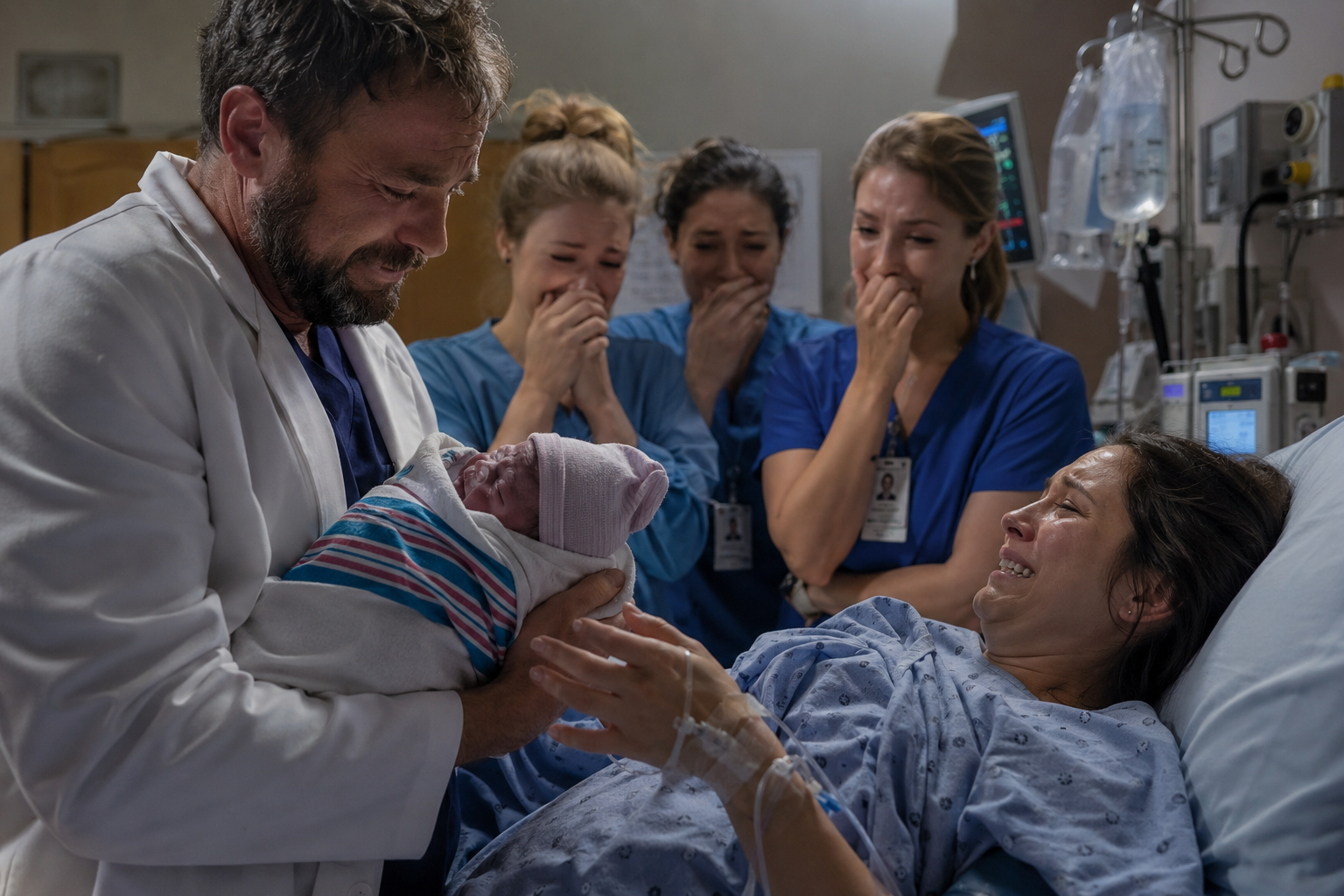
The rain was relentless the morning Joanna checked into St. Jude’s. She carried nothing but a duffel bag and a heavy silence.
There was no frantic husband parking the car, no anxious grandmother pacing the waiting room. Logan had vanished into the night months ago, leaving behind an empty closet and a text message that read: I can’t do this. She hadn’t wasted energy on tears; she had spent it surviving, working late shifts at the pharmacy, and prepping a nursery out of a converted walk-in closet.
“Any emergency contact we should call?” the admissions clerk asked, not looking up.
“Just me,” Joanna replied, her voice steady despite the sharp contraction tightening her abdomen.
The labor was a blur of fluorescent lights, cold apple juice, and the rhythmic thump-thump of the fetal monitor. Joanna didn’t scream. She channeled all her isolation into a quiet, stubborn focus. When the final push brought her son into the world at dawn, his loud, indignant wail felt like a victory march.
“A healthy baby boy,” the midwife beamed, cleaning him up.
Joanna reached out, her arms aching to hold him, when the chief of pediatrics stepped in for the routine newborn assessment. Dr. Thomas Vance was a man etched in stone—graying hair, a stern jaw, and a reputation for absolute clinical detachment.
He approached the bassinet, chart in hand. But as he looked down at the infant, the chart slipped from his fingers, clattering loudly against the linoleum floor.
Dr. Vance stumbled back a step. The color vanished from his lips. He didn’t just mist up; a sob wrenched itself from his chest, staggering the nurses who had worked alongside him for a decade. He stared at the baby’s right shoulder, where a uniquely shaped, jagged birthmark sat—resembling a crescent moon.
It was the exact birthmark his own runaway son, Logan, had been born with.
As the doctor looked from the child to the exhausted woman in the bed, the pieces of a fractured family tree violently collided in the quiet room.