The War Behind Closed Doors
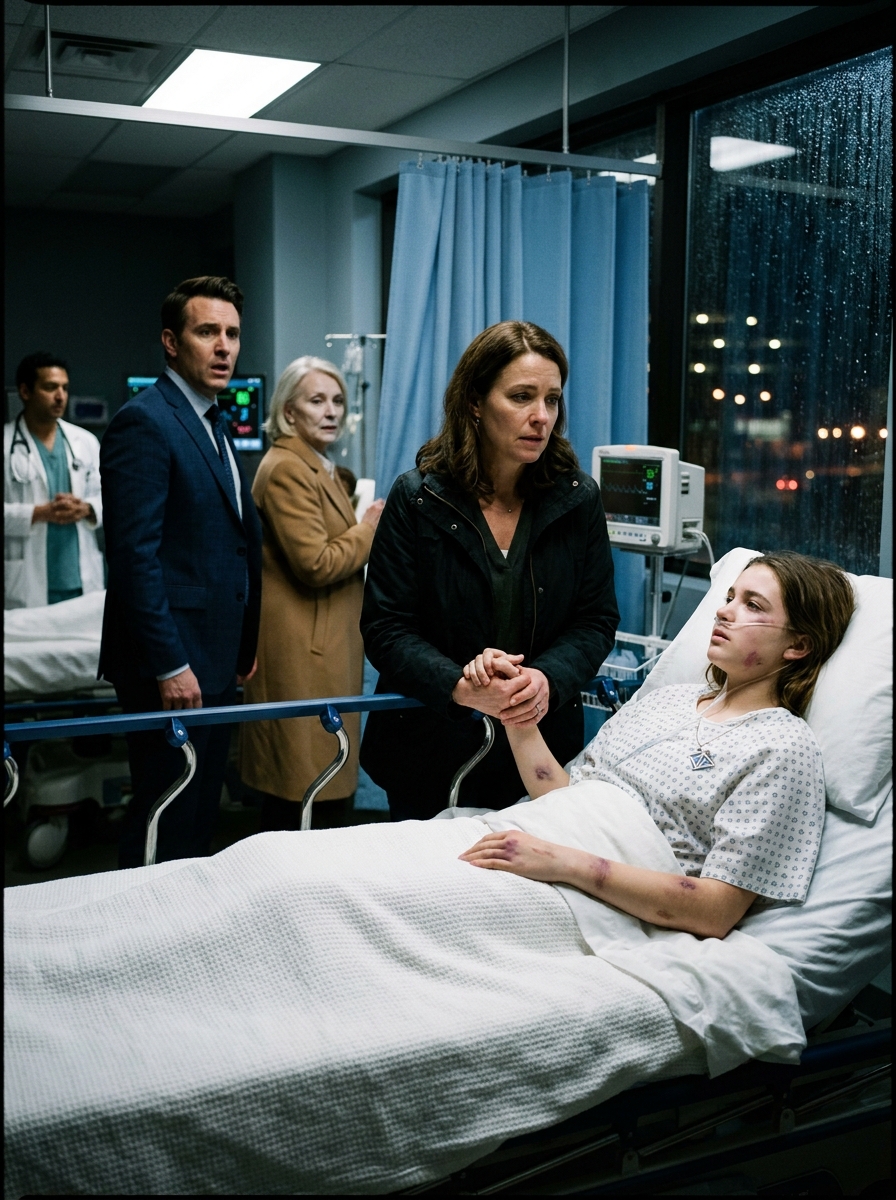
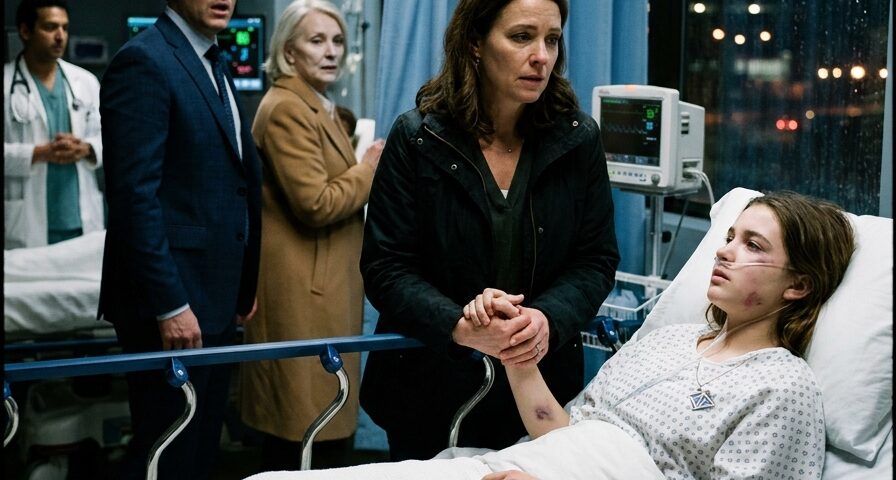
By eight the next morning, Russell had already begun rewriting reality. He sent carefully worded messages to relatives saying Hallie had experienced a “serious emotional episode.” He contacted two physicians who had worked with Carrington Health Ventures and asked them to review records they had no legitimate reason to see. His public relations director prepared a statement about a private family matter. Patricia called three of my closest friends and spoke to them in a trembling voice about how worried she was for me. “Joanna has been under pressure for years,” she told one of them. “I’m afraid she’s losing perspective.” I knew because my friend recorded the voicemail and sent it to me. I sat beside Hallie’s hospital bed while my phone filled with messages, and for perhaps the first time in my adult life, I did not rush to defend myself. That surprised even me.
For years, I had believed every accusation required an immediate answer. Russell understood that about me and used it well. He would provoke, I would react, and then he would calmly point to my reaction as proof that I was the unstable one. So I stopped reacting. I began documenting. At ten fifteen, Russell entered Hallie’s room with two attorneys. He did not knock. One lawyer carried a thick folder; the other held a tablet. “I’ve filed an emergency petition seeking temporary decision-making authority over Hallie,” Russell said. “Given your current emotional condition, it’s the responsible thing to do.” I almost admired the speed. Almost. The older attorney placed several documents on the table. “Mrs. Carrington, we’re also prepared to offer a private family resolution. There would be confidentiality provisions, of course.” I looked from him to Russell. “A private resolution for whom?” “For everyone,” Russell replied. “That isn’t what I asked.”
He pulled a chair closer and sat down, lowering his voice. “Joanna, be practical. You’ve been out of professional life for years. The townhouse is controlled through my company trust. Most of our social circle knows me. The hospital board knows me. Hallie is still a minor, and right now she needs a stable parent.” There was a time when those words would have frightened me. Instead, I took the documents, turned to the final page, and signed only the line acknowledging receipt. Russell frowned. “What are you doing?” “Confirming that your attorneys personally delivered these papers less than twelve hours after our daughter entered the hospital.” He stared at me. I slid the folder into my bag. “Thank you. The timeline is useful.”
That afternoon, the hospital’s safeguarding team restricted Russell’s access while the matter was reviewed. A social worker spoke privately with Hallie. Dr. Whitaker documented his observations with the precision of a man who understood that every word might someday be read aloud in court. Near midnight, when the hall had finally quieted, Hallie and I reviewed the recording from the pendant. The video was unsteady because the device had moved against her shirt, and portions showed little more than furniture and the edge of a bookcase, but the sound was unmistakable. Russell’s voice came first. “You’re going to tell the therapist your mother pressures you. You’re going to say she fills your head with stories about this family.” Then Hallie: “But that isn’t true.” Russell again, louder now: “You have no idea what’s true. Your mother is going to lose everything if she keeps fighting me.” A moment later, Patricia’s voice entered the recording. “Keep the phone ready. We need to show how unstable the girl becomes.”
Hallie turned away from the screen. I paused the video. For several seconds neither of us spoke. Then she asked the question that I suspect many young people ask after adults have failed them badly enough. “Will anyone believe me now?” I reached for her hand. “Yes.” She studied my face. “How do you know?” “Because this time we’re not asking them to choose between your word and his reputation.” I thought that was the most important discovery of the night. I was wrong.
While reviewing the footage frame by frame, I noticed a burgundy binder lying open on Russell’s desk. The camera had captured it for less than two seconds, but the image was clear enough to reveal a spreadsheet and the heading CARRINGTON STRATEGIC DISBURSEMENTS. I enlarged the frame. There were names. A private psychiatrist. A family-court consultant. A physician connected to one of Russell’s foundations. Several payments routed through small consulting firms. And beside my own name were three words that made my hands go cold: CAPACITY REVIEW — PHASE II. I knew the language because I had seen versions of it in financial investigations years earlier. It was deliberately vague, designed to make improper payments resemble legitimate professional services. The pendant had captured something larger than one terrible evening. Russell had been building a case against me.
By dawn, I had reconstructed enough from old emails, trust statements, insurance files, and unexplained transfers to understand the outline. My late father had left me a substantial portfolio of commercial property and municipal bonds, held separately from my marriage. Russell could not simply take those assets. But if I were declared legally incapable of managing my affairs, a court-appointed arrangement could place enormous influence in the hands of people he had already positioned as “independent professionals.” Hallie was another obstacle. In fourteen months, she would turn eighteen and could contradict everything. Russell needed both of us discredited before then. I sat in the blue hospital light and remembered the woman I had once been—the investigator who followed transactions across shell companies, who knew that respectable stationery could hide ugly intentions, who had learned never to focus only on the loudest person in the room.
At six twelve that morning, I called Margaret Doyle, a former colleague who now supervised a special investigations team for the state. She answered on the fourth ring. “Joanna? Do you know what time it is?” I looked at Hallie sleeping beside me. “Yes.” My voice was steadier than I expected. “And I need you to listen before anyone connected to Carrington Health Ventures starts making calls.”