After i lost my wife, i spent ten years driving to every birthday…
After My Wife Died, My Family Forgot Me. On My Birthday, Nobody Came… So I Vanished. One Year Later…
Nobody came.
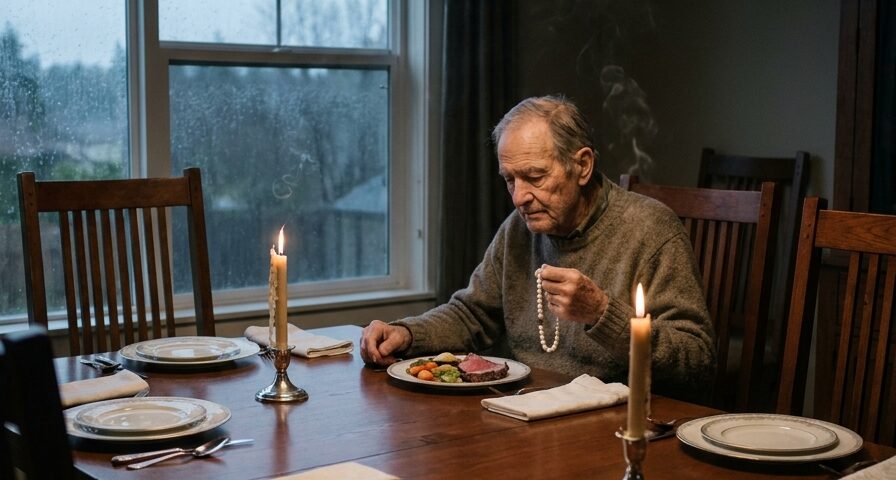
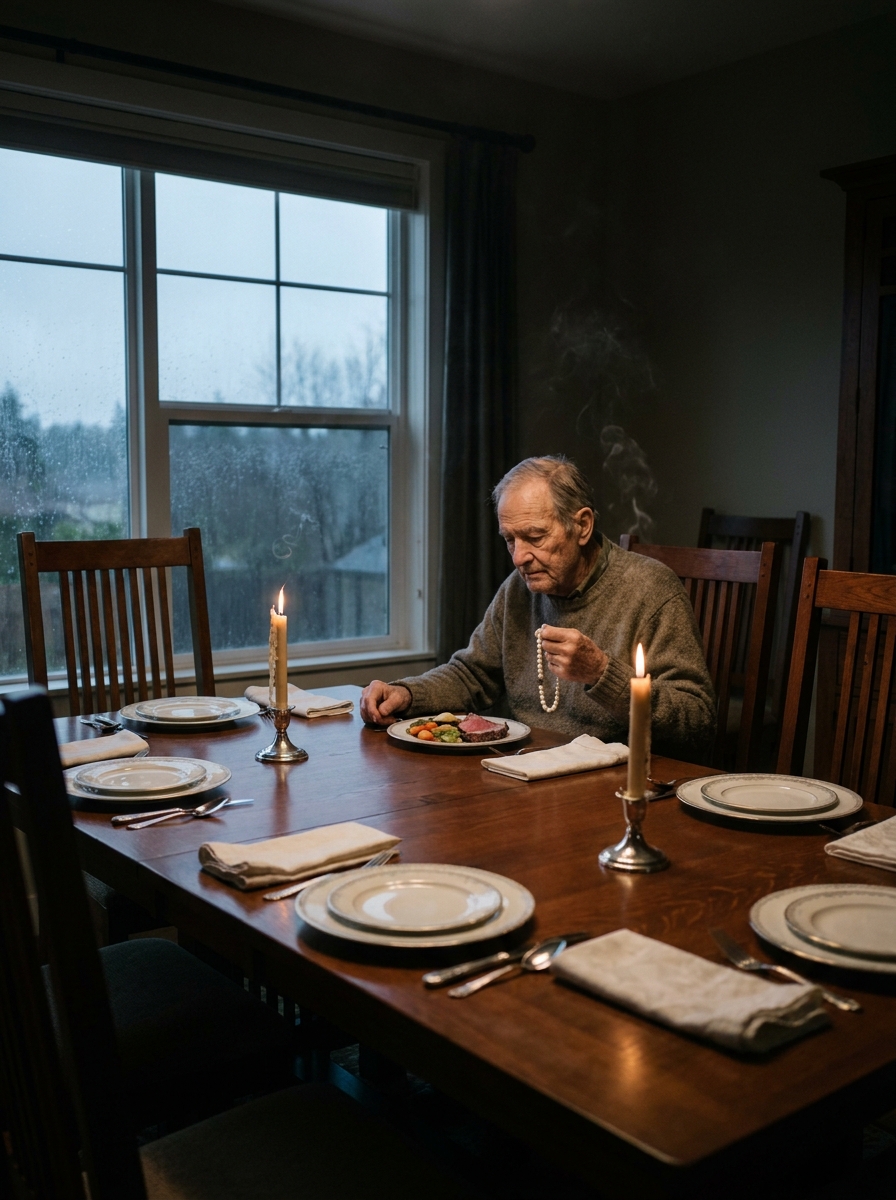
That is the sentence I kept hearing in my head long after the candles burned low, long after the roast cooled in the kitchen, long after the good china sat untouched beneath the yellow dining room light.
Nobody came.
My name is Walter Briggs. I am sixty-nine years old now, which means I was sixty-eight when it happened. By then, I had been a widower for ten years. I had also been, for every one of those ten years, the reliable one. The one who drove. The one who brought food. The one who called first. The one who showed up.
And on a Saturday evening in March, I cooked a full birthday dinner, set my dining room table in the Broad Ripple neighborhood of Indianapolis for seven people, and waited four hours.
No one knocked.
No one rang the bell.
No one pulled into the driveway.
But the birthday dinner only makes sense if you understand the ten years that came before it.
My wife, Carol, died on a Tuesday in April.
She was fifty-eight years old.
Pancreatic cancer. The fast kind. The kind that does not knock politely or leave much room for bargaining. It announces itself when it is already finished making plans and has moved straight into execution.
We had eleven weeks from diagnosis to the end.
Some days I call that a mercy.
Some days I call it cruelty.
Most days, if I am honest, it was both.
Carol was the social center of our family. Not loudly. Not in that performative way some people have, where they make every room orbit around them. Carol did it quietly. Naturally. She remembered birthdays without looking at a phone. She knew what our grandchildren were studying in school, what they were afraid of, what they wanted to be when they grew up, and whether that answer had changed since Thanksgiving.
She remembered that my brother Dennis’s wife, Karen, once mentioned she wanted to learn how to make pie crust. Four years later, Carol found a class, signed them both up, and drove Karen there herself.
That was Carol.
She did not just love people. She attended to them.
She noticed.
And the thing nobody told me about losing a woman like that is that after she is gone, people do not simply miss her. They also lose the person who had been holding the entire family together without asking for credit.
I learned that slowly.
Painfully.
Over months.
Everyone had been relying on Carol to do the remembering, the calling, the checking in, the inviting, the planning, the softening of every sharp edge.
And when she was gone, nobody picked it up.
Nobody.
What they did instead was allow me to become a substitute for her. Imperfectly. Quietly. Without acknowledgment.
For ten years.
The first Christmas after Carol died, I drove forty minutes to my daughter Patrice’s house in Fishers with a ham I had cooked from Carol’s old recipe. I brought a bottle of wine I chose carefully because I remembered what Dennis liked. I brought presents for the grandchildren that I had wrapped myself for the first time in my adult life, because Carol had always done the wrapping.
Nobody thanked me for the ham.
Nobody noticed the wine.
The presents were opened, the paper went into a trash bag, and the conversation moved on.
I drove home at nine that night with a foil-covered plate on the passenger seat and the radio turned low because the silence felt too large.
The following Easter, I cooked again and drove again.
On Mother’s Day, I brought flowers to Patrice’s house and watched my son-in-law, Greg, accept them on her behalf because she was busy on the phone.
Father’s Day came, and nobody called until seven in the evening. When Patrice finally did call, she sounded like someone checking an item off a list.
Thanksgiving.
Christmas.
Birthdays.
Graduations.
First communions.
School plays.
I went to all of them.
Every one.
Not once in ten years did anyone drive to my house in Broad Ripple.
Not once did anyone sit at my dining room table.
Not once did anyone call first and say, “Walter, what do you need?”
I want to be fair about this because fairness matters to me, and because I have had a full year to think about it without the heat of that night clouding my judgment.
Some of the non-calling was grief.
In the early years, grief disorients people. It makes them selfish in ways they do not intend and often do not recognize. I gave my family credit for that for longer than I probably should have.
Some of it was the assumption that I was fine.
I am a man who presents as fine even when I am not. That is either a strength or a coping mechanism, and at my age I suspect it is both.
But after a while, the non-calling stopped being grief.
It became habit.
And habits, if nobody challenges them, become expectations.
What my family had developed over ten years was a quiet expectation that Walter would show up. Walter would bring food. Walter would ask how everyone was doing. Walter would drive home alone. Walter would be there next time.
Walter was reliable that way.
My sixty-eighth birthday fell on a Saturday in March.
That year, I decided to try something different.
I called Patrice in January and told her I wanted to host a birthday dinner at my house. Not asking her to organize it. Not hinting. Not waiting to see if anyone remembered.
I was organizing it myself.
I invited her, Greg, their two children, Dennis, and Karen.
Seven people, including me.
I had the menu planned. I had the date clear. I confirmed with everyone individually.
Patrice on a Tuesday.
Dennis on a Thursday.
Greg by text, because that is how Greg communicates.
All three said yes.
I bought groceries on Friday morning. I spent Friday afternoon and Saturday morning cooking. A roast. Roasted vegetables. Carol’s potato recipe. A cake from scratch, using a method I had found online and practiced twice in the weeks before because I did not want it to taste like a man had made it alone for the first time.
I set the dining room table properly.
The good china.
The cloth napkins Carol kept in the bottom drawer of the sideboard.
The ones she reserved for occasions.
I set the table for seven.
At five-thirty, thirty minutes before the time I had given everyone, I lit the candles.
Six o’clock came and went.
Then six-thirty.
Then seven.
At seven-fifteen, I called Patrice.
Voicemail.
I left a message that I am proud of in retrospect. Calm. No accusation. Just, “Hey, are you on your way?”
Seven-thirty.
Eight.
At eight-thirty, I called Dennis.
He answered on the third ring with the voice of a man sitting comfortably at home watching television. The voice of a man who had not recently thought of anything that required him to be elsewhere.
“Walter,” he said. “What’s up?”
What’s up.
I looked at the table.
The good china.
The cloth napkins.
The candles that had been burning for three hours.
Seven place settings, not one of them disturbed.
“The birthday dinner,” I said. “I had it down for tonight.”
There was a pause.
The pause of a man who does not remember and is now deciding what to do with that fact.
“Oh,” he said. “Yeah, we had… Karen’s thing ran long, and we just figured we’d catch you next time.”
“Karen’s thing?”
“Her book club,” he said. “It went late.”
I looked at the table again.
At the roast I had rested properly.
At the cake I had made twice before getting it right.
At Carol’s empty chair.
“Okay,” I said. “Thanks for letting me know.”
I hung up.
Then I sat at the table alone and ate a plate of the food I had made.
And it was good food.
It deserved better than that evening.
I ate slowly.
When I finished, I blew out the candles, covered the dishes, and sat in the dark dining room for a while.
The house made its small nighttime sounds around me. The refrigerator hummed. The old floorboards shifted. A car passed outside, headlights briefly sliding along the wall.
And in that quiet, something in me settled.
Not broke.
Settled.
This is the last time, I thought.
Not angry. Not dramatic. Just clear in the way things become clear when you have finally allowed yourself to see them whole.
This is the last time I set this table for people who will not come.
The following Monday morning, I called a real estate agent named Linda. She worked at a firm on College Avenue in Broad Ripple.
I had done enough research over the weekend to know what the house was worth. It was a good house in a good neighborhood. A three-bedroom craftsman I had owned for twenty-two years and maintained carefully because Carol had loved it, and then because it was mine.
Linda came Tuesday morning.
She walked through the rooms with a clipboard, speaking gently because good agents can tell when a house is not just a house.
When she finished, she gave me a number.
“That is the number I want,” I told her.
“It might take two or three months in this market,” she said.
“If it takes longer than thirty days,” I told her, “I will reduce the price until it moves.”
She looked at me carefully.
“Are you sure about this?”
I stood in the living room where Carol used to read on Sunday afternoons, where the grandchildren had once built forts out of couch cushions back when they were small enough to fit under them.
“I have been sure about very few things in my life,” I said. “I am sure about this.”
I did not tell Dennis.
I did not post anything online. I hardly had any online presence to speak of, which may have been a personal failing in some years, but in this case was clearly an advantage.
I packed what I wanted.
I donated what I did not.
Carol’s jewelry, her pearl necklace, her engagement ring, two sets of earrings she wore regularly, I wrapped carefully in tissue paper and placed in a small wooden box. That box went with my own things.
They were not furniture.
They were not house contents.
They were hers.
Therefore, they were mine to carry.
Not available for distribution.
I closed every bank account at the old branch and opened new ones at a different institution. I did not forward my mail. I left no forwarding address.
On April fourteenth, exactly ten years and three days after Carol died, I loaded the last boxes into the back of my truck.
Then I drove out of the Broad Ripple neighborhood of Indianapolis for the last time.
I did not look back.
Not because I was angry.
Because there was nothing behind me that required a second look.
I had a destination.
I had a plan.
I had Carol’s jewelry box on the passenger seat and eleven hundred miles of road ahead of me.
That was enough.
Bend, Oregon, is not a place most people in Indianapolis think about much.
It sits in the high desert of central Oregon, east of the Cascade Mountains. The winters are cold, dry, and bright, not gray and damp like Indiana. The Deschutes River runs through the city. On clear days, the mountains appear from almost anywhere in town. The Three Sisters. Broken Top. Mount Bachelor.
And clear days in Bend are more rule than exception.
Carol and I had driven through Bend once in 2009 on a road trip for our thirtieth anniversary. We had stopped for coffee and ended up walking by the river longer than planned. Carol had looked out the car window at the mountains and the high desert light and said, “If I were starting over somewhere, it would be here.”
She had not been starting over.
She had been passing through.
But I had filed the remark away the way I file things that matter.
Ten years later, sitting alone at a dining room table with seven place settings and no guests, I remembered it.
I arrived in Bend on a Thursday afternoon in April.
I had rented a furnished apartment on Franklin Avenue near Drake Park. It had a small balcony, enough space for a chair and a little table. I sat there with a cup of coffee that first evening, looked toward the mountains, and thought, Hello.
Just that.
Hello.
I did not know a single person in Bend, Oregon.
I was sixty-eight years old. Recently retired from twenty-eight years as a civil engineer with the city of Indianapolis. Financially stable because of a pension, careful savings, and the sale of the house.
I had no obligations to anyone within eleven hundred miles.
I will tell you honestly, it was the most frightening and most relieving morning of my life.
And those two feelings existed together without contradiction.
The first three months were quiet in ways I had not anticipated.
Not lonely, exactly. I have always been comfortable with my own company, which is either a gift or a warning sign. In this case, it became a gift.
I walked the river trail in the mornings.
I cooked real food for myself because I like cooking and had spent too many years doing it only for other people. I discovered that cooking for yourself without an audience has its own quiet pleasure.
I read.
I slept better than I had in years.
In July, I walked past a building on Hawthorne Avenue with a sign in the window.
Bend Woodworking Co-op. Members welcome.
I had done woodworking as a hobby for fifteen years. Furniture, mostly. Small pieces. The kind of work that requires patience and precision and rewards both.
I had stopped after Carol died. Partly because I had been too busy showing up for other people, and partly because the workshop in the Broad Ripple house felt too quiet without her moving around in the rooms beyond it.
I walked in.
The co-op had twelve members. They ranged in age from thirty-one to seventy-four. They had a shared workshop space, shared equipment, and a monthly meeting where people showed what they were working on and helped one another solve problems.
It was the kind of conversation that happens naturally when people are doing something with their hands and are not performing.
I paid the monthly fee.
I started coming on Tuesday and Thursday mornings.
Within six weeks, I had been invited to a member’s birthday dinner at a restaurant on Bond Street, attended a weekend river camping trip organized by three co-op members and their families, and been given the unofficial title of the guy who brings coffee because I started arriving early with a thermos.
Nobody assigned me that role.
I chose it freely because I wanted to.
That was the difference.
One Tuesday morning in August, I was pouring coffee for a thirty-four-year-old furniture maker named Tom, who had just finished his first dovetail joint and was unreasonably proud of it.
Choosing it because you want to, I thought.
That is the difference.
In September, I set up a table at the Bend Farmers Market on NW Hawthorne Avenue and began selling small pieces. Cutting boards. Side tables. A set of stools made from reclaimed pine.
I priced them honestly, not cheaply.
The second Saturday, a woman appeared at my table and stood looking at a small side table I had finished in tung oil.
Her name was Ruth.
She was sixty-two, recently retired, and had moved to Bend from Portland two years earlier for roughly the same reasons I had moved from Indianapolis. A life that needed more air in it. A place that looked like it might provide some.
She had the quality of someone who had made a considered decision and was at peace with it.
She looked at the table, then at me.
“Did you make this?”
“I did.”
She turned it over carefully, examined the joinery, and set it back down.
“Do you take commissions?”
I hesitated.
“I do now.”
She laughed.
A direct, unperformed laugh.
Then she bought the table and left her number.
She called three days later about the commission.
Then she called again the week after that about something she had read and thought I would find interesting.
Eventually, she showed up at the co-op one Tuesday morning with her own thermos of coffee and said, “Tom told me you get here early. I’m an early person too.”
She was, as it turned out, a person who called first.
I want to tell you how significant that sounds to a man who spent ten years being the one who always called first.
It does not sound like a small thing.
It sounds like something you did not know you needed until someone gives it to you.
Ruth became my first commission customer, then my second genuine friend in Bend, and then something I will say plainly and without performance: my first real companionship since Carol.
Not a replacement for Carol.
Nothing like that.
Nobody replaces the person who knew the map of your life from the inside.
But Ruth was a person who chose me freely. She showed up at my door without being asked. She called first. She listened in the way people listen when they are not waiting for their turn to speak.
I did not know yet what would come of it.
What I knew was that it felt nothing like setting a table and waiting.
It felt like being met.
The call came in March, eleven months after I left Indianapolis.
Eleven months of silence from my family, which I want to note was not entirely surprising.
If you are only present in someone’s life as a function, the disappearance of the function tends to be noticed before the disappearance of the person.
Dennis called a cell phone number I had kept active for exactly this reason.
Not to be found.
To document the finding.
“Walter.”
His voice had an unfamiliar quality. Not grief. Not urgency. Something closer to inconvenience.
“I’ve been trying to reach you for a month. Why haven’t you called back?”
Dennis had my email address. He had not emailed. He had my cell number and apparently had tried it several times, which is the kind of effort that arrives eleven months late and expects to be credited.
“I’ve been busy,” I said.
“Busy?” he repeated. “Walter, we’ve been trying to find you. Patrice’s husband drove to your house and some strangers answered the door.”
“I moved.”
“We know you moved. Where did you move?”
“Away.”
There was a pause.
“What does that mean?”
“It means I live somewhere else now.”
“Where?”
“Somewhere healthy,” I said. “I’m settled. I’m enjoying myself.”
“Why didn’t you tell anyone?”
I thought about the good china. The cloth napkins. The candles that had burned for three hours. Seven place settings, not one of them touched.
“I didn’t think anyone would notice for a while,” I said.
A longer pause.
Then Dennis said, “Walter, we need to talk about Carol’s jewelry.”
There it was.
Not, We were worried about you.
Not, We are sorry we missed your birthday.
Not, We have not called in a year, and we know it.
Carol’s jewelry.
“The pearl necklace and the engagement ring,” Dennis continued. “Patrice has been asking about them. We assumed they were in the house when you sold it.”
I closed my eyes for a moment.
The pearl necklace.
The engagement ring.
“The jewelry is with me,” I said.
“Patrice thought it should be discussed as a family.”
“Dennis,” I said.
He stopped.
“You called me after eleven months of silence to ask about a necklace.”
The line went quiet.
“I want you to think about that,” I said. “Not for me. For yourself. Think about what that call says about what the last eleven months have been. Think about what it says about the ten years before them.”
I let the silence sit there.
“Carol wore that necklace to our wedding,” I said. “She wore it to every significant occasion of our life together. It is on my dresser right now in the apartment where I live, and I look at it every morning. It is not a family asset. It is a memory of a woman I loved for thirty-two years, and it came with me because it was mine to take.”
Dennis did not answer.
“If you want to talk,” I said, “call me about something that matters. I will answer.”
Then I ended the call.
I put the phone down on the workbench, picked up the sandpaper, and went back to the piece I had been working on.
Some things do not require a raised voice.
They only require the other person to hear themselves clearly, perhaps for the first time, in the silence after you have stopped explaining yourself.
Patrice called three days later.
I had been expecting it.
When Dennis reports back to Patrice, Patrice acts. That had been the family dynamic for as long as I could remember, and apparently eleven months of my absence had not altered it.
She called on a Wednesday evening. I was in the workshop finishing a commission piece, a small writing desk in white oak for a woman named Sandra who lived in Tumalo, just outside Bend. Sandra had been patient with the timeline because she understood good work takes the time it takes.
I answered.
“Dad.”
Her voice had the quality of someone who had rehearsed an opening and was now delivering it.
“Where are you? Are you okay? We’ve been worried.”
“I’m in Oregon.”
“Oregon?” she repeated.
“Bend, Oregon,” I said. “It’s beautiful here.”
“Dad, why didn’t you tell anyone you were moving? We didn’t know if you were…”
“If I was what?” I asked.
A pause.
“We didn’t know if something had happened.”
“Something did happen,” I said.
She went quiet.
“I had a birthday dinner in March. I cooked for seven people. Nobody came. Not you. Not Greg. Not your kids. Not Dennis. Not Karen. Nobody called to explain until eight-thirty that evening, when Dennis told me Karen’s book club had run late.”
Silence.
“Dad, that was… We should have called. I know that.”
“You should have come,” I said. “But that is not the point anymore.”
“What is the point?”
I thought about how to answer that honestly.
“The point,” I said, “is that for ten years, I drove to every birthday and every holiday and every graduation. I cooked every dish I brought to your house. I called first every time. And in ten years, not once did you drive to Broad Ripple to sit at my table.”
I let that land.
“I am not angry, Patrice. I was sad for a long time. Now I am just living somewhere else.”
She was quiet for a while.
“Where in Oregon?” she asked again, softer this time.
“Bend. Central Oregon. East of the Cascades.”
“Can I come visit?”
I looked around the workshop. At the piece I was sanding. At the curls of wood on the floor. At the new life I had built quietly, with no audience.
“Yes,” I said. “You can. But you would have to drive to me.”
She came in May.
She flew into Portland, rented a car, and drove the three hours over the mountains to Bend on a Friday afternoon. She arrived at my apartment on Franklin Avenue at five-thirty with a bottle of wine and the slightly overwhelmed expression of someone seeing her father’s new life for the first time and not knowing what to expect.
She had not told me she was bringing anyone because she was not bringing anyone.
No Greg.
No kids.
Just Patrice, a rental car, and a bottle of wine.
“You look good,” she said, standing in my doorway.
“I feel good,” I told her.
I showed her the apartment first. Simple. Well organized. The pieces of furniture I had made visible on shelves and beside chairs.
I showed her the workshop I had rented on Industrial Way, a small space I moved into after the commissions started coming regularly enough to justify it.
I showed her a photograph Tom had taken of my farmers market table one Saturday morning, the mountains visible in the background, my pieces arranged in the foreground.
She was quiet through most of it.
It was the quiet of someone absorbing something she had not fully imagined.
That evening, we had dinner at a restaurant on Bond Street.
Ruth joined us.
I had told Ruth about Patrice’s visit, and she had offered to give us space. I said no.
“Come,” I told her. “It will be good.”
It was.
Ruth and Patrice talked for two hours.
At one point, Patrice looked at me across the table with an expression I had not seen on her face before. Something between recognition and grief.
“You’re happy,” she said.
“Yes,” I told her.
“I didn’t know you were unhappy before.”
“I wasn’t unhappy,” I said. “I was invisible. Those are different.”
On her last evening, we sat on the balcony of my apartment after dinner. The mountains were turning pink in the late light. The air had that high desert quality that still feels remarkable to me every time. Dry and clean and thin in a way you notice with every breath.
“I’m sorry about the birthday,” Patrice said.
“I know.”
“I don’t mean just that one,” she said. “I think I let a lot of years go by where I assumed you were fine and didn’t check.”
I looked at the mountains.
“Your mother used to check,” I said. “She checked on everyone. When she was gone, nobody picked it up.”
“I think everyone assumed someone else was doing it.”
“Including me,” I said.
She looked at me.
“I assumed if I kept showing up, eventually someone would show up for me. That was my mistake too.”
“What do I do with that?” she asked.
“You call first,” I said. “Not because I need you to. Because that is how relationships work. Someone calls first.”
She nodded.
“Can I come back?” she asked. “In the fall, maybe. Bring the kids?”
“I would like that,” I said. “Call first.”
She laughed.
The first real laugh of the weekend.
The kind that breaks something loose.
“I’ll call first,” she said.
Here is what I have learned in sixty-nine years, and in the last year most clearly.
Presence is a gift.
Not just the presence of showing up, but the presence of being present in return. Of calling first. Of driving to someone else’s house for once. Of remembering that the people who always show up are not doing so because they have nothing better to do.
They are showing up because they love you.
And love is renewable, yes, but it is not infinite. It does not renew itself automatically when nobody tends to it.
For ten years, I tended a relationship with my family that they had largely stopped maintaining.
I did not do this because I was a fool, though I was slow.
I did it because I loved them. Because Carol would have done it. Because the alternative, stopping, felt at the time like loss rather than liberation.
What I did not understand until that Saturday night in March, with seven place settings and no guests, was that I had already lost something.
Not my family entirely. You can lose the active version of a relationship and still recover it if both people choose to.
What I had lost was ten years of the version of myself that deserved to be shown up for.
I got that version back in Bend.
The pearl necklace is on my dresser in the apartment on Franklin Avenue. I look at it sometimes in the mornings when I am getting dressed.
Carol wore it to our wedding and to every significant occasion after that.
It carries her in the way small objects carry people.
Not completely.
Not painlessly.
But truly.
I will decide what to do with it when I am ready.
Not when Patrice asks.
Not when Dennis implies.
Not when the family decides it should be distributed according to someone else’s timeline.
When I am ready.
That is the other thing I have learned.
The timeline is mine.
The decisions are mine.
The address is mine.
It is not available to people who only started wondering where I lived when they wanted something I might have left behind.
Dennis has not called again.
I am not angry about that.
I am not waiting for it either.
If he calls, I will answer.
If he does not, I will walk the river trail in the morning, go to the workshop on Tuesday and Thursday, take my table to the farmers market on Saturday, have dinner with Ruth on Friday evenings, and be present, genuinely present, in a life I built on purpose.
The thing beneath the dinner nobody came to, the house that sold in thirty days, and the eleven hundred miles of road is simpler than revenge and more durable than any confrontation I could have had.
You are allowed to stop.
You are allowed to stop driving to people who never drive to you.
You are allowed to stop calling first to people who never call.
You are allowed to stop setting the table for people who have decided your table is not worth sitting at.
This is not coldness.
It is not cruelty.
It is the recognition that your time, your presence, and your effort are not obligations you owe simply because someone shares your last name.
They are gifts.
And gifts given freely are beautiful.
Gifts demanded by people who have stopped noticing them are something else entirely.
When you stop, two things will happen.
Some people will not notice, and that will tell you something true about what you were to them.
Some people, like Patrice flying into Portland with a bottle of wine and three hours of mountain road ahead of her, will drive to you.
Those are the people worth setting the table for.
Set it for them.
Leave the others to figure out what happened to the address.
The mountains are still pink at this time of evening.
The river is two blocks away.
Ruth is coming for dinner on Friday.
And this time, I am setting the table for someone who already called first.