PART 2: Everyone Judged the Housekeeper for “Having Three Children by Three Men”—But on Her Wedding Night, Her Husband Discovered the Truth Beneath Her Clothes
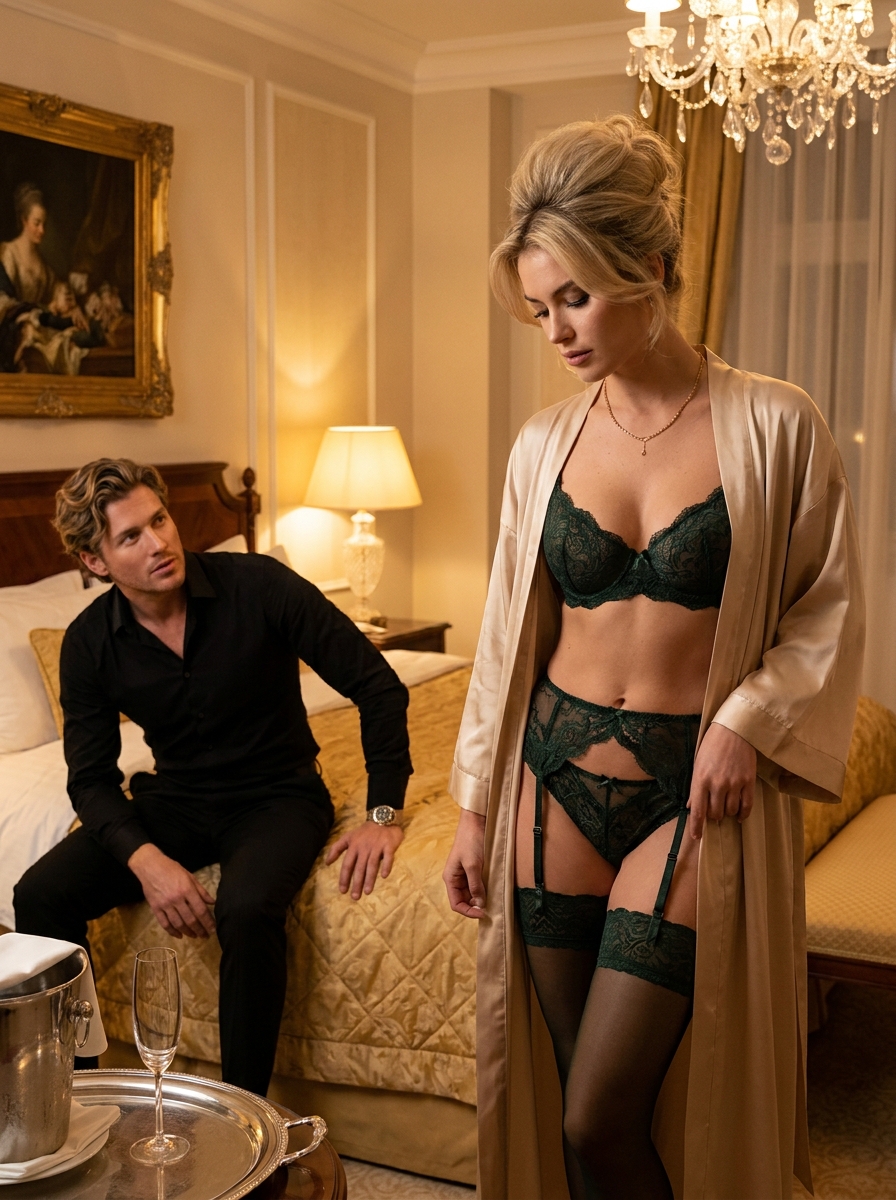
A faint vertical scar that had healed badly because I had gone back to work before I was ready.
Nathan’s eyes moved over them slowly, not with disgust, but with dawning confusion. His face changed in a way I had never seen before. The calm certainty that made boardrooms fall silent disappeared, and in its place stood a man realizing that the story he had accepted about me had only been the thinnest cover over something much deeper.
“Emily,” he whispered. “What happened to you?”
I pulled the robe closed by instinct.
The movement hurt him. I saw it in his eyes.
He stepped back immediately, raising both hands gently.
“I’m sorry,” he said. “I didn’t mean to frighten you.”
“You didn’t.”
But my voice sounded small, even to me.
For a moment, neither of us moved. The master bedroom, with its silk curtains and polished antique furniture, felt too large around us. I had cleaned that room a hundred times before I ever slept beneath its roof. I knew every framed painting, every drawer pull, every quiet shadow in the corner.
But that night, standing barefoot before my husband, I felt like a stranger inside my own life.
Nathan sat slowly on the edge of the bed, giving me space. He did not reach for me. He did not demand an explanation. He simply looked at me with a tenderness that made it harder to stay silent.
“You don’t have to tell me tonight,” he said quietly. “But please don’t hide because you think I would love you less.”
My throat tightened.
I had promised myself I would tell him after the wedding. I had rehearsed the words over and over while folding linens, while sending money orders, while lying awake in the small room above the garage that had once been mine. But practice had not prepared me for the reality of his patience.
Rumors were easier to survive than kindness.
I sat in the chair near the window and folded my hands tightly in my lap.
“Johnny, Paul, and Lily,” I said.
Nathan looked up.
“My children,” I continued, and the old phrase tasted strange in my mouth because it was not a lie, but it had never been the truth people imagined. “That’s what everyone calls them.”
Nathan’s expression stayed open.
“Are they not your children?” he asked.
“They are mine,” I said. “Just not in the way people think.”
Outside, the gardens were dark except for the soft lights along the stone path. Somewhere beyond the glass, the fountain moved steadily in the night. For years, that sound had accompanied my late shifts. Tonight, it sounded like time itself, patient and waiting.
I drew a breath.
“Johnny is my brother,” I said. “Paul is my cousin. Lily is my sister.”
Nathan did not interrupt.
“They were children when I left West Virginia,” I continued. “Johnny was twelve. Paul was ten. Lily was eight. I was eighteen.”
Nathan’s brow furrowed. “Then why did everyone say—”
“Because I let them.”
The confession came out more sharply than I intended.
He leaned forward slightly. “Why?”
I looked down at my hands. They were clean, but I could still remember them smelling of hospital soap and coal dust, of cheap lotion and instant coffee, of all the small survivals that had shaped me before Greenwich.
“Because the real story was too hard to explain,” I said. “And because people are kinder to children in rumors than they are to poor families in trouble.”
Nathan absorbed that in silence.
I had loved that about him before I allowed myself to love him. He did not rush to fill quiet spaces with his own opinion. He let silence become a room where someone else could gather courage.
“My mother died when Lily was eight,” I said. “Cancer. Fast at the end, slow before that. My father had already been gone for years. He worked in a mine and never came home after a collapse. We had grandparents once, but age and bills had worn them thin. After Mom died, there was no one steady left.”
Nathan’s face softened.
“I was the oldest,” I continued. “So I became the adult.”
“At eighteen,” he said softly.
I nodded.
“At eighteen, I signed forms I barely understood. I sat across from social workers pretending I wasn’t terrified. I learned which neighbors could be trusted with a casserole and which ones only wanted a story to tell. I took shifts cleaning motel rooms, then waitressed at night, then cared for my mother’s sister when her drinking got bad because Paul had nowhere else to go.”
I looked toward the mirror across the room. In it, I saw the outline of a woman in a white robe, hair loose, eyes too full.
“The rumors started back home first,” I said. “Not because I had children, but because I was always seen with them. Three kids, three last names, no parents at school events. People filled in the blanks with whatever made them feel superior.”
Nathan’s jaw tightened.
“When I moved here,” I continued, “I needed work that paid enough to send money back. I thought if I kept my head down, the past would stay behind me. But one of the kitchen staff heard me on the phone telling Johnny I loved him. Then Paul. Then Lily. She asked if they were my children. I said yes.”
“You said yes,” Nathan repeated gently.
I closed my eyes. “Because by then, it felt true.”
When I opened them, he was watching me with pain in his face.
“Emily,” he said, “that isn’t something to be ashamed of.”
“I know that now.”
But I had not known it then.
I had been nineteen, then twenty, then twenty-two, alone in a world where people with clean fingernails and family lawyers could make any struggle sound like failure. It was easier to let them think I had made reckless choices than to explain that sometimes poverty made children belong to whoever stayed.
Nathan’s gaze dropped briefly to my robe.
“And the scars?”
I pressed one hand over my stomach.
“They came later.”
He waited.
“Paul got sick first,” I said. “Kidney disease. It ran quietly through his body until it didn’t. His mother couldn’t keep a job, couldn’t keep appointments, couldn’t keep herself sober long enough to argue with doctors. So I became the person who drove him to clinics and learned the names of medications.”
Nathan’s breath changed.
I continued before fear closed my throat again.
“He needed a transplant. We tested everyone who was willing. I was a match.”
Nathan’s eyes filled with shock.
“You donated your kidney?”
“Yes.”
His hand moved as though he wanted to reach for me, then stopped again, still waiting for permission.
“One of the scars is from that,” I said. “The others are from complications. Infection. Another surgery. Nothing dramatic, just expensive and painful.”
“Nothing dramatic,” he repeated, almost in disbelief.
I looked at him with a sad smile.
“When your life is already hard, even surgery becomes one more thing to schedule around work.”
His eyes closed briefly, as if the sentence wounded him.
“Nathan, don’t pity me.”
He opened his eyes.
“I don’t,” he said. “I admire you. And I’m angry that you had to carry all of that alone.”
“I wasn’t alone,” I said. “I had them.”
Johnny, who called every Sunday because he knew I worried.
Paul, who sent pictures from community college and never forgot to thank me for things I wished he did not remember.
Lily, who still cried when she was overwhelmed and pretended she did not.
They were my beginning and my reason. The three names that had become a joke in the staff kitchen were, to me, the three brightest lights in every dark season.
Nathan stood slowly, crossed the room, and knelt in front of my chair.
“May I?” he asked.
I knew what he meant.
After a moment, I nodded.
He took my hands carefully, as though they were something precious.
“I should have asked,” he said. “About them. About you. I thought accepting what I’d heard was the same as being open-minded. It wasn’t.”
That simple admission loosened something inside me.
“You were kinder than most.”
“That doesn’t mean I knew you.”
“No,” I whispered. “But you wanted to.”
He lifted my hand and kissed my knuckles.
“Then let me start now.”
The tears came quietly.
Not the desperate tears I had shed alone in hospital bathrooms, not the exhausted tears of counting bills at kitchen tables, but the softer kind that arrived when a burden realized it was allowed to rest.
Nathan did not pull me into an embrace. He let me come to him.
When I did, he wrapped his arms around me with such care that I almost forgot to be afraid of being held.
For a while, we stayed like that.
Husband and wife.
A billionaire CEO and the former housekeeper people thought they understood.
Two human beings in a quiet room, beginning with the truth.
The next morning, the mansion felt different.
Sunlight poured through the tall windows, turning the marble floors gold. Staff moved through the halls with the careful discretion that always followed major family events, but whispers traveled faster than footsteps. By breakfast, I could feel them gathering just beyond doorways.
Nathan noticed too.
He sat across from me at the long dining table, jacket off, shirtsleeves rolled to his forearms. He looked less like the man whose face appeared on business magazine covers and more like the man who had once laughed weakly from a hospital bed because I scolded him for trying to answer emails with a fever.
“You don’t have to face anyone today,” he said.
I took a sip of tea.
“I’ve been facing them for years.”
“That doesn’t mean you owe them access.”
I looked at him, surprised by how much that sentence mattered.
Before I could answer, the dining room doors opened.
Margaret Carter entered without knocking.
Nathan’s mother had the elegant severity of a woman who had never once wondered whether a room would make space for her. She wore cream silk, pearls, and a controlled expression that suggested the wedding had been something she endured for the sake of tradition rather than celebrated for love.
Her gaze landed on me only briefly before moving to her son.
“Nathan,” she said. “We need to speak.”
“We are speaking,” he replied.
Her mouth tightened.
“Privately.”
I set down my cup.
Nathan did not look away from his mother.
“Emily is my wife.”
Margaret’s eyes flicked toward me again, cool and measuring.
“So she is.”
The words contained no welcome.
A week earlier, that tone might have made me lower my head. That morning, wrapped in the memory of Nathan’s hands holding mine without judgment, I found I did not need to shrink.
“Good morning, Margaret,” I said.
Her brows rose almost imperceptibly.
“Emily.”
Nathan leaned back in his chair.
“What do you need?”
Margaret removed a folded newspaper from her handbag and placed it on the table. It was not one of the major papers, but a glossy society publication that fed wealthy households a steady diet of photographs, innuendo, and charitable announcements written like royal decrees.
On the front page was a picture from our wedding.
Nathan smiling at me.
Me looking up at him with tears in my eyes.
The headline made my stomach tighten.
CEO NATHAN CARTER WEDS FORMER HOUSEKEEPER WITH COMPLICATED PAST.
Beneath it, smaller text mentioned “ongoing questions” about my family, my background, and “three dependents in West Virginia.”
Nathan’s face darkened.
“Who gave them that?”
Margaret sat down as though she had been invited.
“That is what I’d like to know. Because the board will ask. Investors may ask. And whether you enjoy admitting it or not, reputation affects the company.”
Nathan picked up the paper and folded it once, very carefully.
“My marriage is not a corporate event.”
“When your name is on the building, everything is a corporate event.”
I felt old instincts rise inside me.
Apologize.
Make it easier.
Offer to leave the room.
Instead, I stayed still.
Nathan noticed.
His expression softened for just a second before he turned back to his mother.
“What do you want?”
“I want prudence,” Margaret said. “A statement. Something tasteful. Respectful. Clarifying that this marriage is personal and that any children from Emily’s previous life will not affect Carter family assets.”
The room went cold.
I looked at her.
She met my gaze evenly, not cruel exactly, but convinced of her own reasonableness.
“My siblings,” I said.
Margaret blinked.
“Pardon?”
“Johnny, Paul, and Lily are my siblings. Not my children.”
For the first time since entering, Margaret had no immediate response.
Nathan watched her carefully.
“I see,” she said after a moment.
But she did not look ashamed.
Only inconvenienced by new information.
Nathan’s voice was quiet.
“Did you verify any of the rumors before repeating them?”
Margaret’s jaw tightened. “I repeated nothing publicly.”
“But privately?”
Her silence answered.
I folded my hands in my lap beneath the table.
“They are good people,” I said. “Johnny works at an auto shop and takes night classes. Paul is studying respiratory therapy because nurses once kept him alive. Lily is seventeen and wants to be a teacher.”
Margaret studied me.
Something in her expression shifted, not enough to become warmth, but enough to become uncertainty.
“You raised them?”
“I helped raise them.”
“And their parents?”
“Gone or unable.”
The dining room seemed quieter after that.
Margaret looked toward the windows, where the gardens stretched beneath the soft May light.
“My husband’s youngest brother was raised by relatives,” she said unexpectedly. “After an accident.”
Nathan looked surprised.
Margaret’s mouth pressed into a thin line, as if she regretted saying even that much.
“It was considered private,” she added.
I understood then that in Margaret’s world, pain was not denied because it did not exist. It was denied because acknowledging it made lineage messy.
“I’m not asking anyone to parade my past,” I said. “But I won’t let lies define the people I love.”
Nathan’s gaze warmed.
Margaret stood.
“I will speak to the publication,” she said.
Nathan rose too.
“No. I will.”
Her eyes sharpened. “Nathan—”
“And I will not issue a statement distancing myself from Emily’s family.”
Margaret looked between us.
“You have known this woman as your wife for less than twenty-four hours.”
“I have known her character longer than I have known most people’s honesty.”
The words settled over me like a hand at my back.
Margaret’s expression gave nothing away.
Then she picked up her handbag.
“Very well,” she said. “But if there is more to this story, it is better we learn it before strangers do.”
After she left, Nathan looked at me.
“Is there more?”
The question was gentle.
Still, I felt my chest tighten.
“There are always more details,” I said. “But no hidden scandal. No secret men. No children I’m ashamed of.”
“I didn’t mean—”
“I know.”
He came around the table and sat beside me.
“I want to meet them,” he said.
I looked up quickly.
“Who?”
“Johnny, Paul, and Lily.”
Something tender and terrifying opened in my chest.
“Nathan, they aren’t polished. They’re not used to all this.”
He smiled faintly.
“Neither am I, apparently.”
I laughed despite myself.
He took my hand.
“Invite them here,” he said. “Or we can go to them. Whatever feels right.”
I thought of Lily’s small bedroom with its posters and thrift-store desk. Paul’s medical textbooks stacked beside prescription bottles he no longer needed but never threw away. Johnny’s cracked hands and guarded eyes, the way he had become too protective too young.
“They may not trust you,” I said.
“They shouldn’t have to immediately.”
That was the answer that convinced me.
Not because it was grand.
Because it was patient.
We decided to travel to West Virginia the following weekend.
Nathan wanted to go quietly, without drivers or assistants, but quiet had never been part of his life. By Monday, online speculation had bloomed like mold. Old photos appeared from my hometown. Blurry screenshots of school events, a courthouse record about guardianship, even a fundraiser from Paul’s surgery years before.
The rumors changed shape but did not disappear.
Now people asked why I had “misled” everyone.
As if silence were deception when no one had bothered to listen.
Nathan wanted to have his legal team remove every article.
Some they could.
Most they could not.
“People believe what makes them feel entertained,” I told him one evening as we sat in his study surrounded by files neither of us was reading.
“Our lives are not entertainment.”
“No,” I said. “But strangers don’t know that.”
He looked exhausted in a way he had not looked when managing billion-dollar negotiations.
“This is my fault,” he said.
“No.”
“I let the story exist around you. I benefited from being called noble for marrying you despite rumors, when the truth is I never earned that praise.”
I closed the file in my lap.
“Then earn something better now.”
He looked at me.
“What?”
“My trust.”
He nodded slowly.
“I can do that.”
“You can try,” I corrected gently.
A small smile touched his mouth.
“Yes. I can try.”
On Friday morning, we drove to West Virginia.
No motorcade. No security team visible. Just Nathan behind the wheel of a dark SUV, me beside him, the landscape slowly changing from polished suburbs to wide highways, then to mountains rising blue and familiar in the distance.
I had not brought Nathan to my hometown during our courtship. I had told myself it was because he was busy, because travel was complicated, because the wedding had happened quickly.
The truth was simpler.
I had been afraid he would see where I came from and finally understand why everyone else looked down on me.
But as we passed weathered barns, roadside diners, and hillsides glowing green after rain, Nathan seemed not disappointed, but attentive.
“This is beautiful,” he said.
I looked out the window.
“It is.”
“You miss it?”
“Parts of it.”
“What parts?”
I thought about it.
“The smell after storms. The way everyone knows whose dog got loose. The church bells on Sunday. The mountains.”
“And what don’t you miss?”
“People remembering one version of you forever.”
He nodded.
“Greenwich does that too,” he said.
I looked at him, surprised.
He kept his eyes on the road.
“It just charges more for the privilege.”
By late afternoon, we pulled up outside a small blue house with white trim and a porch that sagged slightly on one side. Lily had painted the porch railings herself the previous summer. One post was a different shade of white because she ran out of paint and refused to wait.
Before I could unbuckle my seat belt, the front door flew open.
Lily ran out first.
She was taller than when I had last seen her, all elbows and long hair, wearing jeans and an oversized sweater. Behind her came Paul, lean and serious, then Johnny, broader, cautious, wiping his hands on a shop rag as though he had been working until the second we arrived.
Lily reached me first and nearly knocked me backward with her hug.
“You got married,” she cried into my shoulder. “You got married and didn’t let me do your hair.”
I laughed, holding her tight.
“It was a small wedding.”
“That is not an excuse.”
Paul hugged me next, gentler, mindful of old scars that no longer hurt but lived in his memory as much as mine.
“You okay?” he asked quietly.
“I am.”
He looked past me at Nathan.
“Is he okay?”
I smiled.
“He’s learning.”
Johnny stayed on the porch.
He watched Nathan with the guarded stare of someone who had spent years expecting good things to come with conditions.
Nathan approached slowly and offered his hand.
“Johnny,” he said. “I’m Nathan.”
Johnny looked at his hand before shaking it.
“I know who you are.”
“I’m sure you do.”
“That doesn’t mean I know what you want.”
Nathan did not flinch.
“I want to meet the people Emily loves.”
Johnny’s expression did not soften, but his grip eased slightly.
“That all?”
“For today, yes.”
Lily leaned toward me and whispered loudly, “He talks like a movie lawyer.”
Paul coughed to hide a laugh.
Nathan smiled.
“I’ve been accused of worse.”
Dinner was spaghetti, garlic bread, salad from a bag, and sweet tea so strong Nathan blinked after his first sip. Lily asked him questions with no mercy. Did rich people eat leftovers? Had he ever pumped his own gas? Did he know Emily snored when she was exhausted?
“I do not snore,” I said.
Johnny snorted.
Paul raised his glass. “You absolutely do.”
Nathan looked delighted.
“I’ll consider myself warned.”
Slowly, the evening loosened.
Nathan listened more than he spoke. When Paul explained his classes, Nathan asked about clinical rotations rather than offering to fund anything. When Lily talked about wanting to teach first grade, he asked what made her choose that age. When Johnny mentioned the garage where he worked, Nathan asked what kind of engines he preferred.
It was such a small thing, asking people about themselves without turning their answers into problems to solve.
By dessert, Lily had decided he could stay.
Johnny had not.
After dinner, I found my brother outside on the porch, leaning against the railing in the dark.
“He seems decent,” Johnny said.
I smiled faintly. “That sounded painful.”
“It was.”
I stood beside him.
Crickets sang in the grass. Across the road, the neighbor’s porch light flickered. The mountains were dark shapes against a violet sky.
Johnny’s voice lowered.
“You sure about him?”
“No,” I said honestly. “Not completely.”
He turned toward me.
“But I’m sure about myself now,” I continued. “That matters more.”
Johnny looked away.
For years, he had needed me to be certain because childhood had given him too many adults who were not. It hurt to offer him something less comforting. But truth, I had learned, was kinder than false confidence.
“If he hurts you,” Johnny said.
“I know.”
“No, you don’t. I have tools.”
I laughed softly.
He smiled a little then, but it faded quickly.
“There’s something else,” he said.
My chest tightened.
“What?”
He reached into the pocket of his work jacket and pulled out an envelope folded in half.
“This came two weeks ago. I didn’t want to tell you before the wedding.”
The envelope had no return address. My name was written across the front in block letters.
Not Emily Carter.
Emily Ward.
My old last name.
I opened it beneath the porch light.
Inside was a photocopy of a hospital record from Paul’s transplant. At first, I did not understand what I was seeing. Dates. Lab codes. Donor information. Recipient information.
Then my eyes stopped on one line.
Donor eligibility exception approved by family authorization.
I frowned.
“That doesn’t make sense.”
Johnny’s face was grim.
“I thought so too.”
Paul came outside behind us, Lily hovering in the doorway.
“What is it?” Paul asked.
I read further.
The page listed me as donor.
But beneath relationship to recipient, someone had typed:
Biological sibling.
I looked up slowly.
Paul stared at me.
“What?”
“We’re cousins,” I said.
At least, that was what we had always been told.
Paul took the paper from me, scanned it, and shook his head.
“That has to be a mistake.”
Johnny reached into his pocket again and pulled out a second page.
“I called the hospital records office,” he said. “They wouldn’t tell me much. But they said the file was sealed after the surgery by request of a family representative.”
My stomach turned.
“We didn’t have a family representative.”
“No,” Johnny said. “But someone signed as one.”
Nathan stepped onto the porch then, his presence quiet.
“May I see?” he asked.
I handed him the copies.
He read them carefully. His expression shifted from concern to focus.
“This signature,” he said.
“What about it?”
He looked at me.
“I’ve seen it before.”
“Where?”
“At Carter Foundation archives,” he said. “On old medical grant approvals.”
Lily frowned. “Why would your family foundation be on Paul’s hospital papers?”
Nathan did not answer immediately.
The night seemed to still around us.
I remembered the surgery. The exhaustion. The charity coordinator who appeared after weeks of denied applications. The anonymous grant that covered what insurance would not. The woman on the phone who told me not to ask too many questions because help was help.
I had been twenty-one and desperate.
I had not asked.
Nathan looked at Paul.
“Do you know who paid the final transplant balance?”
Paul shook his head. “Emily said a grant.”
I nodded. “That’s what they told me.”
Nathan’s face had gone pale.
“What?” I asked.
He hesitated, then said, “My father started the Carter Foundation’s rural medical fund after my older sister died.”
I blinked.
“You never told me you had a sister.”
“She died before I was born,” he said. “At least, that’s what I was told.”
The porch fell silent.
Johnny crossed his arms.
“What are you saying?”
“I’m saying the signature on this exception belongs to my father’s former attorney. And the fund that may have paid for Paul’s surgery was restricted. It only covered cases connected to Carter family medical history.”
My pulse began to beat too loudly.
“No,” I said. “That’s impossible.”
Nathan looked at me with the same careful tenderness he had shown on our wedding night.
“Emily, I don’t know what it means yet.”
Paul’s voice was thin. “Biological sibling?”
I reached for him immediately.
“Nothing changes,” I said. “Do you hear me? Nothing.”
He nodded, but his face had lost color.
Lily whispered, “Are we not who we thought we were?”
Johnny looked angry now, but beneath the anger was fear.
“We need answers,” he said.
Nathan folded the papers carefully.
“I can contact the foundation’s records office tonight. Quietly.”
Johnny’s eyes narrowed. “Quietly?”
“Because if someone sealed this,” Nathan said, “we should understand why before we alert the person who wanted it hidden.”
That was the first moment Johnny looked at him with something close to respect.
Inside, the warm kitchen light spilled over the floor. The life I had built from sacrifice and stubborn love suddenly felt as if someone had lifted one corner of it, revealing old roots tangled underneath.
We stayed in West Virginia that night.
Nathan slept in the small guest room beside the kitchen. I slept in Lily’s room because she insisted, though neither of us slept much. She talked in the dark the way she had as a child, asking questions I could not answer.
“Do you think Mom lied?” she whispered.
“I don’t know.”
“Would she?”
I thought of my mother, exhausted and ill, calling me her brave girl. I thought of the secrets adults keep when they believe children cannot survive the truth.
“People can lie because they’re cruel,” I said. “And people can lie because they’re afraid.”
Lily was quiet for a while.
“Which one is worse?”
I stared at the ceiling.
“I’m not sure.”
At dawn, Nathan knocked gently on the bedroom door.
His face told me he had found something.
We gathered in the kitchen around mugs of coffee no one drank. Johnny stood by the sink. Paul sat with his elbows on the table. Lily pulled her knees to her chest in a chair.
Nathan placed his laptop in the center.
“I spoke with someone I trust,” he said. “The Carter Foundation records show a restricted payment made to Paul’s transplant account six years ago.”
My hands went cold.
“Why?”
“Because his medical file was flagged as a genetic match to a Carter family marker.”
Paul looked confused. “What marker?”
Nathan looked at him, then at me.
“A rare kidney disorder. It runs in my father’s family.”
The room went still.
“But Paul had kidney disease,” Lily whispered.
Nathan nodded.
Johnny’s voice was hard. “Are you saying Paul is related to you?”
“I’m saying the foundation believed he was connected closely enough to authorize payment.”
I stood abruptly.
The chair scraped the floor.
“No. That can’t be right.”
Nathan stood too, but kept distance.
“Emily—”
“No,” I repeated. “My mother would have told me.”
But even as I said it, memory rose.
My mother crying once over a letter she burned in the sink.
A photograph missing from an old album.
The way she had refused to let us contact anyone from my father’s side after he died.
Except my father had not been Paul’s father.
Paul was my aunt’s son.
Wasn’t he?
Paul pushed back from the table.
“I need air.”
Lily followed him immediately.
Johnny remained, watching Nathan.
“Keep going,” he said.
Nathan’s expression was troubled.
“There is one more thing.”
I gripped the back of the chair.
“The restricted fund was created in memory of my sister,” he said. “Her name was Catherine.”
I waited.
Nathan swallowed.
“My mother told me Catherine was born premature and died after two days.”
Johnny’s eyes narrowed.
“But?”
Nathan turned the laptop toward us.
On the screen was an old scanned document.
A birth certificate.
Catherine Margaret Carter.
Born twenty-six years ago.
My eyes moved to the date.
My birthday.
The kitchen seemed to fall away beneath me.
“No,” I whispered.
Nathan’s face was pale.
“There’s no death certificate in the foundation archive,” he said. “Only a sealed adoption transfer.”
Johnny stepped closer to the screen.
“Adoption?”
Nathan nodded slowly.
“The receiving family name is redacted. But the county listed is in West Virginia.”
I could not speak.
Every sound sharpened. The refrigerator humming. A car passing outside. Lily’s faint voice on the porch trying to comfort Paul.
Nathan’s eyes met mine.
Neither of us said what the documents were beginning to suggest.
Because saying it would change everything.
Not only my past.
Our marriage.
Our families.
The meaning of every rumor, every hidden payment, every silence that had followed me from childhood to Greenwich.
Then Nathan’s phone rang.
He looked at the screen.
“My mother.”
I shook my head. “Don’t.”
But he answered anyway, putting it on speaker.
Margaret Carter’s voice came through, strained in a way I had never heard.
“Nathan, listen to me carefully. Wherever you are with Emily, leave now.”
Nathan went still.
“Mother, what do you know about Catherine?”
Silence.
A long silence.
Then Margaret whispered, “Who told you that name?”
My knees weakened.
Nathan closed his eyes.
“Was Emily your daughter?”
Margaret made a sound that might have been a sob.
Before she could answer, another voice spoke in the background.
An older man’s voice, calm and unfamiliar.
“Margaret, give me the phone.”
Nathan’s face changed.
“Who is that?”
The line crackled.
The man spoke again, closer now.
“Emily,” he said softly, “if you are there, I need you to listen. Your mother made me promise not to find you unless the Carter family came too close.”
My whole body went cold.
“Who are you?” I whispered.
The man drew a slow breath.
“My name is Thomas Ward,” he said. “And I’m the man who raised you for the first three months of your life.”