Part 2: The Code to Apartment 4C
The world seemed to spin on its axis, tilting wildly beneath his feet.
David gripped the cold metal railing of the storefront awning just to keep from falling. Five years. Five agonizing years of searching, of sleepless nights, of staring at an empty pillow, wondering why she had walked away without a single word.
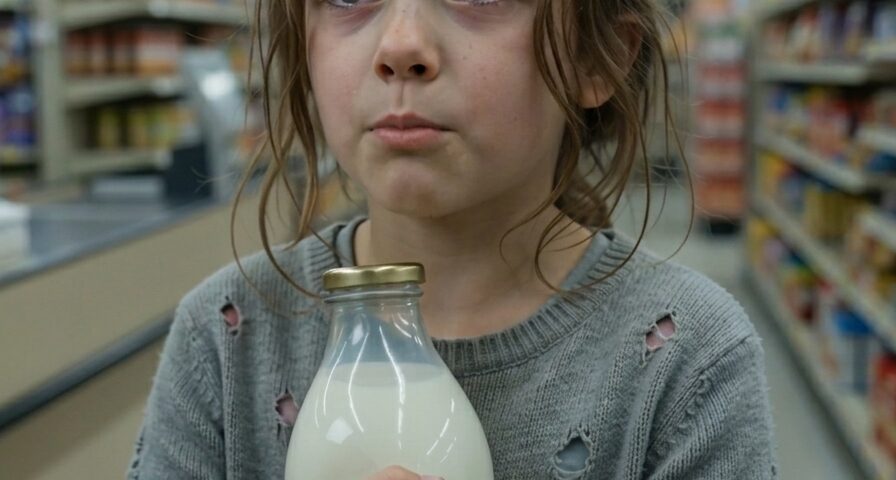
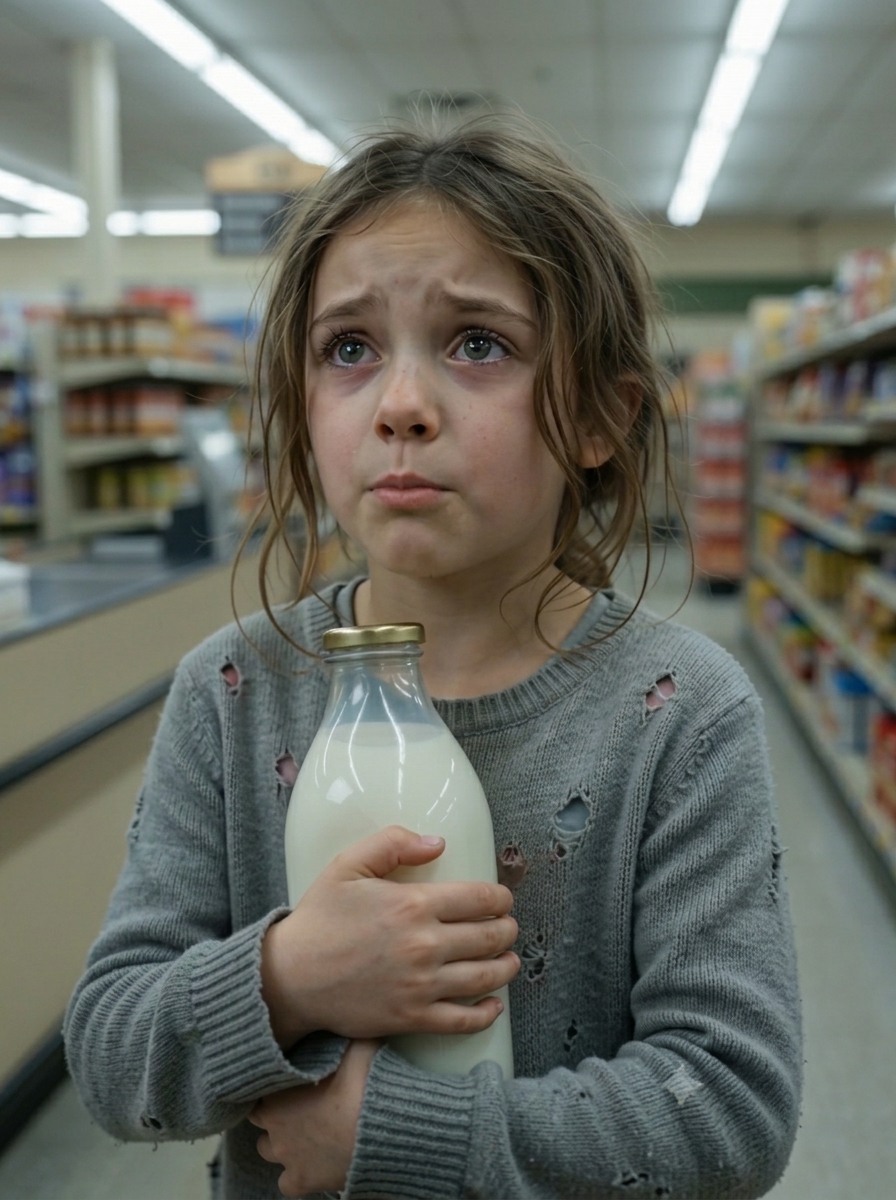
And now, her ghost stood before him in the form of a seven-year-old girl with Marilyn’s striking emerald eyes.
“Hey,” David choked out, the word scraping against his throat. “Wait. Please.”
The little girl flinched, pulling the heavy paper bag tighter against her chest. Her eyes darted toward the dark alleyway, calculating an escape route. Fear, sharp and primal, radiated from her tiny frame.
“I’m not going to take it back,” David said quickly, raising his hands in a gesture of peace. “I swear. Let me… let me help you carry it. It’s heavy.”
She looked at the bag, then up at him, her defenses warring with her exhaustion. Finally, the sheer weight of the groceries won. She extended her trembling arms, letting him take the burden.
“What’s your name?” David asked as they began to walk, his heart hammering against his ribs like a trapped bird.
“Maya,” she whispered.
“Maya,” he repeated.
The name felt like a sacred weight on his tongue. He looked down at her profile as they moved under the flickering amber glow of the streetlamps. The timeline shattered and reassembled in his mind. Five years ago, Marilyn had been pregnant. She must have been. And she had hidden it from him, fleeing into the shadows for reasons he couldn’t yet fathom.
“Is your house far?”
Maya pointed toward a row of dilapidated, grey brick tenements at the edge of the district. “Just there. Apartment 4C. We have to be quiet. The landlord doesn’t like it when we make noise.”
Every step felt heavy with a decade’s worth of unsaid words. David’s mind raced with questions, each one sharper than the last. Why did she leave? Why live like this? Why didn’t she tell him?
But as he looked at Maya’s worn-out shoes and the frayed hem of her oversized coat, the anger dissolved into a profound, aching sorrow. There would be time for answers later. Right now, there was only the immediate mission of survival.
They climbed the crumbling concrete steps of the tenement building. The air inside smelled of damp plaster and cheap cabbage. Up three flights of stairs, the silence between them grew thick, punctuated only by the heavy thud of David’s boots and the soft pit-pat of Maya’s sneakers.
At door 4C, Maya didn’t use a key. She knocked—three rapid taps, a pause, then one soft thump. A secret code for a world that wasn’t safe.
A moment later, the lock clicked. The door swung open.
“Maya? Did you find any—”
The voice died in the air.
Marilyn stood in the doorway. She was thinner than he remembered, the vibrant youthfulness he had loved drained by the harsh realities of poverty. Dark circles shadowed her eyes, and her hair was pulled back in a loose, messy knot. But it was her. Infallibly, undeniably her.
She froze, her gaze shifting from Maya to the heavy paper bag, and finally up to David’s face.
All the air left the room. Marilyn’s hand flew to her mouth, her eyes widening in absolute terror and disbelief.
“David…” she breathed, the sound barely a whisper.
“Marilyn,” he said, his voice breaking entirely.
Before either of them could speak another word, a weak, reedy cry echoed from the shadows of the dimly lit apartment.
“Mommy? Is Maya back? My tummy hurts…”
The sound acted like an electric shock. The heavy emotional gridlock broke instantly. David didn’t ask for explanations. He didn’t demand to know why she had broken his heart. He simply stepped past her into the apartment, setting the groceries firmly on the small, chipped kitchen table.
The apartment was brutally sparse—a single mattress in the corner, a broken chair, and empty cupboards. On the mattress lay a little boy, no older than four, clutching a ragged blanket. He had David’s unruly dark hair and the exact shape of his jaw.
David’s knees went weak. He dropped to the floor beside the mattress.
“Hey there, buddy,” David said, his voice dropping to a gentle, soothing register he didn’t know he possessed. “I brought some food. The pain is going to stop now. I promise.”
Marilyn walked into the room like a woman moving through a dream. She sank to her knees on the opposite side of the mattress, tears finally spilling over her cheeks, cutting tracks through the dust on her face.
David pulled a container of soup and a loaf of fresh bread from the bag. With steady hands, he opened the food, grabbed a clean spoon from the small sink, and began to gently feed the boy, small spoonfuls at a time. Maya sat close by on the floor, eagerly tearing into a piece of the fresh bread the cashier had given her, her hunger finally losing its grip.
For the first time in years, the apartment was filled not with the sound of crying, but with the quiet, rhythmic sound of a family being sustained. The boy ate hungrily until his eyes grew heavy, and he finally drifted into a peaceful sleep, the phantom pain in his stomach vanished.
David stood up, wiping a stray tear from his own cheek. He turned to Marilyn, who was watching him with a mixture of intense shame and desperate, fragile hope. He reached out, his large hand enveloping her smaller, cold one.
“The past doesn’t matter tonight,” David said softly, pulling her into a tight, protective embrace. “You’re not alone anymore. I’ve got you. All of you.”
Marilyn buried her face in his chest, her shoulders shaking violently as the crushing weight of survival finally lifted from her soul. The long winter was over.