PART 2
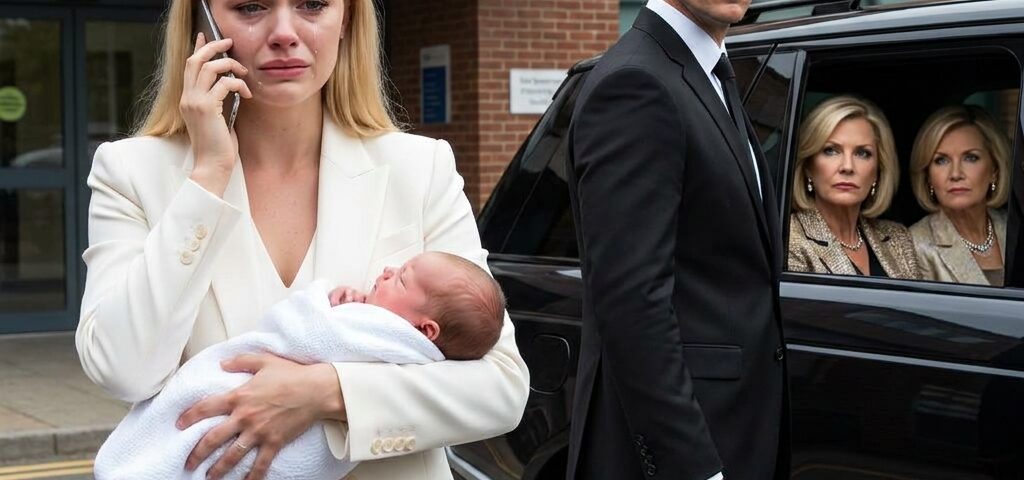
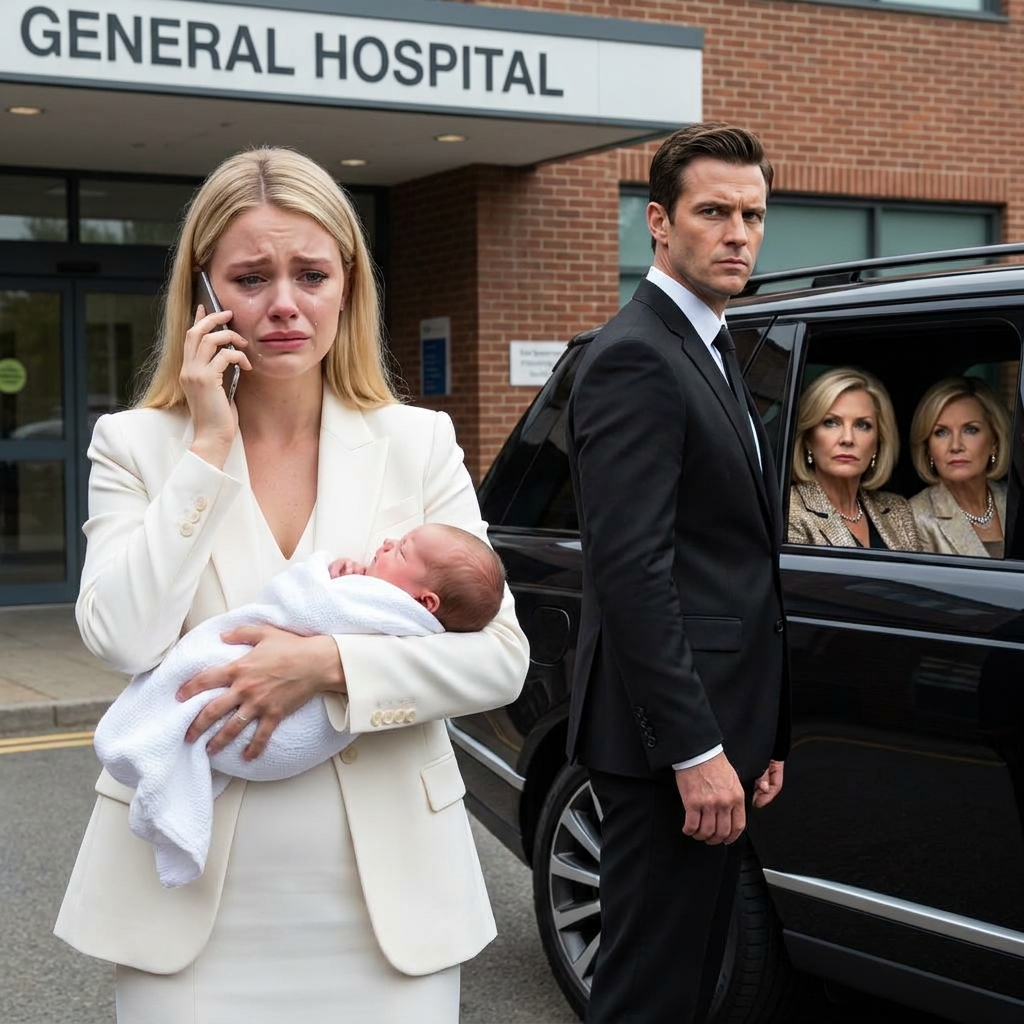
By the time the bus reached our stop, my hands had gone numb around Noah’s tiny body.
Manhattan moved outside the windows in bright, careless streaks: taxis cutting through traffic, delivery bikes weaving between cars, women in wool coats laughing into phones, people carrying coffee as if nothing in the world had broken open that morning.
Inside my coat, Noah slept against my chest with his mouth slightly open. His breath warmed the fabric of my shirt. I kept one hand on the back of his head and the other pressed carefully against my abdomen, trying not to cry every time the bus lurched forward.
My father stayed on the phone the entire ride.
He did not shout. He did not ask me to repeat what happened. That scared me more than anger would have.
“Are you dizzy?” he asked quietly.
“A little.”
“Is Noah breathing normally?”
“Yes.”
“Good. Keep him close. Security is already at your building. I am twelve minutes behind them.”
“Dad,” I whispered, looking around at the passengers. “Please don’t make it a scene.”
There was a pause.
“I will make it safe,” he said. “Those are not always the same thing.”
I closed my eyes.
For years, I had told myself I wanted a normal life. No private drivers. No assistants. No last name that made bankers stand straighter. I wanted grocery runs, a small apartment, a husband who chose me because of me.
So I had hidden the easiest parts of my life and exposed the most vulnerable ones.
Daniel had not fallen in love with my simplicity.
He had mistaken it for weakness.
When the bus doors opened, an older woman beside me stood first and touched my arm. “Honey, let me help you with that bag.”
I wanted to say I was fine.
The lie rose automatically, trained by pride and marriage and exhaustion.
Then Noah stirred, and pain flared across my incision like fire.
“Thank you,” I said.
She carried the diaper bag down the steps while I moved one careful foot at a time. The city air hit my face, cold and sharp. I stood on the sidewalk outside our building, trembling.
Not from the weather.
From the realization that I had made it home without my husband, but not alone.
Two men in dark suits stood near the entrance. I recognized one immediately.
Marcus Reed had worked for my father since I was seventeen. He had taught me how to check the back seat of a car before getting in, how to spot when someone was following too closely, and how to breathe through panic without letting it take control.
His expression changed when he saw me.
“Mrs. Carter,” he said softly.
I tried to smile. “It’s Bennett today.”
Something in his eyes warmed. “Yes, ma’am.”
He took the diaper bag from the woman and thanked her with such sincerity that she smiled at Noah before walking away.
The doorman, Henry, hovered near the lobby desk, pale and anxious. “Mrs. Carter, I tried calling upstairs, but Mr. Carter isn’t answering.”
“He’s at lunch,” I said.
The words sounded absurd.
My father’s second security officer held the elevator open. Marcus walked beside me, not touching me, staying close enough that if my knees failed, I would not fall.
Inside the elevator, I caught my reflection in the polished metal doors.
My hair was loose and tangled. My face looked colorless. The hospital bracelet still circled my wrist. Noah was wrapped in the blue blanket the nurse had tucked around him before discharge, the one Daniel had not noticed.
The woman staring back at me did not look like the daughter of Charles Bennett.
She looked like someone who had spent too long asking for tenderness from people who considered it optional.
When the elevator opened on the twenty-third floor, I heard voices before I reached our door.
Daniel’s mother, Patricia, laughing.
Ashley speaking over her.
Daniel saying something about wine.
For a second, I froze.
“They came back?” I whispered.
Marcus looked at Henry, who had ridden up with us.
Henry swallowed. “The reservation was apparently canceled. They returned twenty minutes ago.”
Of course they had.
Daniel had left me and Noah on a bus to make a lunch reservation, and then he had not even gone.
The apartment door was unlocked.
Inside, the dining table had been set with plates I had chosen before our wedding. Someone had opened the bottle of champagne my father had sent after Noah’s birth. Patricia sat in my favorite chair with her shoes off, scrolling through her phone. Ashley was photographing the flowers on the counter. Daniel stood near the window, still in his coat, laughing at something his father said.
My diaper bag slipped from Marcus’s hand onto the entry bench.
Every head turned.
Daniel’s smile vanished.
“Emily?” he said.
My name sounded wrong in his mouth.
Patricia stood first. “Why are there men in the hallway?”
I did not answer her. I looked at Daniel.
“You left us on a bus.”
He glanced at Marcus, then at the second security officer, then back at me. His eyes sharpened with embarrassment, not remorse.
“I gave you money,” he said under his breath. “You made it home, didn’t you?”
Ashley rolled her eyes. “Oh, please. Thousands of women take buses with babies.”
I felt Marcus go still beside me.
Noah shifted against my chest and made a tiny sound. That small noise did what Daniel’s words could not. It brought me back into my body.
“My son is five days old,” I said. “I am five days out of surgery. And you drove away in my car.”
Daniel’s father, Richard, frowned. “Your car? Daniel said it was his company vehicle.”
My laugh came out tired and strange.
“No. It was a wedding gift from my father.”
Daniel stepped forward quickly. “Emily, let’s talk in the bedroom.”
“No.”
The word was quiet.
Everyone heard it.
Daniel stopped.
Patricia’s mouth tightened. “This is unnecessary. You are emotional from hormones.”
“Maybe,” I said. “But I am also awake.”
The room fell into a silence that felt different from every silence before it.
In our marriage, silence had usually meant I was surrendering. I would stop arguing, stop asking, stop explaining why something hurt. Daniel would treat my quiet as permission to continue.
But this silence belonged to me.
I turned to Marcus. “Please collect Noah’s bassinet, my hospital paperwork, and the gray suitcase in the nursery closet.”
Daniel blinked. “What are you doing?”
“Leaving.”
Patricia laughed once. “With whose money?”
I looked at her then.
Not with anger. Not even satisfaction.
Just clarity.
“My own.”
Before she could answer, the elevator opened again.
My father stepped into the apartment.
Charles Bennett did not need to raise his voice to change a room. He was tall, silver-haired, and dressed in a navy overcoat that made him look more like a visiting professor than a man whose companies built bridges, airports, ports, rail systems, and entire city districts across three continents.
But power has a temperature.
His made the room colder.
Daniel stared at him, confused for half a second.
Then recognition struck.
I watched it move across his face: disbelief, calculation, fear, and finally the sickening realization that the “retired builder in Connecticut” he had dismissed for two years was not retired and had never been ordinary.
“Mr. Bennett,” Daniel said weakly.
My father did not look at him first.
He came to me.
His eyes dropped to Noah, then to my hospital bracelet, then to the way I was leaning against the wall to stay upright. Something in his face shifted, but when he spoke, his voice remained steady.
“May I hold my grandson?”
I nodded.
The moment Noah was in his arms, my father’s entire expression softened. His large hand supported Noah’s head with careful reverence, as if he were holding something more precious than every contract he had ever signed.
“Hello, Noah,” he whispered. “I am sorry I was not there sooner.”
My throat closed.
Daniel cleared his throat. “Sir, this is a misunderstanding.”
My father looked at him then.
“No,” he said. “It is not.”
Daniel raised both palms. “Emily was discharged. She was upset. My family was here. I thought—”
“You thought a woman five days after abdominal surgery should carry a newborn onto a city bus while you used her vehicle for lunch.”
Richard looked at Daniel. “Is that true?”
Daniel’s jaw tightened. “Dad, don’t start.”
Patricia recovered first, lifting her chin. “Families have disagreements. We don’t need strangers marching into our home.”
“My daughter’s home,” my father said. “Purchased with funds from her trust before the marriage and placed in her name.”
Daniel went pale.
I looked at him slowly. “You told me the mortgage paperwork was complicated.”
“It was,” he snapped, then caught himself. “I mean, I handled things for us.”
My father’s eyes narrowed. “You handled quite a bit, Daniel.”
Marcus returned with the gray suitcase. The second officer carried Noah’s bassinet. Henry hovered by the door, looking as though he wished the floor would open.
My father shifted Noah gently in his arms. “Emily will be staying elsewhere while she recovers. Any communication regarding the child, finances, property, or the marriage will go through counsel.”
Daniel’s embarrassment finally turned to panic. “You can’t just take my son.”
That landed.
For all his cruelty that morning, those words carried something real, or close enough to real that I felt the ache of it. I looked at him and wondered which version of Daniel might have existed if ambition had not eaten through his tenderness.
“I am not taking Noah from you,” I said. “I am taking him somewhere safe while I heal.”
His face twisted. “Safe? From me?”
I did not answer.
That was answer enough.
Patricia moved toward my father. “You people think money gives you the right to destroy families.”
My father looked at her calmly. “No. Money gives us the ability to leave rooms where we are being mistreated. That is all.”
Ashley crossed her arms. “Daniel built his company himself.”
My father’s gaze moved to her.
“He built some of it,” he said. “The first investor introductions came through a Bennett Global venture partner after Daniel represented himself as a family connection with my blessing.”
Daniel’s head snapped up. “That’s not—”
“Careful,” my father said.
One word.
Daniel stopped speaking.
I stared at my husband. “You used my family name?”
He looked away.
That hurt in a new place.
Not because he had benefited from it. I would have helped him if he had asked honestly. But he had mocked the very family he had secretly used.
My father turned to me. “Sweetheart, are you ready?”
I looked around the apartment.
The white sofa where I had folded Noah’s clothes. The framed wedding photo on the hallway wall. The half-packed hospital bag Daniel had dumped near the closet. The nursery door standing open, revealing pale blue curtains and a mobile of tiny clouds turning softly in the air from the draft.
I had imagined bringing Noah home to that room.
Life rarely breaks all at once. Usually it cracks quietly, then waits for you to notice the shape of the damage.
“I need one thing,” I said.
I walked slowly into the nursery. Every step pulled at my stitches. Behind me, nobody spoke.
On the dresser sat the small wooden music box my mother had given me when I was six. She died two years later, and for most of my childhood, that music box was the only place I let myself cry.
I picked it up and opened the lid.
The tiny ballerina turned to a soft, imperfect melody.
Noah stirred in my father’s arms outside the door.
I closed the box and placed it in my suitcase.
Then I left my wedding ring on the dresser.
Daniel saw it when I returned.
His face changed.
“Emily,” he said, quieter now.
I waited.
For one brief moment, I thought he might apologize.
Instead, he said, “Think about how this looks.”
And there it was: the marriage, reduced to its truest sentence.
I followed my father out.
Downstairs, a black sedan waited behind another security vehicle. The SUV Daniel had taken sat at the curb, returned by a driver I did not recognize. My father had already recovered it without a scene.
He helped me into the sedan himself. Noah’s car seat had been installed perfectly in the back, rear-facing, with a soft mirror attached to the seat. A nurse from my father’s private medical team sat beside it, kind-faced and calm.
“I didn’t ask for all this,” I murmured.
“No,” my father said, settling beside me as the door closed. “You asked for help.”
The difference made me cry.
The place he took us was not a hotel but a quiet townhouse on a tree-lined street in the West Village. I had stayed there once as a teenager after a school recital. Back then, it had seemed like one of my father’s many unused properties. Now it looked like a sanctuary.
Warm lamps glowed in the windows. A bassinet waited in the bedroom. There were clean pajamas folded on the bed, pain medication on the nightstand, and soup warming in the kitchen.
A postpartum nurse named Elise checked my incision and frowned.
“You should not have been walking that much,” she said.
“I didn’t have much choice.”
She looked at my father.
His face hardened, but his voice stayed gentle. “She does now.”
That evening passed in fragments.
Noah nursing.
Elise teaching me how to shift without straining my abdomen.
My father taking business calls in the hallway in a voice so controlled I knew entire departments were trembling on the other end.
Me falling asleep for twenty minutes and waking in panic until I saw Noah breathing beside me.
Around midnight, my father knocked softly and entered with tea.
“You don’t have to take care of me,” I said.
His smile was sad. “I missed too many chances already.”
I looked down.
After my mother died, my father had buried himself in work. He loved me, but often from airports, boardrooms, and handwritten notes left beside gifts. I learned independence early, then mistook emotional distance for maturity.
“I wanted a life that didn’t need rescuing,” I said.
“I know.”
“I thought if Daniel didn’t know who you were, then what we had would be real.”
My father sat in the chair by the window. “And was it?”
The question was not cruel.
That made it harder.
“I don’t know anymore.”
He nodded slowly. “That may be the most honest answer.”
Noah made a soft clicking sound in his sleep.
My father looked at him with wonder.
“When you were born,” he said, “your mother made me promise that our money would never become a wall between you and ordinary happiness. I agreed. Then I spent the rest of my life building walls and calling them protection.”
I had never heard him speak that way.
“I hid things too,” I admitted.
“Yes.”
I looked up.
He continued, “But hiding wealth is not the same as inviting disrespect. Daniel made choices with the information he had. That information was simply less useful than he believed.”
A small laugh escaped me through tears.
My father smiled faintly.
Then his expression changed.
“There is something else,” he said.
I stiffened. “What?”
“Your husband’s startup has several investors who may have believed Bennett Global was informally supporting it.”
“I didn’t know.”
“I believe you.”
The speed of his answer made me cry again.
He leaned forward. “Emily, I need you to tell me whether you ever signed documents for Daniel. Anything business related.”
“No. I don’t think so.”
“Think carefully.”
The room seemed to cool.
I remembered Daniel bringing papers to the hospital two days after Noah was born. He said they were insurance forms. My vision had been blurry from pain medication, and I had signed where he pointed because he said the billing department needed them before discharge.
My stomach turned.
“Maybe,” I whispered.
My father went still. “When?”
“At the hospital. After the delivery.”
He closed his eyes briefly.
“What did I sign?”
“I don’t know yet,” he said. “But we will find out.”
The next morning, Bennett Global’s legal counsel arrived with a woman named Priya Shah, who specialized in financial misconduct and spoke with a calm precision that made every sentence feel organized.
She sat at the kitchen table while Elise rocked Noah near the window.
“Emily,” Priya said, “we are not assuming wrongdoing. We are verifying documents. That distinction matters.”
I appreciated that.
I did not want a war. I wanted truth. I wanted sleep. I wanted to look at my son without feeling fear crawl up my spine.
Priya slid a folder toward me. “Did you authorize Daniel Carter to represent himself as a Bennett family-backed founder?”
“No.”
“Did you authorize him to use your apartment as collateral for business lending?”
My heart stopped.
“My apartment?”
My father’s hand tightened around his coffee cup.
“No,” I said.
Priya turned one page. “Did you sign a spousal acknowledgment connected to a bridge loan from Harrow Street Capital?”
“I don’t know. I might have signed something at the hospital, but I didn’t know it was that.”
Priya’s expression did not change, but her pen paused.
“That is important.”
Before anyone could say more, my phone rang.
Daniel.
No one moved.
I let it ring until it stopped.
A text appeared.
We need to talk. Your father is overreacting. I never meant for yesterday to happen like that.
Another followed.
My investors are asking questions. Please tell them this is a private misunderstanding.
Then another.
Emily, I’m sorry. I panicked. Mom was pressuring me. I’ll come see Noah today.
I stared at the screen.
The apology was almost right.
Almost.
It blamed panic. His mother. Pressure. Circumstances.
Not choice.
Priya gently placed a hand over the phone. “May I advise?”
I nodded.
“Do not respond emotionally. Do not discuss investors, documents, or custody by text. If you wish, send one sentence: Please direct all communication through counsel.”
I typed it.
Daniel replied seconds later.
So this is what you are now? Hiding behind your father?
My father reached for the phone, then stopped himself.
That restraint mattered.
I set the phone face down.
“No,” I said quietly. “I’m standing behind myself.”
By afternoon, the story had begun leaking in Daniel’s world.
Not publicly. Not online. There were no dramatic headlines, no humiliating posts. But investors ask questions when legal counsel requests document copies. Banks listen when collateral authorization is disputed. Men who once took Daniel’s confidence as proof of stability began examining the paperwork beneath it.
Daniel came to the townhouse at four-thirty.
He was not allowed inside.
I watched him from the second-floor window as he stood on the sidewalk in the same coat he had worn the day before. His hair looked windblown. He held a small shopping bag from an expensive baby boutique.
For a moment, my heart remembered him differently.
Daniel on our third date, carrying soup across town because I had the flu.
Daniel dancing with me barefoot in the apartment after we signed the lease.
Daniel crying when the pregnancy test turned positive.
Those memories were real.
So was the bus.
My father joined me at the window. “You do not have to see him.”
“I know.”
But after a while, I asked Marcus to bring Daniel to the small sitting room on the ground floor. My father stayed nearby but out of sight. Priya remained in the hallway. Elise kept Noah upstairs.
Daniel entered slowly, eyes moving over the townhouse, the security, the quiet proof that the world was larger than he had imagined.
When he saw me seated by the fireplace with a pillow held gently against my abdomen, his face crumpled.
“Emily,” he whispered.
“Sit down.”
He did.
The shopping bag rustled in his hands. “I brought Noah something.”
“He has what he needs.”
That landed harder than I expected.
Daniel looked down. “I messed up.”
I waited.
“I was stressed,” he said. “The company is under pressure. My mom kept saying you were acting fragile, and Ashley was complaining, and I just… I made a terrible decision.”
“Yes.”
He swallowed. “But I didn’t abandon you.”
I looked at him.
He could not hold my gaze.
“You left me outside a hospital with fifty dollars,” I said. “You took my car, dropped my bag on the sidewalk, and told me not to call while you had lunch.”
His eyes filled. “I know.”
“No, Daniel. You remember. I am not sure you know.”
He wiped his face with one hand, and I saw the boyishness that had once disarmed me. But I was not twenty-eight anymore, dazzled by apologies that sounded like affection.
“Did you use my apartment as collateral?” I asked.
His tears stopped.
That was answer enough.
“I was going to fix it before you found out.”
My chest hurt. “Before I found out?”
“The bridge loan was temporary. We needed cash flow. Once the Series B closed, it would be cleared. You were never going to lose anything.”
“You had no right.”
“I’m your husband.”
“Not your signature.”
He flinched.
I leaned back, exhausted. “What did I sign in the hospital?”
He looked toward the door.
“Daniel.”
His voice dropped. “A spousal acknowledgment.”
“I was medicated.”
“You were awake.”
The room went very quiet.
That distinction told me everything.
I rose too quickly and gasped. Pain shot across my incision. Daniel jumped up, but Marcus appeared in the doorway before he could reach me.
“Sit down,” Marcus said.
Daniel sat.
I steadied myself against the chair. “You need to leave.”
“Emily, please. I can fix this.”
“You keep saying that as if the problem is paperwork.”
His face tightened. “Your father will destroy me.”
“No,” I said. “The truth might.”
For the first time, anger flashed in his eyes. Not loud. Not explosive. Just wounded pride looking for somewhere to land.
“You let me believe you were ordinary,” he said.
I stared at him.
“You lied too,” he continued, voice shaking. “You watched me struggle while your father could have solved everything.”
A strange calm settled over me.
“I watched you become someone who thought love meant access,” I said. “And I kept hoping I was wrong.”
Daniel had no response.
Marcus escorted him out.
That evening, Noah cried for nearly an hour.
Nothing soothed him at first. Not feeding. Not rocking. Not the pacifier Elise offered. His tiny face reddened, his fists curled, and his cries cut through every room in the townhouse.
At first, I panicked.
Then Elise placed him against my chest, skin to skin, and dimmed the lights.
“Breathe with him,” she said.
So I did.
Slowly, Noah quieted.
His little body softened against mine. His cheek rested over my heart. I realized then that love was not always a sweeping feeling. Sometimes it was counting breaths in a dark room and staying calm because someone smaller needed your nervous system to become a shelter.
My father stood in the doorway, watching.
“Was I like this?” I asked.
“Louder,” he said.
I smiled.
He came closer. “Your mother used to say you cried like you were making an announcement.”
“Sounds accurate.”
He laughed softly.
For the first time in years, the sound did not feel distant.
The next two days unfolded with careful routines.
Elise checked my incision. Priya traced documents. My father cooked breakfast badly and ordered dinner well. Noah slept in short, miraculous stretches. I learned the shapes of his moods: the little wrinkle before hunger, the sigh after feeding, the way his fingers opened when he heard my voice.
Daniel sent messages through counsel. Some apologetic. Some defensive. Some practical. He asked for visitation, and I agreed to supervised time once my doctor cleared me to travel and once temporary agreements were in place.
I did not want to punish him with Noah.
I wanted Noah protected from chaos.
There is a difference.
On the third evening, Priya arrived with a folder thicker than before.
My father and I sat across from her at the kitchen table while rain tapped lightly against the windows.
“We have confirmed the hospital document was used as part of Daniel’s bridge financing,” she said. “The lender is already cooperating.”
I let out a breath.
“But there is something unusual.”
My father’s expression sharpened.
Priya removed a page and turned it toward us.
“It appears Daniel’s company received a second private loan eight months ago, before the bridge loan. The guarantor was not Daniel.”
I frowned. “Who was it?”
Priya looked at my father. “A shell company connected to Bennett Global’s old European holdings.”
My father went completely still.
“I sold those holdings years ago,” he said.
“Most of them,” Priya replied. “One remained active. Dormant, but active.”
“I don’t understand,” I said.
Priya’s eyes softened. “Emily, someone inside your family’s structure may have backed Daniel long before he approached the public investors.”
My father rose from the table and walked to the window.
I had seen him angry. I had seen him sad. I had never seen him uncertain.
“Dad?”
He did not turn around.
“There is only one person who would have known about that entity,” he said.
A chill moved through me.
“Who?”
Before he could answer, Marcus appeared at the kitchen doorway with an envelope in his hand.
“This was delivered by courier,” he said. “No return address. It is marked for Mrs. Carter only.”
My father turned.
“No,” he said immediately.
But I had already reached for it.
Inside was a single photograph.
It showed Daniel standing outside a restaurant six months earlier, shaking hands with an elegant older woman in a cream suit. Her silver hair was pinned at the nape of her neck. Her profile was unmistakable, though I had not seen her in twenty-six years except in portraits my father kept locked away.
On the back, someone had written one sentence in blue ink.
Ask your father why he told you your mother was dead.