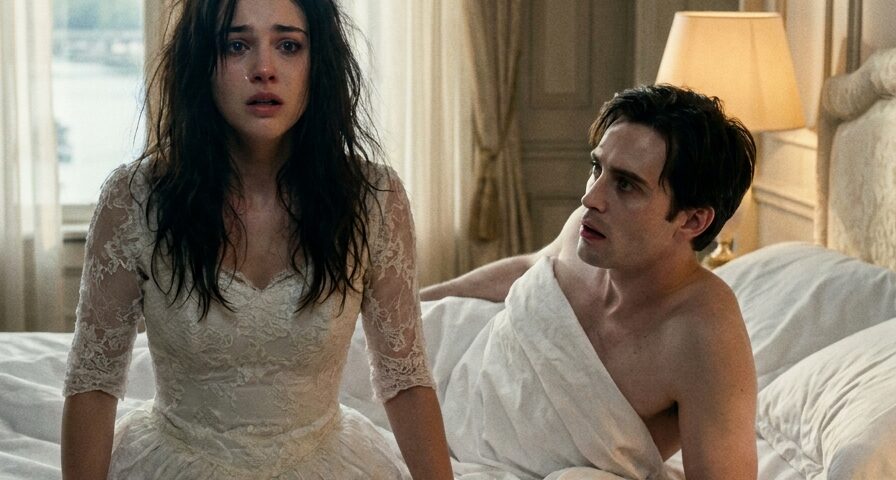
PART 2: I Was Forced to Marry a Billionaire in a Coma — Then He Woke Up and Warned Me Not to Trust His Own Family
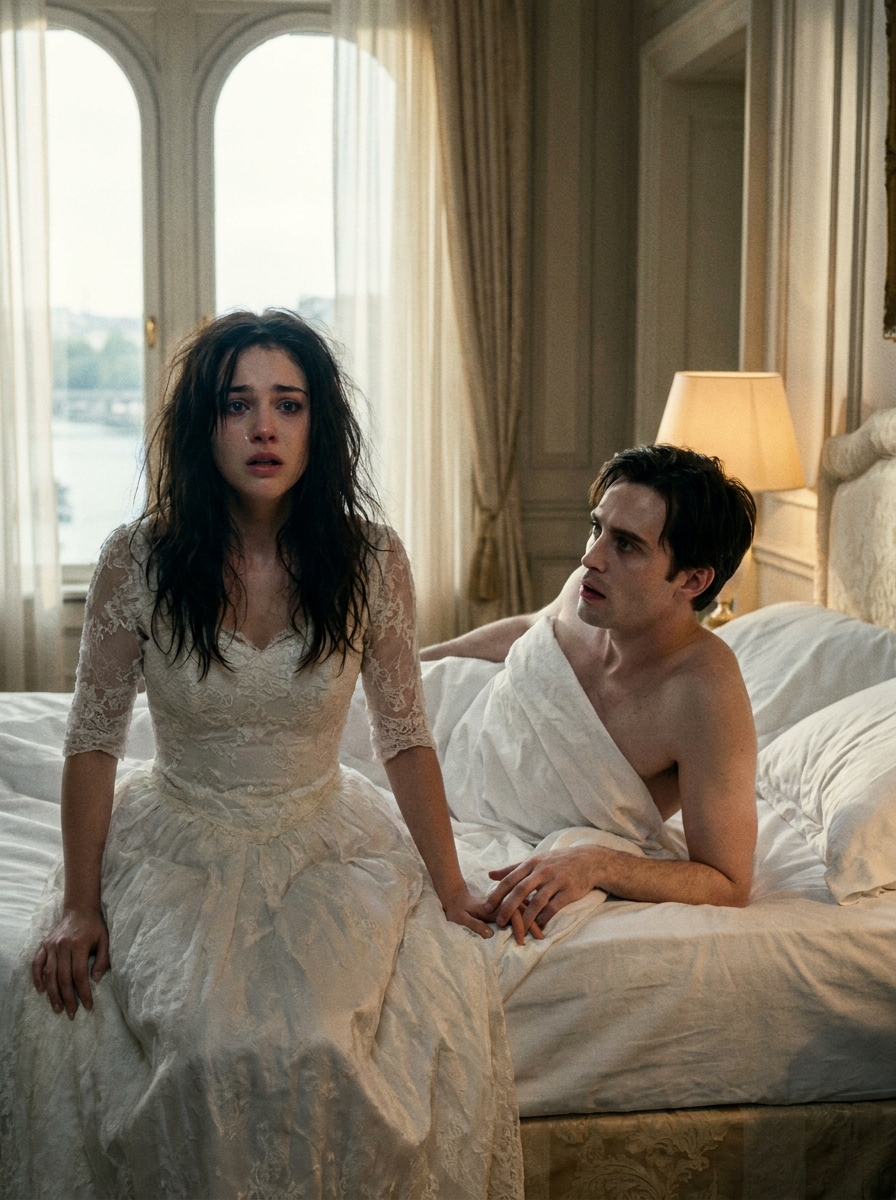
A man who had been silent through his own wedding.
A man everyone insisted could not hear a word.
A man I had married less than an hour ago.
His fingers twitched beneath mine again.
“Don’t…” he whispered.
I leaned closer, my heart pounding so violently I could hear blood rushing in my ears.
“What?”
His lips barely moved. “Jason.”
The name made the room feel colder.
Then his eyes rolled slightly, and panic snapped me out of shock.
I jumped up, knocking the chair backward.
“Help!” I shouted. “Someone help!”
The door opened almost immediately. The private nurse from the chapel rushed in, followed by another nurse and a man in a gray suit who looked more like a lawyer than a doctor.
“What happened?” the nurse demanded.
“He opened his eyes,” I said, backing away from the bed. “He spoke.”
The room erupted into controlled motion.
A monitor was wheeled closer. Blood pressure cuff. Flashlight. Questions spoken gently but firmly.
“Mr. Thornton, can you hear me?”
“Ethan, squeeze my hand.”
“Follow the light if you can.”
I stood near the window, one hand pressed to my chest, watching strangers touch my husband with practiced urgency.
My husband.
The word felt absurd.
An hour ago, he had been a legal condition in a contract arranged by desperate families and expensive attorneys. Now he was a living man with frightened eyes and a warning on his lips.
Don’t trust Jason.
Vivian arrived minutes later.
She did not run. I suspected Vivian Thornton had never run anywhere in her life. But she entered with a swiftness that made everyone step aside without being asked.
“What is happening?”
The nurse turned. “Mrs. Thornton, he showed signs of consciousness. Eye opening. Limited vocalization.”
Vivian went still.
Only her fingers moved, curling once around the handle of her cane.
“Ethan?” she said.
At the sound of her voice, his eyes shifted.
Not enough to focus.
Enough to know.
Something broke across Vivian’s face so quickly I might have missed it if I had blinked. The woman who had studied me like a business acquisition, who had told her comatose grandson not to embarrass the family, suddenly looked like a grandmother standing at the edge of a prayer she had been afraid to say aloud.
“Ethan,” she repeated, softer.
His lips moved.
No sound came.
The nurse leaned close. “Don’t try to speak yet.”
Vivian’s gaze sharpened. “Call Dr. Moreau. Now. And no one informs the household until I say so.”
The man in the gray suit objected. “Mrs. Thornton, the family should—”
“The family will be told what I decide they are told,” Vivian said.
The room quieted.
Then her eyes moved to me.
“What did he say?”
My throat tightened.
Everyone seemed to turn toward me at once.
I could have lied.
Maybe I should have.
I had known these people for less than a day. I did not understand their loyalties, their feuds, or why a man barely awake from nine months of silence would spend his first breath warning me about his cousin.
But the truth was already sitting between us.
“He said not to trust Jason.”
The nurse looked down quickly, pretending not to react.
The man in the gray suit went pale.
Vivian’s face did not change.
That was how I knew the words meant something.
She stepped closer to me. “Did he say anything else?”
“My name. I think.” I swallowed. “No. Just Jason.”
Vivian looked back at Ethan.
His eyes had closed again, but the monitors continued their steady rhythm. Alive. Present. Not awake in the way stories promised, but no longer absent either.
“Leave us,” Vivian said.
The nurse hesitated. “He needs observation.”
“You stay. Everyone else out.”
The second nurse and the man in the suit left. I expected Vivian to send me out too, but she didn’t.
Instead, she lowered herself into the chair beside Ethan’s bed, spine straight, hands folded over the silver head of her cane.
“You picked an inconvenient time to wake,” she said to him.
The nurse blinked.
I stared.
Vivian’s eyes shone, but her voice remained dry. “Then again, you always did enjoy ruining Jason’s plans.”
Ethan did not respond.
Vivian reached out and touched his hand with two fingers, so lightly it seemed she feared he might vanish.
I looked away.
Some grief felt too private to witness, even when it happened in front of you.
The doctor arrived twenty minutes later.
Dr. Luc Moreau was tall, dark-skinned, and calm in the way excellent doctors often are—not detached, but deeply centered. He introduced himself to me as Ethan’s neurologist, though he seemed unsurprised to learn who I was.
“Mrs. Thornton,” he said.
The title struck me like a borrowed coat placed suddenly across my shoulders.
“Claire,” I corrected quietly.
His expression softened. “Claire.”
He examined Ethan carefully, asking questions Ethan could not yet answer, checking reflexes, pupil response, breathing, muscle tone. Vivian watched every movement as if memorizing evidence.
Finally, Dr. Moreau turned to us.
“This is significant,” he said. “But we must be careful. Consciousness after prolonged coma can return in stages. He may drift in and out. Speech may be limited. Memory may be fragmented. We need imaging, blood work, and strict control of stimulation.”
“Will he recover?” Vivian asked.
Dr. Moreau did not offer easy comfort. “It is too early to say.”
Vivian nodded once, accepting honesty because anything else would have insulted her.
“What triggered it?” I asked before I could stop myself.
The doctor looked at me. “Sometimes familiar voices, emotional stimuli, or simply the body’s own timing can coincide with emergence. We may never know exactly.”
Vivian glanced at me.
I felt heat rise in my face.
I had whispered to Ethan about my mother. About being trapped. About not wanting to marry him.
Had he heard everything?
Had he been listening inside that stillness all along?
Dr. Moreau left instructions with the nurse and said he would return after arranging hospital-level equipment to be brought to the estate. Vivian, it appeared, had enough money to make a mansion function like a private medical wing.
When the room finally quieted again, I stood near the foot of the bed, unsure whether I was supposed to stay, leave, apologize, or ask for my life back.
Vivian solved it for me.
“You will remain in this room tonight.”
I turned sharply. “Excuse me?”
“He spoke to you.”
“That doesn’t mean I’m medically useful.”
“No,” she said. “It means you are relevant.”
“I’m also a person.”
One eyebrow rose. “Are you?”
The words stung until I saw that she was not mocking me.
She was testing me.
I straightened. “Yes. I am. And since everyone seems to forget that today, I’ll say it clearly. I was pressured into this marriage by my father, by your lawyers, and by a situation I barely understand. I am not a nurse, not a spy, not a decorative wife for a family trust, and not something to be placed in a room because it is convenient.”
The nurse suddenly became fascinated by Ethan’s IV line.
Vivian studied me for a long moment.
Then, to my surprise, she smiled faintly.
“There you are.”
I blinked. “What?”
“I wondered how long it would take you to stop apologizing with your posture.”
I had no idea what to say to that.
Vivian stood slowly. “You are correct. You are a person. Unfortunately, you are now a person married to Ethan Thornton, which means convenience will rarely be available to you.”
“That’s not comforting.”
“It wasn’t meant to be.”
She walked toward the door, then paused.
“Jason must not know Ethan has spoken. Not yet.”
“Why?”
Vivian’s expression hardened. “Because for nine months, Jason has behaved like a man waiting for a door to open. Tonight, Ethan reminded us there may be a reason he expected it to.”
Then she left.
The nurse remained beside the bed. Her name was Anna. She had kind brown eyes and a quiet efficiency that made the room feel less frightening.
“You should sit,” she told me.
“I’m not tired.”
“That is what people say five minutes before fainting.”
I sat.
Anna dimmed the lights. Outside the window, the Hudson River reflected the last blue of evening. The estate grounds stretched below in manicured perfection—gardens, stone paths, tall trees moving gently in the wind. Everything looked peaceful from above.
I was beginning to suspect nothing in this house was peaceful up close.
Ethan slept.
Or seemed to.
I sat in the chair beside him and watched his face. Without the chapel’s artificial stillness, he looked younger. Not boyish, exactly, but human. His cheekbones were sharper than they should have been. His hands seemed too thin. A faint scar marked the edge of his hairline near his temple.
The accident, I had been told, happened nine months earlier.
A late-night crash on a private road after a charity event. Ethan’s car went through a barrier and down an embankment. No other vehicles involved. Terrible weather. Slick pavement. A tragedy.
That was the official version.
But his first words were not about rain or brakes or fear.
They were about Jason.
Around midnight, Anna stepped out to speak with Dr. Moreau by phone. She left the door slightly open.
I was alone with Ethan again.
The machines whispered and beeped softly.
I leaned forward.
“I don’t know if you can hear me now,” I said quietly. “But you scared me earlier.”
His fingers did not move.
“I suppose I should thank you for warning me. Though it would have been helpful if you’d included details.”
Nothing.
I sighed, rubbing my eyes.
“My mother used to say that when a man gives you a vague warning, he either knows too little or too much.”
The faintest crease appeared between Ethan’s brows.
I froze.
“Ethan?”
His eyelids fluttered.
I stood quickly, but not as panicked as before.
His eyes opened halfway.
This time, they found mine.
Not clearly at first. Then with effort.
“Claire,” he whispered.
My name.
A shiver moved through me.
“Yes. I’m here.”
His lips moved. I leaned closer.
“Married?”
The question was so unexpected, so fragile, that my chest tightened.
“Yes,” I said. “Technically.”
A sound escaped him. It might have been a breath. It might have been the ghost of a laugh.
Then pain crossed his face.
“Grandmother?”
“She’s here. She was with you earlier.”
His eyes shifted toward the door.
“Safe?”
“I don’t know,” I admitted. “She seems like the kind of woman who terrifies danger into apologizing.”
This time, the breath definitely resembled a laugh.
It faded quickly.
His hand moved weakly against the sheet. I took it without thinking.
His fingers were cold.
“Jason…” he whispered.
“What about Jason?”
His eyes closed, opened again.
“Car.”
“The accident?”
A tiny movement. Maybe a nod.
“What happened to the car?”
His breathing grew uneven with effort.
I leaned closer. “Ethan, did Jason cause the accident?”
His fingers tightened faintly around mine.
The door opened.
Anna returned, and Ethan’s eyes closed instantly.
Too fast.
Not unconscious.
Pretending.
I felt it in the change of his hand beneath mine.
Anna stopped. “Did he wake again?”
I looked at Ethan.
His fingers gave the smallest pressure against my palm.
A request.
A secret.
I heard Vivian’s voice: Jason must not know Ethan has spoken.
“No,” I said.
The lie surprised me with how easily it came.
Anna studied me for one second too long.
Then she nodded. “Try to rest, Claire.”
I did not sleep.
At dawn, the estate began to stir.
Footsteps in distant halls. The clink of dishes from somewhere below. A groundskeeper’s cart humming outside. The room filled gradually with pale morning light, and Ethan remained still, his face composed in that unnerving almost-sleep.
Vivian returned at seven wearing a cream suit, pearls, and the expression of a woman prepared to fire the weather if it displeased her.
“Dr. Moreau will be here shortly,” she said. “Jason has requested breakfast with you.”
My stomach dropped. “With me?”
“He is curious.”
“I’m sure he is.”
“Do not tell him anything.”
“I gathered that.”
Vivian looked at Ethan. “Did he wake again?”
I hesitated.
Her eyes came back to mine.
In that moment, I understood Vivian Thornton was not a woman easily lied to. She could probably detect dishonesty from a change in breathing.
“Yes,” I said.
Anna was not in the room. The door was closed.
Vivian’s fingers tightened on her cane. “What did he say?”
“He asked if we were married. He asked about you. Then he said Jason and car.”
Vivian closed her eyes briefly.
When she opened them, they were cold.
“I knew it.”
“You suspected Jason?”
“I suspected everyone.”
“That must be lonely.”
“It is efficient.”
I looked at Ethan. “Why didn’t anyone investigate?”
“There was an investigation. Jason cooperated beautifully. The police found nothing beyond poor road conditions and a driver who should have been more cautious.”
“You don’t believe that.”
“My grandson drove too fast when he was nineteen and foolish. Not at twenty-nine with a board vote scheduled for the next morning.”
“A board vote?”
Vivian looked toward the window. “Ethan intended to remove Jason from all operational authority.”
The room seemed to sharpen.
“Why?”
“That,” she said, “is what I need Ethan to tell us when he can.”
Breakfast with Jason took place on a terrace overlooking the river.
I did not want to go. Vivian informed me that wanting had become irrelevant but appearance had not. If Jason believed I was frightened, confused, and isolated, he would underestimate me. Vivian seemed to think this was useful.
“Let him,” she said while a maid pinned my borrowed hair clip into place. “Men like Jason often mistake quiet women for empty rooms. Leave the door open and listen.”
The dress they gave me was pale blue and too expensive for my life. I felt like a fraud wearing it. Then I remembered I had been married in a borrowed gown to an unconscious stranger and decided fraud might be the house dress code.
Jason was already seated when I arrived.
He stood smoothly, smiling as if yesterday’s chapel conversation had been an amusing introduction rather than the beginning of my dread.
“Claire. May I call you Claire?”
“You already did.”
His smile widened. “Fair.”
He pulled out a chair. I sat without thanking him.
The terrace was beautiful in a way that made the tension feel almost indecent. Morning sun turned the river silver. A breeze moved through white curtains tied to the stone columns. The table held coffee, fruit, pastries, soft-boiled eggs, and a small vase of yellow roses.
“My grandmother can be overwhelming,” Jason said, pouring coffee.
“She can be direct.”
“That’s a polite word for terrifying.”
“I’m still building my vocabulary.”
He laughed.
I could see why people trusted him at first. Jason had warmth on command. He knew how to lean forward at the right angle, how to make his attention feel like a gift. His dark blond hair was perfectly styled, his cufflinks tasteful, his expression open.
Too open.
“How was your first night as a Thornton?” he asked.
“Strange.”
“I imagine so.” He stirred his coffee though he had added nothing to it. “Ethan requires a great deal of care.”
“He does.”
“It can be upsetting, seeing someone like that.”
“Someone alive?”
His spoon paused.
Then he smiled again. “Of course.”
I lifted my cup. My hand did not shake. I was proud of that.
Jason watched me over the rim of his coffee.
“Vivian has probably told you I’m the villain of the family.”
“She hasn’t said much about you.”
“No? That’s unlike her. Silence is usually not her favorite weapon.”
“What is?”
“Inheritance.”
He said it lightly, but the word sat between us.
I looked toward the gardens below. “I’ve had enough talk of inheritance for one lifetime, and I’ve only been married a day.”
His eyes sharpened with interest.
“Your father received a generous settlement, I hear.”
“My father received payment for selling my choices.”
Jason’s expression shifted. Genuine surprise, perhaps. Or a well-made imitation.
“You resent the arrangement.”
“Shouldn’t I?”
“That depends. Many people would consider marriage into this family an opportunity.”
“Many people weren’t standing beside a groom who couldn’t say no.”
For the first time, Jason had no immediate answer.
Then he leaned back.
“You’re more honest than I expected.”
“That sounds like something people say right before they punish honesty.”
“No. I admire it.” He glanced toward the house. “This family suffocates truth until it becomes useful. You’ll learn that.”
“Is that a warning?”
“Advice.”
“Those can look similar.”
His smile returned, but thinner now.
A servant approached with fresh coffee. Jason waited until we were alone again before speaking.
“Claire, I’m going to be direct.”
“How refreshing.”
“Ethan may never recover.”
I set my cup down carefully.
Jason continued, “My grandmother will keep him breathing forever if machines allow it. She loved my uncle. Ethan is all she has left of him. But sentiment cannot run a corporation of seventy thousand employees.”
“And you can?”
“I already do more than most people know.”
“I’m sure that’s true.”
His gaze narrowed slightly. “You’re his wife now. That gives you influence, whether you wanted it or not. Eventually, Vivian will ask you to sign things. Consent forms. Trust documents. Voting proxies. Medical authorizations.”
My pulse beat faster.
“And you’re asking me not to?”
“I’m asking you to read before you sign.”
That almost sounded reasonable.
Too reasonable.
“Why are you telling me this?”
“Because Vivian chose you for a reason.”
I stilled. “My father told me the marriage was about the trust requirement.”
“Yes. That too.”
“What other reason?”
Jason picked up his napkin and folded it with unnecessary care.
“You look like someone Ethan once loved.”
The terrace seemed to tilt.
“What?”
Jason’s eyes stayed on mine.
“A woman named Claire Bennett.”
My mouth went dry. “That’s my name.”
“I know.”
The breeze moved the white curtains beside us.
For a second, all I heard was the river below.
Jason leaned forward slightly. “You thought this was coincidence?”
I stood too quickly, my chair scraping against the stone.
Jason rose as well. “Claire—”
“No.”
I walked away before he could say another word.
Inside the mansion, the halls seemed different. Yesterday they had been intimidating because they were grand. Now they felt constructed, every portrait and polished table hiding lines of sight, every door potentially listening.
I found Vivian in the library speaking with Dr. Moreau.
Both turned when I entered.
“Did Jason upset you?” Vivian asked.
“Did you choose me because of my name?”
Dr. Moreau excused himself quietly.
Vivian did not pretend confusion. “Partly.”
The bluntness hit harder than denial would have.
“Partly?”
“Your father’s debt made the arrangement possible. Your age and background made it legally clean. Your name made it… interesting.”
“Interesting?” My voice rose. “I am a person, remember?”
“Yes.”
“Then stop discussing me like a chess piece.”
Vivian’s jaw tightened. “Lower your voice.”
“No. I have spent twenty-four hours being moved from chapel to bedroom to breakfast like furniture with a pulse. I want answers. Who was the other Claire Bennett?”
Vivian looked toward the fireplace.
For a moment, I saw her age.
Not in her skin or posture, but in the weight behind her eyes.
“She was you,” Vivian said.
I stared at her.
“That isn’t funny.”
“It isn’t meant to be.”
“What does that mean?”
Vivian walked to the desk and unlocked a drawer. From it, she removed a thin folder and handed it to me.
Inside was a photograph.
I saw myself.
Not exactly. The woman in the picture was older than me by a few years. Her hair was shorter. Her face was narrower. But the resemblance was close enough that my breath caught.
The back of the photograph read: Claire Bennett — Research Division, 2018.
I looked up slowly.
“Who is she?”
“Ethan’s former fiancée.”
The words entered me one at a time.
Former.
Fiancée.
“She died?” I asked.
“She disappeared.”
“When?”
“Three weeks before Ethan’s accident.”
I gripped the folder. “And no one thought to mention that before marrying me to him?”
“Would you have agreed?”
“I didn’t agree. Not really.”
Vivian’s expression tightened, and for the first time, I thought maybe the word struck something inside her.
She looked away.
“I did what was necessary to protect Ethan.”
“From Jason?”
“From whoever tried to erase the first Claire Bennett and failed to finish erasing Ethan.”
A chill moved through me.
I looked back at the photograph. The other Claire smiled from a company ID badge, unaware that years later another woman with her name and nearly her face would stand in this library holding proof of her existence.
“How did you find me?”
“Your father applied for emergency debt relief through a private lender. The lender flagged your name during routine review. My office was alerted.”
“That sounds convenient.”
“Most traps do.”
I looked sharply at her. “A trap for whom?”
Before Vivian could answer, the library door opened.
My father stepped inside.
He looked smaller in the Thornton mansion than he had in our rental kitchen. His best suit hung loosely from his shoulders, and his eyes darted between Vivian and me with nervous hope.
“Claire,” he said. “I’ve been looking for you.”
I stared at him.
Suddenly, the debt, the hurried marriage, the way he had refused to meet my eyes in the chapel—all of it rearranged itself beneath Jason’s words.
“How long did you know?” I asked.
His face faltered. “Know what?”
“About the other Claire Bennett.”
The blood drained from his face.
Vivian’s cane struck the floor once.
A quiet sound.
A warning.
My father opened his mouth, then closed it.
That was answer enough.
I felt something inside me tear—not loudly, not in anger, but with the soft finality of fabric giving way.
“You knew,” I whispered.
“Sweetheart, I was trying to protect you.”
“No.”
He flinched.
“No more of that word,” I said. “Not from you. Protection doesn’t look like selling me into a family secret.”
His eyes filled. “I had no choice.”
“You had me.”
He looked stricken.
Good.
For once, he should have to look at the cost of his helplessness.
Vivian spoke coldly. “Daniel Bennett, you were paid to disclose everything you knew before the wedding.”
“I did,” he said quickly.
“Apparently not.”
“I told your people about the name match.”
I stared at him. “Name match?”
His shoulders slumped.
“Your mother,” he said, and the room seemed to still around the word.
My heart lurched.
“My mother is dead.”
“Yes.” His voice broke. “She is.”
“What about her?”
He rubbed both hands over his face. “Before she married me, she worked for Thornton Biotech. Not in research. Administration. Filing. Records. She knew the first Claire Bennett.”
The photograph trembled in my hand.
“What?”
“She used to joke about it,” he said weakly. “Same name as our daughter. Same birthday month. Same stubborn chin. I didn’t think it mattered.”
Vivian’s eyes sharpened. “Your wife worked for Thornton Biotech?”
My father looked confused. “You didn’t know?”
“No,” Vivian said.
The temperature of the room seemed to drop.
My father looked from her to me, suddenly understanding that whatever he had confessed was not the thing she expected.
Vivian stepped closer. “What was your wife’s position?”
“Records coordinator. Then executive archive assistant. Years ago.”
“Which archive?”
“I don’t know. Medical trials, maybe. Internal licensing. She never talked much about work.”
Vivian’s face had gone pale beneath her composed makeup.
I had never seen her frightened before.
“What is it?” I asked.
She did not answer.
A knock sounded at the library door.
Anna, Ethan’s nurse, stood there breathless.
“Mrs. Thornton,” she said. “He’s awake again.”
Vivian moved immediately.
I followed, still holding the folder.
My father called my name, but I did not turn.
Ethan’s room was bright with late morning sun. Dr. Moreau stood beside the bed, monitoring him closely. Ethan’s eyes were open, clearer than before but still heavy with effort.
Vivian went to him. “Ethan.”
His gaze moved to her, then to me.
He saw the photograph in my hand.
His expression changed.
Not confusion.
Recognition.
“Claire,” he whispered.
“I’m here,” I said.
His eyes closed briefly, as if gathering strength.
Then he looked directly at me.
“Which one?”
The room went silent.
My fingers went numb around the folder.
Vivian leaned closer. “Ethan, listen to me. This is Claire Bennett. Your wife.”
His breathing quickened slightly.
“No,” he whispered.
Dr. Moreau checked the monitor. “Do not push him.”
But Ethan forced the words out.
“Not… first.”
I stepped closer despite myself. “You knew another Claire Bennett.”
His eyes filled with pain.
“Gone.”
“Did Jason hurt her?” Vivian asked.
Ethan’s gaze shifted to his grandmother.
His hand moved weakly on the sheet.
Vivian took it.
“Archive,” he whispered.
Vivian went still.
My mother’s old job.
The word landed with awful precision.
“What archive?” I asked.
Ethan’s eyes found mine again.
“Your mother,” he breathed.
The monitor beeped faster.
Dr. Moreau stepped in. “Enough.”
“No,” Ethan whispered.
His fingers reached toward me.
I took his hand.
It was stronger than yesterday.
“Your mother,” he said again, each word costing him, “hid… file.”
My father appeared in the doorway, face white.
Vivian turned toward him with a look that could have cut stone.
“What file?” she asked.
My father shook his head. “I don’t know.”
Ethan’s eyes did not leave mine.
“Bennett,” he whispered. “Not name.”
My pulse thundered.
“What does that mean?”
His lips trembled.
“Code.”
Then his eyes rolled back, and Dr. Moreau ordered everyone away from the bed.
Anna adjusted the equipment. Vivian stepped back, one hand pressed against her mouth. My father sank into a chair near the wall, looking as if the floor had vanished beneath him.
Bennett was not a name.
Bennett was a code.
My whole life, I had carried it like an inheritance from a family I thought I understood.
Claire Bennett.
A daughter’s name.
A missing fiancée’s name.
A file hidden by my dead mother.
A word spoken by a man waking from the edge of silence.
By evening, the estate had become a house of locked doors.
Vivian dismissed half the staff for the day and stationed her own security at the private medical wing. Jason was told Ethan had shown “minor neurological reflexes” but had not regained meaningful speech. My father was given a guest room and, I suspected, watched closely.
I refused to see him.
I sat instead in a small sitting room connected to Ethan’s suite, the folder open on my lap.
The first Claire Bennett’s employee record was incomplete. Research Division. Clearance level redacted. Emergency contact blank. Last badge access: Thornton Biotech Archive Annex, 11:47 p.m., three weeks before her disappearance.
My mother’s name appeared on a transfer log from the same annex.
Margaret Bennett.
Executive Archive Assistant.
Date: the same night.
I stared until the words blurred.
My mother had died two years ago of a stroke. Sudden, devastating, ordinary in the way death can be ordinary on paper. She left behind recipe cards, a sewing basket, a sweater that still smelled faintly of lavender, and no hint that she had ever touched the edge of something dangerous inside the Thornton empire.
But maybe she had tried.
Maybe she had hidden something.
Maybe my father had known enough to be afraid and not enough to protect me.
A soft knock came from the inner door.
Anna stepped in.
“Ethan is sleeping,” she said. “Dr. Moreau is staying nearby.”
I nodded.
She hesitated.
“What is it?” I asked.
Anna closed the door behind her.
“I shouldn’t get involved.”
“People keep saying that right before they get involved.”
A faint smile crossed her face and vanished.
“I was Ethan’s nurse for seven months,” she said. “Before that, there was another nurse. Her name was Celia. She was dismissed after asking questions.”
“What questions?”
“About sedation levels. About why some nights Ethan seemed more responsive after Jason visited.”
My stomach tightened.
“Jason visited him alone?”
“Occasionally. Vivian didn’t know.”
“How is that possible?”
Anna gave me a look. “In houses like this, people know how to make staff choose between truth and employment.”
I thought of my father. Of debt. Of choices that didn’t feel like choices.
“What happened to Celia?”
“She moved away, supposedly. But before she left, she gave me this.”
Anna pulled a small paper from her pocket. It had been folded many times.
“I kept it because I didn’t know who to trust.”
I opened it.
It was a handwritten list.
Dates.
Medication times.
Visitor logs.
Beside several entries was one name.
Jason.
And beside one date, three words were underlined twice:
Patient tried speaking.
The date was six months ago.
I looked up.
“Ethan tried to wake before.”
Anna nodded, eyes troubled. “More than once.”
“Why didn’t anyone tell Vivian?”
“Celia tried. The next day she was gone.”
I felt cold.
“Do you know where Celia is now?”
Anna shook her head. “No. But she left a number.”
She handed me another slip.
Before I could respond, a noise came from the hallway.
Voices.
Vivian’s, low and furious.
Jason’s, calm and amused.
Anna’s face paled.
“Hide that,” she whispered.
I slipped Celia’s note into the folder just as the door opened.
Jason entered without waiting for permission.
Vivian followed behind him, her expression carved from ice.
“Claire,” Jason said warmly. “There you are. Grandmother seems to think I shouldn’t check on my cousin.”
“Your cousin is sleeping,” I said.
“So I hear.”
His eyes moved to the folder on my lap.
“What are you reading?”
“A family album.”
His smile sharpened. “We have terrible photographers.”
Vivian stepped between us. “Leave.”
Jason ignored her.
“You know,” he said to me, “this house has a way of making people paranoid. Vivian sees enemies in every hallway. Ethan saw conspiracies in every boardroom. The first Claire saw ghosts in the archives.”
My hand tightened on the folder.
“And you?” I asked.
“I see patterns.”
“So do I.”
His eyes glinted.
For one dangerous second, the charming mask slipped—not into cruelty, not openly, but into calculation so precise it frightened me more.
“Then be careful which pattern you step into,” he said.
Vivian’s voice cut through the room. “Jason.”
He lifted both hands, smiling again. “Fine. I’ll go. Wouldn’t want to upset the bride.”
At the door, he paused and looked back at me.
“Oh, Claire?”
I said nothing.
“My condolences about your mother. Margaret was very good at keeping things where they belonged.”
Then he left.
The silence after him was enormous.
Vivian turned to me. “What did he mean?”
I could barely speak.
“He knew her.”
Vivian’s face darkened. “Apparently.”
Anna slipped out quietly, leaving Vivian and me alone.
For the first time, neither of us pretended control.
Vivian sat slowly across from me.
“You asked earlier why I chose you,” she said. “The truth is, I thought your name might provoke someone.”
I stared at her. “You used me as bait.”
“Yes.”
The honesty was so stark it stunned me.
“I should hate you.”
“You may.”
“I might.”
“Good. Hate keeps people alert.”
“No,” I said. “Fear does that. Hate just makes them stupid.”
Vivian looked at me for a long moment.
Then, unexpectedly, she laughed softly.
“Ethan would like you.”
I looked toward the bedroom door.
“He doesn’t know me.”
“No. But he has always admired people who correct me.”
The fragile humor faded quickly.
Vivian leaned forward, both hands on her cane.
“I did not know about your mother,” she said. “I swear that to you.”
“Why should I believe you?”
“Because if I had known Margaret Bennett worked in my archive, I would have found you years ago.”
The room stilled.
“Why?”
Vivian looked older again.
“Because the first Claire Bennett disappeared with a file that could have destroyed Jason’s father. And perhaps mine.”
My breath caught.
“Your son?”
“My younger son. Jason’s father. Richard Thornton.”
“I thought Richard died.”
“He did. Seven years ago. Heart attack, officially.”
“Officially?”
“In this family, official stories are often just expensive curtains.”
I sat back, overwhelmed.
Vivian continued. “Richard was brilliant, reckless, and morally flexible when it suited him. Ethan discovered irregularities in a biotech acquisition shortly before the first Claire vanished. Jason claimed Ethan was unraveling from stress. I believed Ethan. But belief without proof is a weak weapon.”
“And my mother had proof?”
“I don’t know. But Ethan seems to think so.”
I looked down at the folder.
Bennett was not name.
Code.
That night, I did not return to my assigned room.
I stayed in the chair beside Ethan’s bed.
Around three in the morning, the room was dark except for the dim glow of monitors. Ethan’s breathing was steady. Outside, rain tapped against the windows, turning the river invisible.
I must have dozed, because the sound that woke me was small.
Paper sliding.
My eyes opened.
Ethan was awake.
His hand had moved toward the folder on my lap.
“You need to rest,” I whispered.
“So do you,” he breathed.
His voice was barely there, but clearer than before.
I sat up quickly. “Should I call Anna?”
“No.”
“Ethan—”
“Please.”
The word stopped me.
Not because it was weak.
Because it was human.
I leaned closer.
“What do you remember?”
His eyes closed, then opened again.
“Rain. Road. Jason called. Said Claire was alive.”
“The first Claire?”
A faint nod.
“Said he had proof. Told me to come alone.”
My pulse quickened.
“You went?”
“Stupid.”
“You were hopeful.”
His eyes shifted to mine.
For a moment, the room felt less like a mystery and more like two people sitting beside the wreckage of choices made from love.
“What happened?”
“Car… brakes wrong.” His breathing hitched. “Not crash. Before.”
“Before?”
“Drugged.”
I went still.
“At event,” he whispered. “Drink.”
My heart thudded.
“Jason?”
His eyelids fluttered.
“Don’t know.”
“Who, then?”
He swallowed with effort.
“Woman.”
I leaned closer. “What woman?”
His eyes filled with frustration. His hand moved weakly toward the folder.
“File.”
I opened it quickly. “This?”
He shook his head.
“No. Bennett file.”
“I don’t know where it is.”
“Your mother did.”
A chill moved over my skin.
“She’s dead.”
His gaze held mine.
“Is she?”
The question froze the room.
My breath stopped.
“What did you say?”
Before he could answer, a phone buzzed.
Not mine.
Ethan’s.
I didn’t even know he had one in the room until the sound came from the bedside drawer.
He looked toward it, panic flickering in his eyes.
I opened the drawer.
Inside was an old phone in a clear evidence sleeve, powered somehow, screen glowing with an incoming message from an unknown number.
My hands went cold as I read it.
Welcome back, Ethan.
Then another message appeared.
Claire Bennett is in the house again.
A third followed before I could speak.
Tell your wife to ask her father why Margaret Bennett’s grave is empty.
Ethan’s eyes found mine in the dim blue light.
Outside, rain struck the windows harder.
And somewhere deep inside the Thornton estate, a door quietly closed.