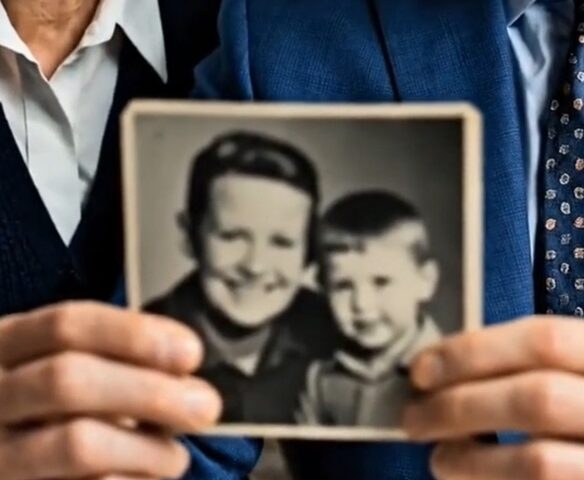
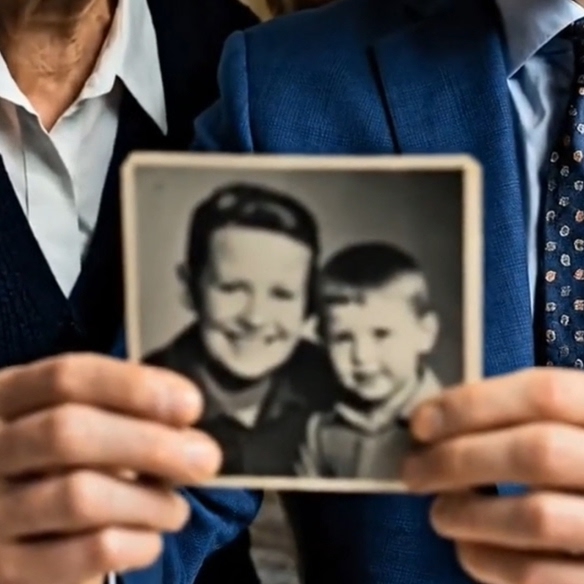
The paper felt thin and brittle against his skin, like a leaf ready to crumble.
He looked from the photograph to the woman’s eyes—faded, milky, yet holding the same sharp intelligence he remembered from half a lifetime ago.
The city, the rush, the meeting he was supposedly sprinting toward—it all turned into static noise, irrelevant and distant.
“Mama?” he whispered.
It was a word he hadn’t spoken, hadn’t even dared to think, in twenty years.
The old woman didn’t cry. She simply reached out, her thumb brushing the sleeve of his expensive navy jacket, leaving a faint, dusty streak of flour on the dark wool.
“You always were in such a hurry, Julian,” she said, her voice a fragile rasp.
“Even before you could walk, you were trying to run away from the moment.”
The woman beside him—his assistant, or perhaps a client, he couldn’t quite remember—stepped back, sensing the tectonic shift in the air.
Julian didn’t look at her. He didn’t look at the watch that had governed his day.
He looked at the woman who had somehow survived the wreckage of his past, standing on a street corner, selling the ghosts of his childhood for a few coins.
He didn’t ask how she was here, or why she had waited. He didn’t ask about the years of silence.
He just leaned over the cart, ignoring the startled commuters, and pressed his forehead against her shoulder, smelling the cinnamon, the yeast, and the undeniable, crushing scent of home.
The old woman rested her hand on his hair, closing her eyes.
“Eat,” she commanded softly.
And for the first time in his adult life, he stopped running.
He finished the pastry, every crumb, savoring the sweetness, the pain, and the mercy of finally arriving exactly where he was meant to be.