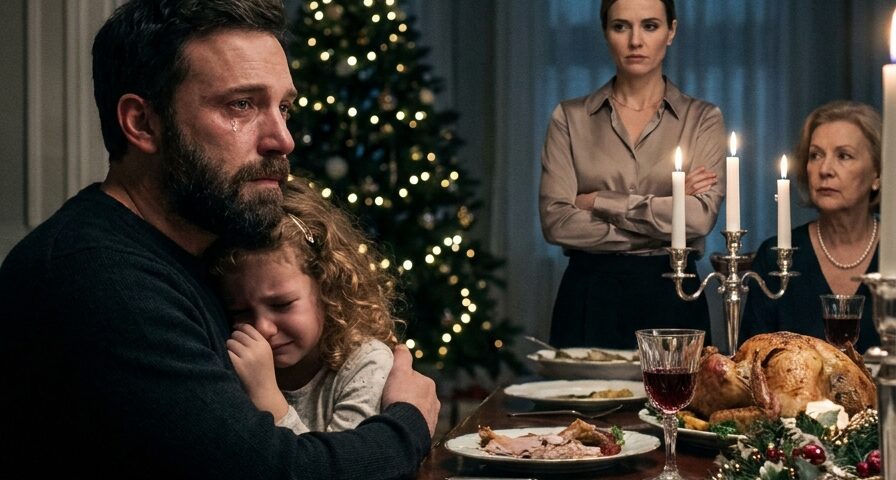
PART 2:The Hidden Letter My Late Mother Left Behind Saved My Family Years Later
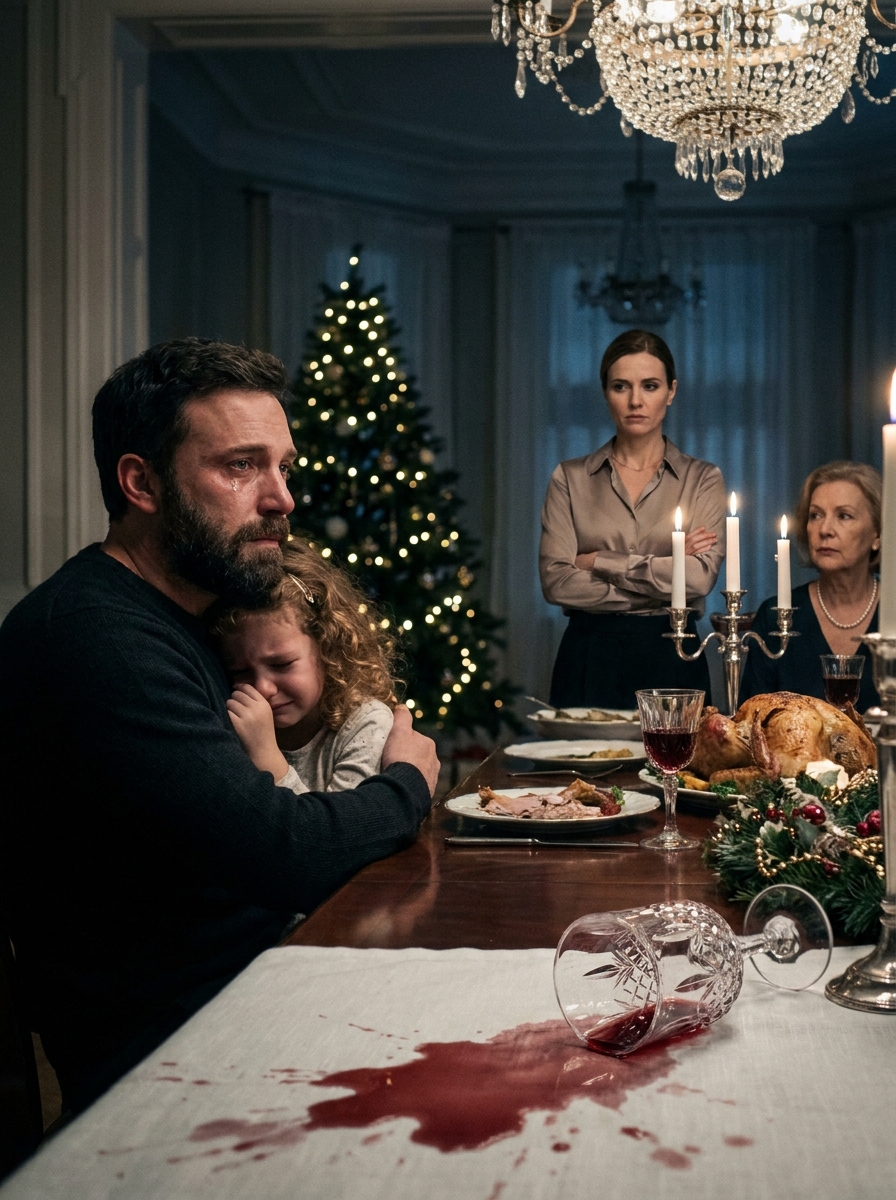
The silence after the call ended felt louder than Patricia’s scream.
I stood in the motel bathroom with the phone still pressed to my ear, staring at the rust-colored ring around the sink drain, waiting for Claire’s voice to return through static and distance.
It did not.
From the other side of the door, Lily shifted beneath the blankets.
“Daddy?” she called softly.
I wiped my face with both hands before I opened the door. The room smelled of old radiator heat, melted snow, and the tiny packet of cocoa the motel clerk had given me out of pity at dawn. Lily sat up in bed, hair tangled, one mitten still on, the other lost somewhere beneath the sheets.
“Was that Mommy?” she asked.
I crossed the room slowly, forcing my voice to stay steady. “Yes.”
“Is she still mad?”
I sat beside her. “No, sweetheart.”
Her eyes searched mine with the careful seriousness children learn when the adults around them become unpredictable.
“Then why are you scared?”
The question landed so gently that it nearly broke me.
I pulled the blanket higher around her shoulders. “Because sometimes grown-ups make mistakes for a long time before they realize they need help fixing them.”
“Did Mommy make a mistake?”
I looked at my daughter’s small face, at the worry already gathering there like weather. “Yes,” I said. “But I think she’s trying to be brave now.”
Lily was quiet for a moment.
Then she reached beneath the pillow and brought out the little paper snowflake she had made the night before at the restaurant, the one Patricia had called messy, the one Lily had tried to hide after Claire snapped at her for crying. One corner was bent. One point had torn.
“Can brave people still cry?” Lily asked.
I took the snowflake from her hands and smoothed it carefully against my knee.
“Yes,” I said. “Sometimes crying is how brave people tell the truth.”
My phone buzzed again.
Not Claire.
Robert.
I answered before the second ring.
“Daniel,” he said, breathless. “I have Claire. We’re in the car.”
My body went still. “Where is Patricia?”
“At the house. Marcus is there with her.”
“Marcus?”
“He came over after you left. He started recording because he thought—” Robert stopped. I heard a turn signal clicking. “It doesn’t matter. Claire is with me.”
In the background, I heard someone crying quietly.
“Let me talk to her,” I said.
There was shuffling, then a broken whisper.
“Daniel?”
I closed my eyes.
“Claire.”
“I’m sorry,” she said immediately. “I’m so sorry. I should have stopped it. I should have stopped her years ago. I heard Lily crying and I—” Her breath hitched. “I became twelve years old again.”
I leaned against the wall because my knees were not reliable.
“Where are you going?” I asked.
“I don’t know.” A pause. “Dad said we should meet you somewhere safe.”
I glanced at Lily, who was watching me with wide, silent eyes.
“The police station,” I said.
Claire inhaled sharply.
“Daniel, I don’t want this to become—”
“It already became something,” I said, not harshly, but firmly enough that she stopped. “Last night, your mother cornered our daughter until she believed love could be taken away for spilling cocoa on a tablecloth. Then she screamed in the house while you begged me not to bring Lily back. We’re going somewhere with cameras, people, and records.”
For a moment, there was only the sound of tires over slush.
Then Claire whispered, “Okay.”
I expected argument. I expected old loyalty to reach through the phone and close around her throat.
Instead, she said it again.
“Okay.”
I packed our things in less than three minutes. Lily insisted on carrying her snowflake herself, pressed flat inside the motel Bible because she said it needed “something heavy and holy.” I did not have the heart to correct her theology.
By the time we pulled out of the parking lot, the sky had turned the pale blue of winter mornings that pretend nothing terrible has happened overnight. Snow clung to the motel sign. Trucks growled past on the highway. Lily stared out the window, thumb tucked against her lip, until she suddenly sat forward.
“Daddy?”
“Yes?”
“If Mommy is brave now, can I hug her?”
My hands tightened around the wheel.
“You never have to hug anyone before you’re ready.”
She considered this with solemn care.
“What if she needs one?”
That was Lily. Even wounded, she was looking for where to place tenderness.
“Then you can decide,” I said. “Your love belongs to you.”
She sat back, and in the rearview mirror I saw her nod as if I had handed her something important.
At the police station, Robert’s silver car was already parked crookedly near the entrance. He stood beside it without a coat, shoulders dusted in snow, looking smaller than I had ever seen him. Claire sat inside the passenger seat, both hands wrapped around a paper cup, staring at nothing.
When Lily saw her, she froze.
Claire looked up.
For one suspended second, mother and daughter stared at each other through the windshield, separated by glass, snow, and the long night behind us.
Then Claire opened the car door.
She did not rush forward. She did not cry out. She stepped into the snow and lowered herself to her knees on the salted pavement, heedless of the cold soaking through her jeans.
“Lily,” she said, voice trembling, “I am so sorry.”
Lily clutched the motel Bible to her chest.
Claire kept her hands folded in her lap. “I should have protected you. I didn’t. That was wrong. What Grandma said was wrong. What I said was wrong.” Tears slipped down her face, but she did not wipe them away. “You don’t have to forgive me right now. You don’t have to hug me. I just need you to know I love you when you’re happy, when you cry, when you make mistakes, when you spill things, when you’re scared, and when you’re mad at me.”
Lily’s chin trembled.
“Even if I ruin Christmas dinner?”
Claire made a sound like the air had been knocked out of her.
“Especially then,” she whispered. “Dinner can be cleaned up. You are more important than any tablecloth.”
Lily stood very still.
Then she walked forward, slowly, and placed the Bible in Claire’s hands.
“My snowflake is in there,” she said. “It got bent.”
Claire opened it carefully. The torn paper snowflake lay between the pages.
She looked at it as though Lily had handed her a heart.
“I bent too,” Claire said softly. “But maybe we can both still be beautiful.”
Lily’s mouth folded downward. Then she stepped into Claire’s arms.
Claire held her like someone being given sunlight after years underground.
Robert turned away, covering his mouth with one hand. My father, who had arrived without my noticing, stood near the entrance with his cap in his hands and tears in his eyes.
A young officer came out a moment later, gentle but professional, and invited us inside.
What followed was not dramatic in the way movies pretend truth should be dramatic. There were no slammed doors, no thunderous speeches, no instant justice. There were forms. Names. Times. Questions asked twice in different ways. A quiet room with children’s drawings taped to the wall. A woman named Officer Ramirez who crouched to Lily’s level and asked if she wanted crayons.
Lily drew a house in blue.
Then she drew a smaller house beside it.
Then, after a long pause, she drew a bridge between them.
Claire watched from across the room, fingers pressed against her lips.
Robert gave his statement first. He admitted Patricia had always been severe. He used words like “strict” and “old-fashioned” until Officer Ramirez quietly asked, “Did you ever feel afraid to disagree with your wife in your own home?”
Robert’s face changed.
He looked down at his wedding ring.
“Yes,” he said. “For a long time.”
Marcus arrived just before noon, carrying a laptop bag and the exhausted expression of a man who had spent the night deciding which family truth could no longer be buried. He was Claire’s older brother, charming at dinners, absent at holidays, always with a reason not to stay long. I had judged him for that.
Now he entered the station and looked at Claire with such grief that I understood absence could sometimes be a scar, not an insult.
“I brought everything,” he said.
Claire stiffened. “Everything?”
Marcus glanced at Lily, then lowered his voice. “The recordings. Emails. The trust documents.”
Robert shut his eyes.
I looked between them. “What trust documents?”
Claire looked just as confused as I was.
Marcus hesitated. “You don’t know.”
“Know what?” Claire asked.
Robert sank into a chair.
“Dad?” Claire whispered.
For the first time since I had met him, Robert Whitmore looked completely defeated by the weight of his own silence.
“When your grandmother died,” he said slowly, “she left money for you and Marcus. Education, housing, anything that helped you build independent lives.”
Claire stared at him. “What are you talking about?”
“Your mother controlled the accounts until you turned twenty-five,” Robert said. “She told me she transferred everything properly. I believed her because believing her was easier than fighting.”
Marcus set the laptop bag on the table with care. “She didn’t transfer it. Not all of it. She used some. Hid some. Moved some into accounts under the family business.”
Claire’s face had gone pale.
“That doesn’t make sense,” she said. “Mom always said Grandma left everything to the preservation society.”
“She lied,” Marcus said softly. “And when I found out at twenty-two, she threatened to cut me off from the family completely if I told you.”
Claire gave a small, humorless laugh. “So you left.”
“I was a coward,” Marcus said. “And I told myself you were safe because you were married to Daniel. Because you smiled in pictures. Because you kept saying Mom was difficult but meant well.” His voice cracked. “Last night when Lily cried the same way you used to, I realized I had mistaken quiet for safety.”
Lily had stopped coloring. She was listening, though she pretended not to.
Claire wrapped her arms around herself.
“Why would she keep money from us?” she asked.
Robert’s eyes were wet.
“Control,” he said. “Your grandmother wanted you free. Patricia wanted you grateful.”
The room seemed to tilt around that sentence.
My mind went back over the years with painful clarity. Claire refusing promotions because her mother said ambitious mothers ruined children. Claire panicking over credit card bills even when we were fine. Claire calling Patricia before every major decision, then pretending it was only a habit. Claire flinching whenever Lily said no.
A hidden architecture had held up our family, and I had only seen the wallpaper.
Officer Ramirez took notes. Marcus handed over copies of documents, bank statements, and recordings. No one promised a quick resolution, but the words “financial exploitation,” “civil attorney,” and “protective order consultation” entered the room like sturdy furniture being placed beneath a collapsing ceiling.
At some point, Claire stepped into the hallway.
I followed.
She stood by a vending machine, looking at the rows of candy bars without seeing them.
“I thought I was protecting our life,” she said. “Every time I asked you not to upset my mother, I thought I was keeping peace.”
“I know.”
She turned to me. “But I wasn’t. I was passing the fear down.”
The old version of me would have rushed to comfort her, to tell her it wasn’t so bad, to make the pain easier because I loved her and could not stand seeing her suffer.
But love, I was learning, was not always cushioning someone from truth.
So I said, “Yes.”
She nodded once. A tear slid down her cheek.
“I don’t want Lily to become me.”
“She won’t,” I said.
“How do you know?”
I looked through the glass window into the small room where Lily was showing my father her blue bridge drawing. He was nodding gravely, as though she had presented architectural plans for a cathedral.
“Because last night she asked if she had done something wrong,” I said. “And today she asked whether brave people can cry. That means she’s still asking questions. We just have to make sure nobody teaches her to stop.”
Claire pressed her hand over her mouth.
Then, from somewhere deep in the building, a door opened and closed.
Patricia had arrived.
She did not enter like a woman afraid. She entered like a woman inconvenienced.
Her coat was cream-colored wool. Her hair was pinned perfectly. Snowflakes glittered on her shoulders and melted without permission. She looked at the officers, then at Robert, then Marcus, then me.
Finally, she looked at Claire.
“My goodness,” she said. “Look at all this theater.”
Claire’s whole body tightened.
I moved half a step closer to her, but she lifted one hand, not to push me away, but to steady herself without hiding behind me.
Patricia’s eyes flicked to Lily in the room beyond.
“There’s my granddaughter,” she said, softening her voice into something sweet and poisonous. “Lily, darling, come give Grandma a kiss.”
Lily did not move.
Claire stepped forward.
“No,” she said.
One syllable. Barely above a whisper.
But it changed the air.
Patricia blinked. “Excuse me?”
Claire’s hands trembled at her sides. “You don’t call her over like that. Not anymore.”
Patricia smiled tightly. “Claire, you are upset. Daniel has clearly filled your head with—”
“No,” Claire said again, stronger this time. “Daniel didn’t do this. Marcus didn’t. Dad didn’t. Lily didn’t.” She swallowed. “You did.”
The station seemed to quiet around her.
Patricia’s gaze hardened. “After everything I sacrificed for you.”
Claire flinched, but she did not step back.
“I used to believe love was measured in sacrifice,” she said. “But love doesn’t keep receipts to use as weapons.”
For the first time, Patricia looked uncertain.
It lasted only a second.
Then she turned to Robert. “Take me home.”
Robert rose slowly.
For a moment, I thought he might obey. So did Claire. I saw it in the sudden fear that crossed her face.
But Robert only removed his car keys from his pocket and set them on the table.
“No,” he said.
Patricia stared at him.
Robert’s voice shook, but he continued. “I have spent forty years mistaking quiet for loyalty. I won’t do it anymore.”
Patricia looked at Marcus. “You ungrateful boy.”
Marcus’s face tightened. “I learned from the best.”
There was no triumph in his voice. Only exhaustion.
Officer Ramirez stepped between them with calm authority and explained that Patricia was not under arrest at that moment, but that statements had been made, documentation submitted, and recommendations would follow. She advised everyone to avoid contact until matters could be reviewed properly.
Patricia listened with a frozen smile.
Then she looked at Claire one last time.
“You’ll come back,” she said. “You always do.”
Claire’s fingers found mine.
“No,” she answered quietly. “I won’t.”
Patricia left without another word.
The door closed behind her with a soft pneumatic sigh.
No one moved.
Then Lily slipped out of the small room and walked to Claire’s side. She did not say anything. She simply pushed the torn snowflake into Claire’s coat pocket.
“For when you feel bent,” she whispered.
Claire knelt and pressed her forehead gently to Lily’s.
Robert began to cry openly then. Not loudly. Not dramatically. Just an old man standing in a police station while the life he had avoided looking at finally looked back.
That afternoon, we did not return to our house immediately. Claire was afraid Patricia might be there. I was afraid of the memories waiting inside. So my father brought us to his place, a small brick house with a sagging porch and a kitchen that always smelled faintly of cinnamon because he put it in his coffee.
He made grilled cheese sandwiches and tomato soup. He burned two and served them anyway. Lily declared the black edges “snowman hats” and ate around them.
Claire sat at the table in my mother’s old cardigan, sleeves hanging past her wrists. She looked younger somehow, not weaker, but newly unarmored.
After lunch, Lily fell asleep on the couch with her head in Claire’s lap.
Claire did not move for nearly an hour.
“I don’t remember her ever holding me like this,” she said.
My father, washing dishes at the sink, turned off the water.
“Your mother?” he asked gently.
Claire nodded. “If I cried, she told me to stand up straight. If I was sick, she said not to be dramatic. If I was happy too loudly, she told me people would think I was common.” Her fingers moved lightly through Lily’s hair. “I thought becoming a good mother meant never letting Lily embarrass herself.”
My father dried his hands on a towel and sat across from her.
“My wife used to say children are not clay,” he said. “They are gardens. You don’t shape them by squeezing. You help them grow toward light.”
Claire looked at him.
“I wish I had known her better,” she said.
He smiled sadly. “She knew you enough to hope you’d find your way.”
Claire frowned. “What do you mean?”
My father glanced at me, and something unreadable passed over his face.
“I wasn’t going to bring this up today,” he said. “But maybe today is exactly when it belongs.”
He stood and went to the hallway closet. I heard boxes shifting. When he returned, he carried a small tin painted with faded holly leaves. My mother’s Christmas tin.
He placed it on the table in front of Claire.
“She gave me this before she died,” he said. “Said I’d know when to open it.”
My throat tightened. “Dad, you never told me.”
“I forgot for a while,” he admitted. “Or maybe I remembered and wasn’t ready.”
Inside the tin were old photographs, a pressed white ribbon, and a sealed envelope yellowed at the edges.
Claire leaned forward.
On the envelope, in my mother’s careful handwriting, were two words.
For Claire.
Claire stared at it as though the letters might rearrange themselves.
“My mother wrote to you?” I asked.
My father nodded slowly. “Before the wedding. She was already sick then, but she saw more than we did.”
Claire’s hands shook as she opened the envelope.
The letter was only one page.
Dear Claire,
You smiled all through dinner tonight, but you watched your mother before every laugh. I know that habit. My own mother had a sharp tongue and called it guidance.
I want to tell you something before you join this family.
You do not have to earn gentleness here.
If someday you forget that, I hope someone reminds you. If someday you have a child, I hope you let that child be loud, messy, tender, and free.
Daniel will not always understand what frightens you. Teach him. Let him love the parts of you that learned to hide.
And when the day comes that you must choose between keeping peace and protecting love, choose love. Peace built on fear is only silence wearing a clean dress.
With hope for you,
Margaret
Claire read the letter once.
Then again.
On the third time, she pressed it to her chest and bent over it like a prayer.
I could not speak.
My mother had seen it. Years before Lily. Years before the dinner. Before the snow, the motel, the police station. She had seen Claire watching for permission to breathe.
Claire looked up at me, eyes shining.
“She knew,” she whispered.
I sat beside her and took her hand.
“Yes.”
“She tried to warn me.”
“No,” my father said softly. “She tried to bless you.”
Claire began to cry, but the sound was different now. Not the trapped crying from the phone. Not the terrified crying my father had described. This was grief finding an open window.
Lily stirred in her lap.
“Mommy?” she mumbled.
Claire wiped her cheeks quickly. “I’m here, baby.”
Lily opened one eye. “Are you sad?”
“A little.”
“Do you need the snowflake?”
Claire laughed through tears. “I have it.”
“Good,” Lily murmured, and fell asleep again.
That evening, after Lily had gone to bed in my old room under a quilt my mother had made, Claire and I sat on the porch wrapped in blankets, watching snow gather on the railing.
Our house was only ten minutes away, but it felt like another country.
“I don’t know how to come home,” Claire said.
“We don’t have to solve that tonight.”
She nodded.
For a while, we listened to the soft scrape of branches.
Then she said, “I need help.”
I turned toward her.
The porch light caught the tired lines beneath her eyes, the raw honesty in her face.
“I mean real help,” she said. “Therapy. Boundaries. Legal advice. Whatever it takes. I don’t want to make promises because I’m afraid of losing you. I want to become someone Lily can trust.”
I reached for her hand beneath the blanket.
“I want that too.”
She looked at me carefully. “And you?”
“What about me?”
“You always become the calm one. The rescuer. The one who knows what to do.” Her thumb moved over my knuckles. “But last night hurt you too.”
I looked out at the snow.
In the rush to protect Lily, I had not let myself feel it. The humiliation of standing at that table while my wife chose silence. The fear in the motel room. The anger that had frightened even me because it was rooted so deeply in love.
“I don’t know what I need yet,” I admitted.
Claire leaned her head against my shoulder.
“Then we’ll find out slowly.”
The first unexpected gift arrived three days later.
It came in the form of Marcus standing on our porch with two coffees, a folder, and a nervous smile.
Patricia had not come to the house. Officer Ramirez’s advice, Robert’s refusal to drive her, and Marcus’s lawyer had drawn a circle she had not yet crossed. Instead, she left voicemails that Claire did not play. Each one was saved and forwarded to the attorney Marcus recommended.
Claire opened the door but stayed behind the threshold.
Marcus held up the coffees. “Peace offering?”
She looked at him for a long time.
“Coffee isn’t enough.”
“I know,” he said.
She let him in anyway.
They sat at our kitchen table while Lily built a tower of blocks in the living room and pretended not to listen.
Marcus slid the folder toward Claire.
“I started the process,” he said. “Forensic accountant. Civil claim. Dad is cooperating.”
Claire did not touch the folder.
“I’m not doing this for money.”
“I know.”
“Then why does everyone keep talking about accounts and trusts like they matter?”
Marcus leaned back, rubbing his hands over his face.
“Because Grandma wanted us to have choices,” he said. “Mom took choices away and called it family. Getting them back matters.”
Claire was quiet.
Then Marcus reached into his coat pocket and pulled out a small velvet pouch.
“I also found this in Dad’s safe.”
He placed it on the table.
Claire opened it.
Inside was a silver locket shaped like a tiny oval mirror. Its surface was scratched. Its clasp was delicate and old.
Claire’s breath caught.
“I remember this.”
Marcus nodded. “Grandma wore it every Christmas.”
Claire opened the locket. Inside was a miniature photograph of a young woman with bright eyes and windblown hair. Beside it, folded impossibly small, was a sliver of paper.
Claire removed it with trembling fingers.
There were only six words written there.
Let her laugh. Let her leave.
Claire covered her mouth.
Marcus looked toward the window.
“She knew Mom too.”
The room filled with the kind of silence that does not empty a space, but deepens it.
Claire closed the locket in her palm.
“I used to think Grandma was cold,” she said.
“Mom told us she was.”
“She wasn’t?”
Marcus smiled sadly. “She sent me birthday cards every year after Mom said she forgot. I found them unopened in a box last spring.”
Claire looked at him, stunned.
“Why didn’t you tell me?”
“Because every truth I found made me ashamed of the last one I hid.”
Claire’s face softened, but not completely. Forgiveness, I realized, was not a door swinging open. Sometimes it was a window cracked an inch.
“You should have told me,” she said.
“I know.”
“You left me there.”
His eyes reddened. “I know.”
Lily’s block tower collapsed in the living room with a clatter. Everyone turned.
She looked up at us.
“It’s okay,” she said. “I can build a different one.”
Something in Marcus’s face folded.
Claire looked at him, then at the fallen blocks, then at the locket in her hand.
“A different one,” she repeated.
The weeks that followed were not simple, but they were honest.
Claire began therapy on Tuesday mornings. The first time she went, she sat in the car for twenty minutes before entering the building. When she came home, Lily ran to her with a drawing of a lion wearing roller skates.
Claire laughed so hard she cried.
The second week, Claire and I went together. We talked about dinner at the Whitmores’, about the years before it, about how fear had worn the mask of tradition in our marriage. I admitted I had avoided confronting Patricia because I wanted Claire to choose me without being asked. Claire admitted she had expected me to rescue her from a room she had never told me she was locked inside.
Neither confession fixed everything.
Both made breathing easier.
Robert moved into a small apartment near the library. He bought one chair, one mattress, and six plants because Lily told him lonely rooms needed “green listeners.” He came over on Saturdays to make pancakes, and each week he learned to ask before hugging Lily goodbye.
The first time he asked, Lily beamed.
“Yes, Grandpa,” she said. “You can have a big one.”
He held her gently, like a man relearning the size of love.
Patricia did not disappear. People like Patricia rarely vanish just because truth has entered the room. She sent letters written in beautiful handwriting. She left messages about family reputation, about illness, about betrayal. Once, she mailed Lily a porcelain doll with a note that read, For when you are ready to behave like a young lady.
Claire stood in the kitchen holding the doll box for a long time.
Then she carried it to Lily.
“This came from Grandma,” she said. “It has a message that does not feel kind. You can decide what happens to it.”
Lily studied the doll through the clear plastic window.
“She’s pretty,” she said.
“She is.”
“But her face looks like she can’t sneeze.”
Claire laughed before she could stop herself.
Lily grinned. “Can we give her to someone who likes dolls that can’t sneeze?”
So we donated it, note removed.
That night, Claire blocked Patricia’s number.
Her finger hovered over the screen only once.
Then she pressed the button.
In March, the legal process uncovered the final truth.
It arrived in a conference room downtown, where sleet tapped the windows and the accountant, a mild woman with silver glasses, explained the movement of money across decades.
Most of it was what Marcus had warned us about. Hidden transfers. Manipulated signatures. Accounts drained and disguised as maintenance fees.
Then the accountant turned a page and frowned.
“There is one unusual disbursement from Margaret Whitmore’s estate,” she said.
Claire looked up. “My grandmother?”
“Yes. A charitable gift, issued privately. It was made twenty-nine years ago to a medical relief fund.” The accountant adjusted her glasses. “The beneficiary notation is unusual. It names a specific patient.”
Robert leaned forward.
“What patient?”
The accountant read the name.
“Margaret Ellis Harper.”
My father went still beside me.
The room narrowed.
“That was my wife,” he said.
Claire turned to him. “Daniel’s mother?”
He nodded slowly, color draining from his face. “Her cancer treatment. There was an experimental program. We couldn’t afford it. An anonymous donor covered what insurance wouldn’t.”
The accountant looked between us. “The donor was Margaret Whitmore.”
For several seconds, no one spoke.
I felt as if time had reached backward and lit a candle in a room I never knew existed.
“My mother lived three extra years because of that treatment,” I said.
My father’s eyes filled.
“She saw Daniel graduate,” he whispered. “She met Claire. She came to the wedding.”
Claire’s hand found mine under the table.
The revelation moved through us quietly at first, then with gathering force.
Claire’s grandmother had not only tried to give her freedom. She had unknowingly given our family time. She had given my mother enough years to write the letter in the Christmas tin. Enough years to see Claire clearly. Enough years to leave behind the words that would one day help save Lily from the same silence.
Claire pressed the locket at her throat.
“She brought us together,” she said.
No one corrected her.
Because in some mysterious, practical, documentable way, she had.
The settlement came months later, without a trial. Patricia, facing evidence too clear to dismiss and a family no longer willing to bend around her, agreed to return what remained of the trusts and relinquish control over the family business assets. There were legal restrictions, mandated mediation attempts she refused, and a formal agreement limiting contact with Lily unless Claire and I approved it.
Justice did not arrive like a lightning strike.
It arrived like winter thawing.
Slowly. Drip by drip. Revealing ground underneath.
Claire used part of her recovered inheritance to create something none of us expected.
She rented the empty storefront beside the library, the one with tall windows and peeling green paint, and turned it into a children’s art studio.
She called it The Snowflake Room.
The first time she showed me the sign, I laughed and cried at once.
“Are you sure?” I asked.
She looked through the window at Lily, who was inside arranging jars of paint by “happiness order.”
“Yes,” Claire said. “I spent my childhood thinking there was only one right shape to become. I want children to know they can fold, tear, start over, and still make something beautiful.”
Opening day came in early December.
Snow fell in soft, generous flakes, the kind that made the whole town look forgiven. My father hung paper stars from the ceiling. Robert carried boxes of crayons with the solemnity of a man transporting jewels. Marcus set up the donation table and pretended not to cry when Claire placed their grandmother’s photograph near the entrance.
Beneath it, on a small card, Claire had written:
For Margaret Whitmore and Margaret Harper, who gave us time, courage, and light.
People came all morning. Children painted crooked trees and purple dogs. Parents drank coffee from paper cups. Lily wore an apron three sizes too large and introduced herself as “assistant director of glitter.”
Near noon, the bell above the door rang.
The room softened into sudden quiet.
Patricia stood in the doorway.
She looked different. Not humbled exactly, but less polished. Her hair was loose beneath her hat. She held no gift, no letter, no weapon disguised as tradition.
Claire went still beside me.
I stepped closer, but she touched my arm.
“I’m okay,” she said.
Patricia’s eyes moved over the room—the paint-splattered tables, the laughing children, the paper snowflakes taped to the windows. Her mouth tightened at the mess, but she said nothing about it.
Then she saw the photograph of her mother.
For a moment, her face opened with something like pain.
Claire walked toward her, stopping several feet away.
“Why are you here?” she asked.
Patricia looked at Lily, then back at Claire.
“I saw the article,” she said.
Claire waited.
Patricia swallowed. “Your grandmother would have liked this.”
It was not an apology.
The old Claire might have rushed to turn it into one.
The new Claire simply nodded. “Yes. I think she would have.”
Patricia’s gloved fingers curled around the strap of her purse.
“I don’t know how to speak to you now,” she said.
Claire’s eyes shone, but her voice stayed steady. “Then start with the truth.”
Patricia looked around the room again.
A little boy at the nearest table held up a paper snowflake with one side accidentally torn off.
Claire knelt beside him and said, “That looks like it’s dancing.”
The boy’s face lit up.
Patricia watched.
Something small shifted in her expression, too small to call transformation, too real to ignore.
“I was afraid of my mother,” she said at last.
Claire did not move.
Patricia kept her eyes on the floor. “She was not cruel the way I said. She was free. That frightened me more. She laughed loudly. She left rooms when men shouted. She told me obedience was not a virtue if it cost me my soul.” A bitter smile touched her mouth. “I decided she was reckless because I did not know how to become her.”
Claire’s breath trembled.
“So you made me afraid instead.”
Patricia closed her eyes.
“Yes.”
The word hung there, bare and insufficient.
“I am not asking for anything,” Patricia said. “I know I have no right.” She opened her purse and removed a small envelope. “This was hers. I kept it because I hated it.”
Claire accepted it carefully.
Inside was a photograph.
Two young women stood outside a hospital, arms around each other, wind tangling their hair. One was Claire’s grandmother, unmistakable from the locket.
The other was my mother.
On the back, written in faded ink, were the words:
Margaret and Maggie, the day we decided our children would be freer than we were.
My father, who had come up behind us, made a soft sound.
He took the photograph with trembling hands.
“I never knew they met,” he whispered.
Patricia looked at him. “They volunteered together before your wife became ill. My mother admired her very much.”
My father touched my mother’s face in the picture.
Claire leaned against me, tears slipping silently down her cheeks.
The final hidden thread had surfaced at last—not money, not guilt, not fear, but friendship. Two women named Margaret, standing in the cold outside a hospital, making a promise for children who would one day marry, stumble, break patterns, and build a room where torn snowflakes were called dancing.
Patricia looked at Lily.
“I was wrong,” she said.
Lily, still wearing her enormous apron, studied her grandmother with careful eyes.
Patricia’s voice faltered. “You did not ruin Christmas dinner.”
Lily glanced at Claire.
Claire nodded slightly, leaving the choice where it belonged.
Lily walked to a table, picked up a blank paper snowflake, and brought it back.
“You can color this,” she told Patricia. “But you have to use the messy markers too.”
Patricia looked down at the paper.
Her hand trembled when she took it.
“I don’t know how,” she said.
Lily shrugged. “That’s okay. Mommy says starting is a kind of brave.”
Patricia sat at the nearest table.
She did not become gentle in a single afternoon. She did not earn instant forgiveness. Some distances remained necessary. Some trust would take years, if it came at all.
But she uncapped a green marker.
And when the ink smeared across her glove, she did not scold anyone.
She only stared at the stain.
Then, quietly, almost to herself, she laughed.
Claire slipped her hand into mine.
Across the room, Robert was helping a child tape a lopsided star to the window. Marcus was showing my father the photograph again, both of them bent over it like treasure. Lily leaned over Patricia’s paper and suggested orange because “snowflakes can be sunsets if they want.”
Outside, snow fell on the library steps, the parked cars, the old town clock, and the sign above the door.
The Snowflake Room glowed against the winter afternoon.
I looked at my wife, at my daughter, at the family we had almost lost and the one we were still learning how to become.
Claire looked back at me.
For the first time in a long time, there was no fear waiting behind her smile.
Only light.
THE END